
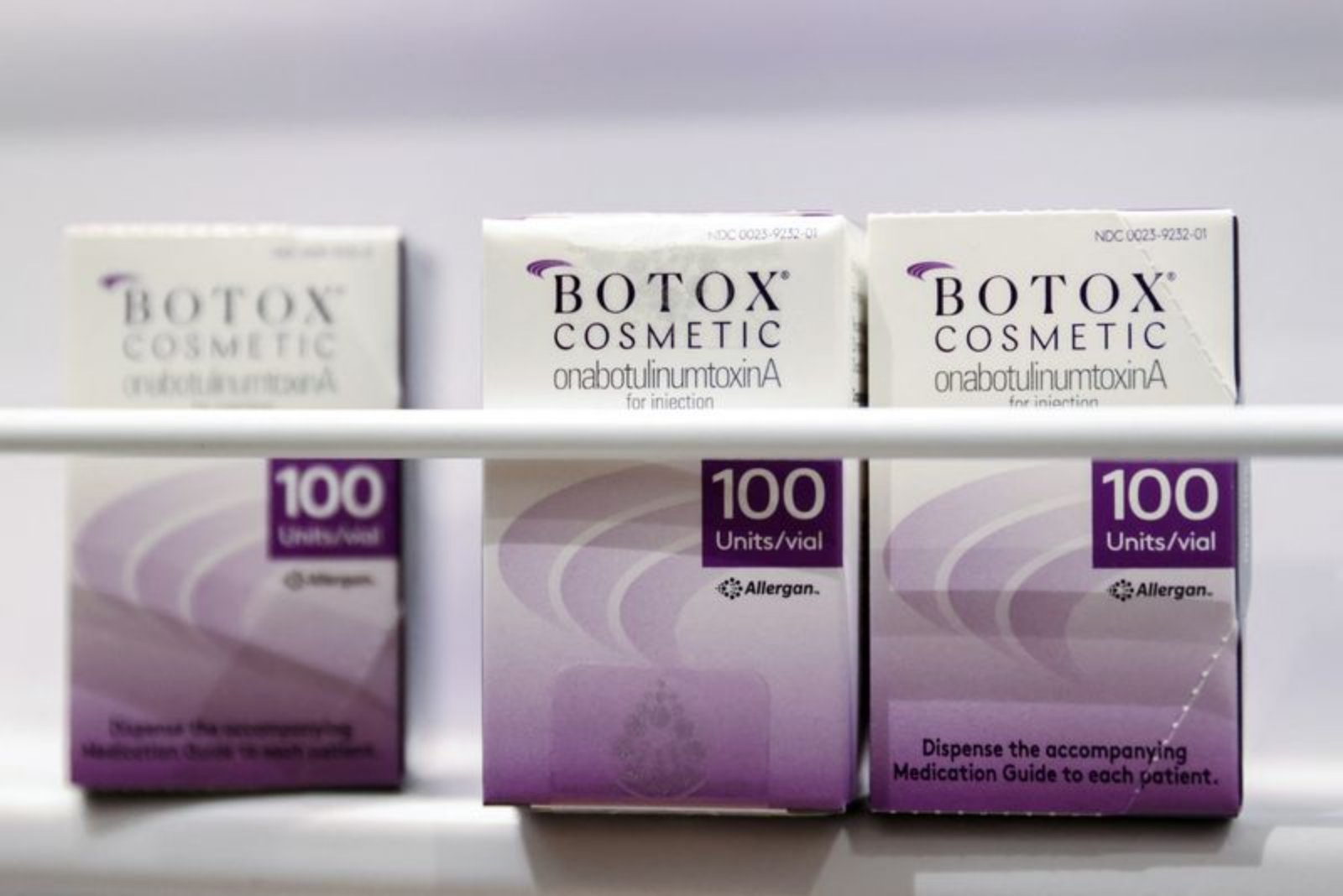
AbbVie initiated legal action against the U.S. Department of Health and Human Services on Wednesday, asking a federal court in Washington, D.C. to set aside price controls that the Centers for Medicare & Medicaid Services has applied to Botox.
In its complaint, the North Chicago, Illinois-based drugmaker contends that Botox falls into a category of Medicare-covered medications that Congress explicitly excluded from price controls when it enacted the Inflation Reduction Act of 2022. AbbVie identifies the specific statutory exclusion at issue as the carve-out for "plasma-derived products," and says the CMS decision to impose price limits on Botox conflicts with that exclusion.
The lawsuit names as defendants the Department of Health and Human Services, Health Secretary Robert F. Kennedy Jr., the Centers for Medicare & Medicaid Services, and CMS Administrator Mehmet Oz. HHS did not immediately provide a response to a request for comment.
AbbVie notes that Botox is commonly used for cosmetic purposes to smooth facial wrinkles, and that it also has a range of therapeutic uses. The complaint lists several medical conditions for which Botox is used, including eye- and neck-movement disorders, neck spasms, incontinence and migraines.
A central factual claim in the complaint is that roughly one-third of Botox consists of human serum albumin - a protein derived from human blood plasma. AbbVie says this ingredient is essential to Botox's safety and efficacy. The complaint states: "Because HSA is sourced from plasma collected from human donors, Botox is a 'plasma-derived product' that Congress excluded from the price-control program."
AbbVie argues that the price controls compel the company to offer Botox to Medicare beneficiaries at what it calls "confiscatory prices," or face what the complaint describes as "ruinous" tax liability and possible exclusion from federal programs if it does not comply. The complaint further asserts that CMS has infringed AbbVie's First Amendment rights by directing what the company may say about its pricing, and that CMS's actions constitute violations of due process and an unlawful "taking" under the Fifth Amendment.
The suit asks the court to end the application of the price controls to Botox.
The company reported that Botox made up just over 10% of AbbVie's $61.16 billion in revenue for the previous year, with purchases for therapeutic uses representing about 6% of that total.
The complaint characterizes this challenge as the first lawsuit arising from CMS's alleged violation of one of the Inflation Reduction Act exclusions - specifically the exclusion for plasma-derived products - though the complaint itself supplies the legal basis and remedy sought in this matter.
ProPicks AI note: The original reporting included a reference to AI-driven portfolio analysis tools evaluating AbbVie among other companies. That content described the tool's use of financial metrics to assess stocks and mentioned AbbVie in the context of such investment screening. The present report preserves the factual existence of that referenced service but does not endorse investment recommendations.