
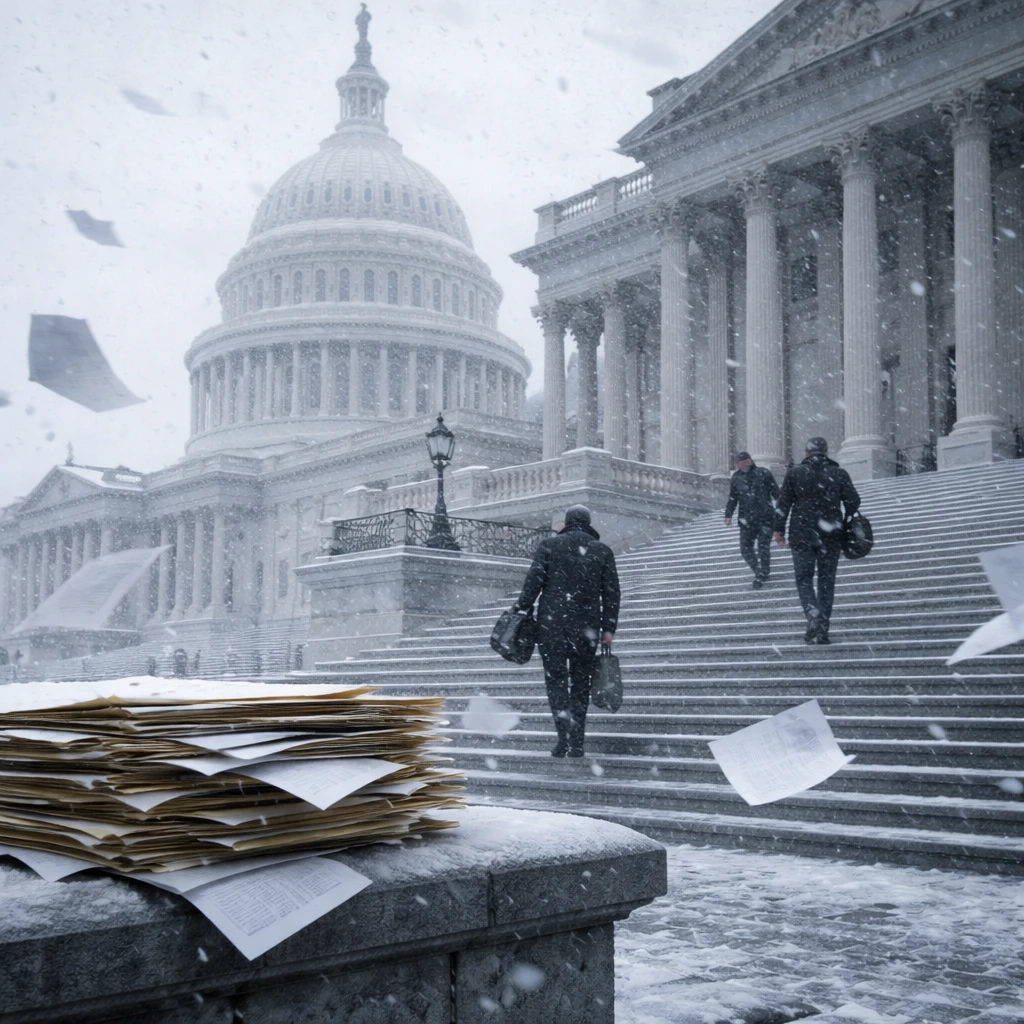
Wolfe Research has flagged a rising probability of a U.S. government shutdown taking effect after Jan. 30, citing mounting Senate resistance and weather-related disruption that together complicate efforts to advance a six-bill funding package.
The package, combined into a single "minibus," encompasses six of the 12 appropriations subcommittees and represents in excess of 75% of discretionary federal spending. In a client note, Wolfe Research analyst Tobin Marcus described the potential outcome as a "partial" shutdown, adding that the per-day fiscal cost of such a lapse "won't be much less than the total shutdown last fall."
Wolfe's analysis points to internal Senate dynamics as a central obstacle. The note says the Senate Democratic caucus is "newly united in opposition to voting for DHS funding in its current form," creating a unified voting bloc against the provision as drafted. At the same time, a projected snowstorm is expected to reduce available Senate floor days - the analysts estimate it will "lop 1-2 days off the Senate's week" - and make it harder to recall members of the House from recess in time to negotiate or pass legislation.
The research team also highlighted operational consequences for economic reporting. A lapse in appropriations would likely delay the collection and release of key macroeconomic series, including payrolls, unemployment, and CPI data. Wolfe Research qualified that any disruption to those releases should be limited if the funding lapse proves short-lived.
On tax administration, the note indicates that tax refunds should generally continue to be processed unless the funding lapse endures. The analysts said the administration is likely to "bend the rules to keep processing tax returns if needed."
Wolfe Research's base case envisions a short funding lapse that concludes by Feb. 6, a timeline driven more by procedural challenges and calendar timing than by a broader political breakdown. The firm acknowledged that a longer shutdown remains possible, but judges it less likely given the "fluid" set of circumstances and what it describes as the White House's preference to avoid prolonged disruptions.
Key takeaways
- The minibus covers six appropriations subcommittees and more than 75% of discretionary spending, increasing the scope of impacts if funding lapses.
- Senate Democrats are reportedly united against current DHS funding language, reducing the chances of a swift Senate vote in favor of the package.
- Severe weather is expected to remove 1-2 Senate floor days, compounding timetable pressures and complicating any effort to recall the House from recess.
Potential risks and uncertainties
- Delay to economic data releases - payrolls, unemployment, and CPI could be affected, which has implications for markets and economic forecasting.
- Operational disruption to tax processing if a shutdown is prolonged, though the administration may take steps to continue refunds in the near term.
- While Wolfe's base case is a short shutdown ending by Feb. 6, the possibility of a longer lapse remains given the evolving political and procedural landscape.