
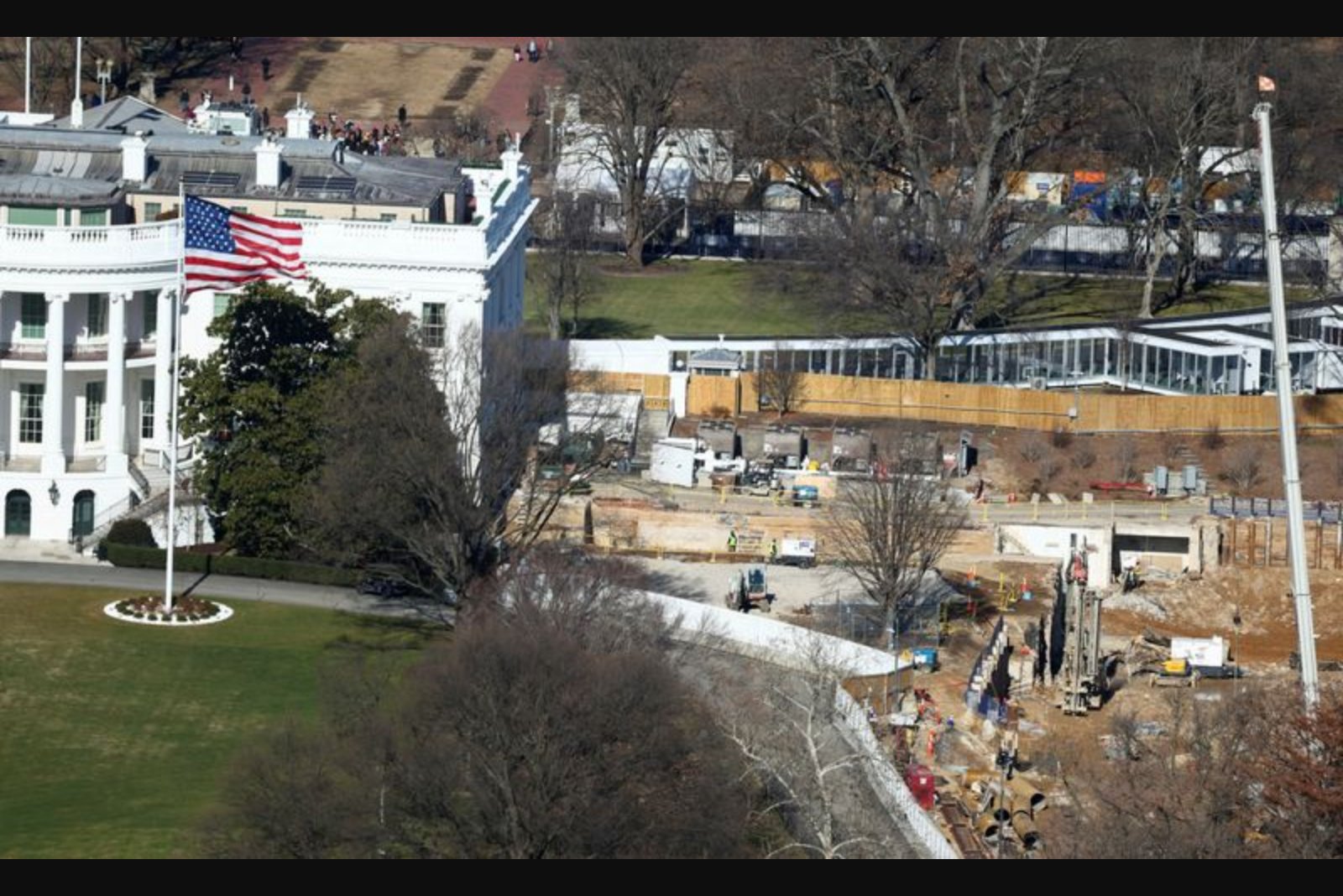
The administration's proposal to construct a 90,000-square-foot (8,400-square-meter), $400 million addition to the White House - described by officials as privately financed - is set for consideration by the National Capital Planning Commission on March 5, according to a tentative agenda posted online. The project would replace the East Wing, which was demolished in October.
In filings and supporting documents made available through the commission, the White House presented its argument that removing the 120-year-old East Wing represents "the most effective solution to many longstanding issues affecting the White House," citing the structure's limitations, low energy efficiency and restricted accessibility for people with disabilities. The administration included architectural renderings by Shalom Baranes alongside statements that some elements from the previous wing would be retained, including the East Wing cornerstone and a pergola designed by the architect I.M. Pei.
The National Capital Planning Commission is one of two federal bodies with oversight responsibilities for major building projects in the Washington, D.C. area. The other is the U.S. Commission of Fine Arts. Both groups are assigned consultative roles in approving D.C.-area construction plans. According to publicly available material, neither body is expected to block or delay the White House proposal; members of both panels were appointed by the president, and Will Scharf, a former personal lawyer to the president, serves as chair of the National Capital Planning Commission.
Despite the upcoming planning review, the initiative remains under judicial examination. A federal judge last month expressed doubts about whether the administration had the authority to proceed with construction following a demolition that, according to court filings, did not receive congressional approval. Separately, the National Trust for Historic Preservation filed a lawsuit in December contending that the project lacked required approvals and did not undergo the necessary environmental review processes.
The administration has signaled an ambitious timeline, indicating a ceremonial ribbon-cutting for the neoclassical addition in summer 2028. In its disclosures, the White House labeled the planned work as the most extensive transformation of the capital's built environment in decades and characterized the new space as addressing functional, environmental and accessibility shortfalls tied to the East Wing's age and design.
Documents submitted to the commission and posted online provide the most detailed public description of the project to date. They include the administration's rationale for demolition, architectural illustrations and an inventory of select historic items slated for preservation and incorporation into the new structure. Beyond those materials, the public record reflects ongoing legal and procedural questions that will likely continue to accompany the project as it advances through the planning and judicial processes.
Summary
The administration seeks approval from the National Capital Planning Commission for a privately financed, $400 million, 90,000-square-foot White House addition following an October demolition of the East Wing. The plan, illustrated by architect Shalom Baranes, aims for a summer 2028 ribbon-cutting but faces legal challenges and questions over procedural approvals and environmental review.
Key points
- The National Capital Planning Commission will consider preliminary and final site and building plans on March 5, per a posted tentative meeting agenda.
- The White House contends demolition was necessary due to the East Wing's age, energy inefficiency and limited accessibility; some historic elements are to be preserved, including a cornerstone and an I.M. Pei-designed pergola.
- Two federal advisory bodies oversee major D.C. projects - the National Capital Planning Commission and the U.S. Commission of Fine Arts - and neither is expected to block the proposal; the National Capital Planning Commission is chaired by Will Scharf.
Risks and uncertainties
- Ongoing federal litigation: A judge has questioned the administration's authority to proceed after demolition without congressional approval, creating legal uncertainty for construction timelines - this risk affects legal services and construction sectors involved with the project.
- Administrative approvals and environmental review: The National Trust for Historic Preservation's December suit alleges missing approvals and environmental review, posing a procedural risk that could delay implementation - this bears on planning, regulatory compliance, and preservation-focused contractors and consultants.