
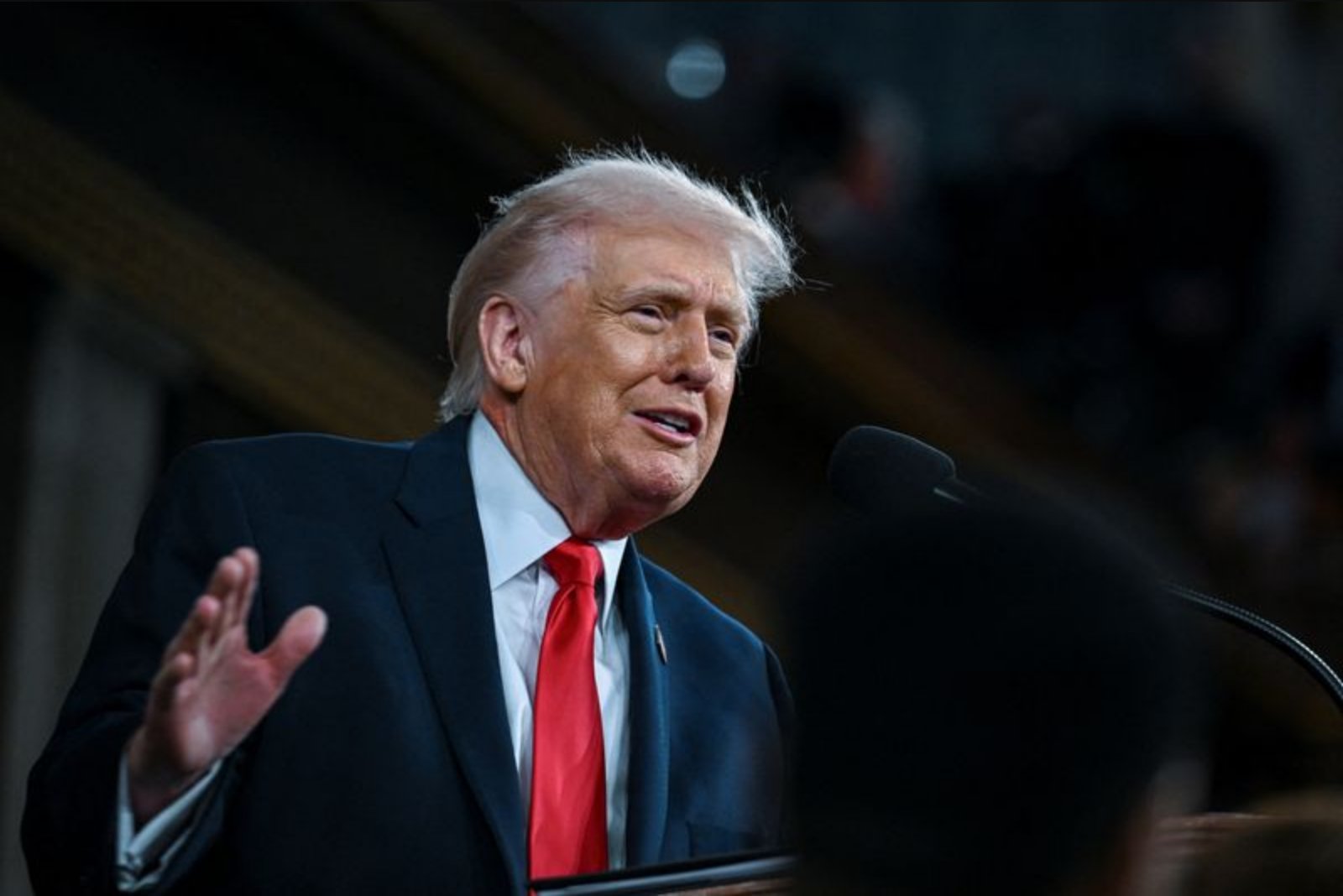
President Donald Trump is scheduled to travel to Corpus Christi, Texas on Friday to emphasize his economic message and fossil fuel priorities as Republican voters in the state head into competitive primary elections. The visit comes days before contested GOP primaries and positions the president close to several U.S. House districts where Hispanic voters could be decisive in November.
The trip does not mark a deep intervention in the state’s marquee U.S. Senate contest, where the president has largely remained on the sidelines. Instead, it places him in a region where local and national-level races intersect with energy policy and economic messaging.
White House press secretary Karoline Leavitt said in a statement that the president will use the Texas stop to promote his "drill baby drill" agenda. The choice of Corpus Christi is notable for economic and energy reasons: the area is the largest exporter of liquefied natural gas in the United States, with 42% of the nation’s LNG passing through its port.
Trump’s event follows a warning from a Texas Republican who described her recent loss in a state legislature race, despite receiving the president’s endorsement, as a "wake-up call" for the party. The visit is being framed by the White House as a continuation of the themes highlighted in the president’s State of the Union address, particularly contrasts with Democrats on affordability and immigration enforcement as both parties prepare for midterm battles for control of Congress later this year.
Midterm elections traditionally act as a referendum on the sitting president, and Trump has cautioned that his legislative and policy agenda would be imperiled if Republicans lose control of Congress. For now, though, Republicans in Texas must determine which candidates will carry the party’s banner into the November general election.
Public opinion polling shows Senator John Cornyn, who has served since 2002, trailing two challengers in a highly competitive Senate primary. Texas Attorney General Ken Paxton and U.S. Representative Wesley Hunt are polling ahead of Cornyn in the state’s most contested race. Unlike in other states, where the president publicly encouraged challenges to incumbents, Trump has largely refrained from intervening in the Texas Senate contest and allowed the candidates to battle it out amid personal accusations and claims of ineffectiveness.
Republican contenders in both the Senate contest and some House races are expected to attend the president’s Corpus Christi event on Friday.
At the president’s urging last year, Texas Republicans initiated a redistricting push aimed at improving the party’s chances in U.S. House races. With the new map now in effect, Republican strategists estimate the party could pick up up to five additional seats across the state. Those potential gains are part of a broader effort to shore up the GOP’s Congressional standing.
Hispanic voters in south Texas are widely viewed as central to the party’s electoral prospects. State Senator Adam Hinojosa, who is the first Republican to represent the Rio Grande Valley in the Texas Senate since 1874, said voters are focused on economic stability and opportunity. "We need the job opportunities, we need to make sure that our families are taken care of, we need to be able to afford all of the groceries and things to have a decent lifestyle," Hinojosa said in an interview. He credited Trump’s border policy and pro-oil platform for energizing parts of the Republican base and said he expected the president’s visit to have a mobilizing effect.
Trump’s policy priorities have emphasized maximizing U.S. fossil fuel output, including rolling back environmental regulations and simplifying permitting processes for energy projects. Those moves have benefited energy-producing regions such as southern Texas, where oil, gas and export infrastructure are significant components of the local economy.
National polling underscores the challenge of converting those benefits into broad economic approval. A Reuters/Ipsos poll found that 36% of respondents nationwide approved of the president’s handling of the economy, while 56% disapproved. Local sentiment in Corpus Christi is mixed: Tiffany Ritchie, a 50-year-old self-described independent who voted for Trump in the 2024 presidential election, said in an interview that it is uncertain whether the president fully understands economic concerns. "It’s hard to know if he is perceptive to economic concerns," she said, adding that the president is "the kind of character who will just kind of throw anything against the wall and see if it sticks."
Republican strategists are also focused on two Democratic-held border districts that they believe are vulnerable. One is the Brownsville-area seat held by Vicente Gonzalez since 2016, and the other is the Laredo-area seat represented by 11-term Representative Henry Cuellar. The president pardoned Cuellar and his wife in December, a move that preceded the president publicly backing a local Republican judge, Tano Tijerina, and accusing Cuellar of an "act of disloyalty" for seeking re-election as a Democrat.
Democrats have pushed back on the president’s messaging. Madison Andrus, a spokesperson for the Democrats’ campaign arm, said in a statement: "If Donald Trump wants to remind South Texans how terrible the economy is, he can be our guest."
Trump’s visit to Corpus Christi will therefore serve multiple purposes: reinforcing his economic and energy policy themes, signaling support to Republican candidates in nearby districts and drawing attention to a strategic export hub for U.S. liquefied natural gas. How that combination of policy emphasis, local economic ties and campaign theater affects primary and general election outcomes will depend on voter responses in the coming weeks.