
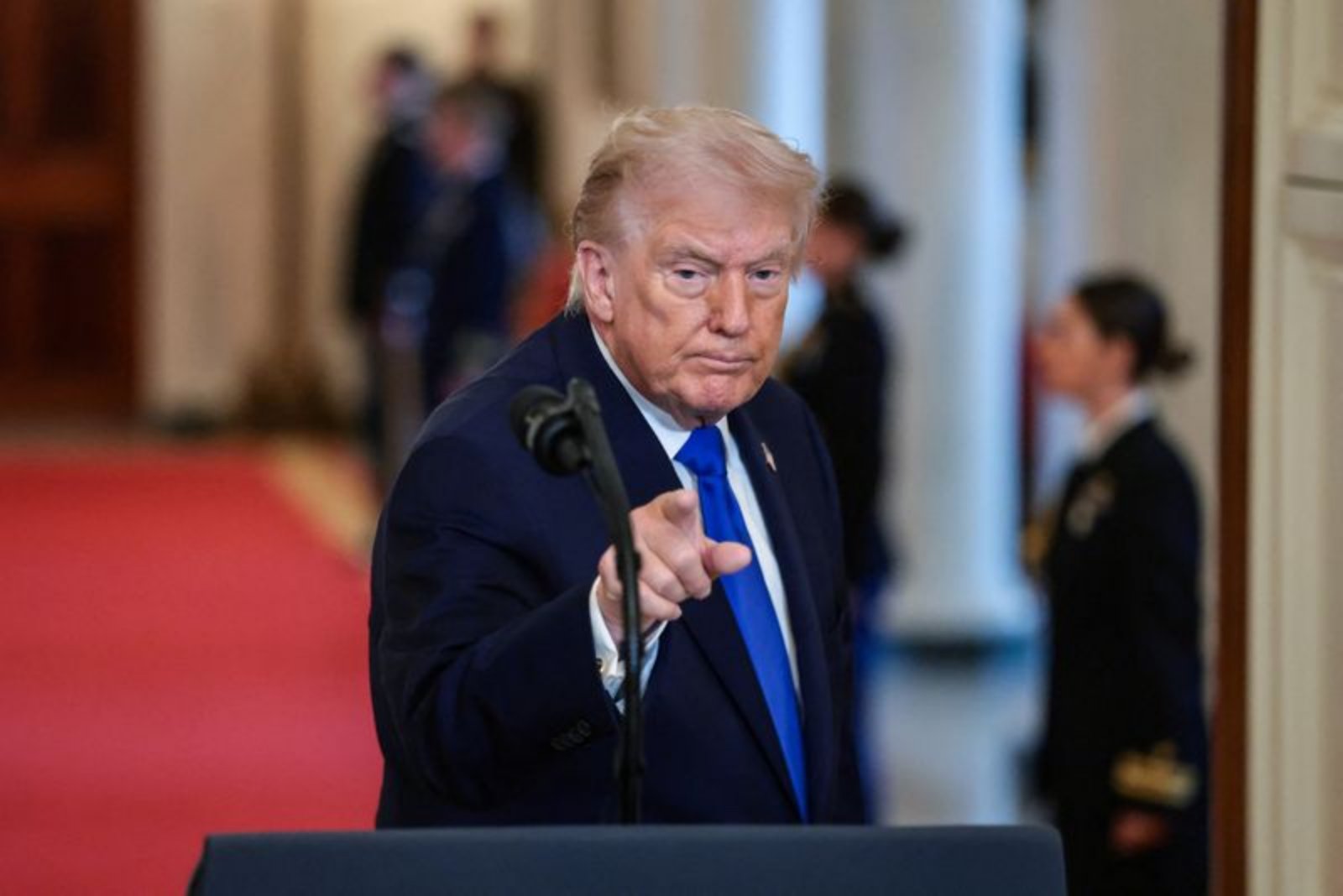
President Donald Trump is scheduled to deliver the traditional State of the Union address to a joint session of Congress on Tuesday at a time when his administration is confronting a range of political and policy challenges.
The televised, prime-time speech - his second address to Congress in the 13 months since he returned to the White House - arrives as Trump’s approval ratings have weakened, concerns about Iran have grown, and many Americans continue to wrestle with rising living costs. With November’s midterm elections approaching, the address provides the president an opportunity to present his case to voters and to argue for Republican control of Congress.
Domestic political and policy friction has intensified in recent days. The Supreme Court issued a ruling that invalidated Mr. Trump’s global tariff regime, undercutting a central piece of his trade policy. At the same time, newly released economic data showed the economy slowed by more than expected while inflation picked up pace.
Inside the executive branch, operations at the Department of Homeland Security are largely on hold amid a dispute between congressional Republicans and Democrats tied to the administration’s assertive immigration tactics. That standoff followed the fatal shootings of two U.S. citizens in Minneapolis, which have heightened scrutiny of enforcement actions. The administration is also still contending with fallout from the public release of government files related to convicted sex offender Jeffrey Epstein.
Foreign policy questions add another layer of complexity. Officials say the administration has shifted additional naval assets toward the Middle East and is developing contingency plans regarding Iran that could, according to U.S. officials, include options involving a change of government. Those movements and planning have increased concern that the administration may be moving closer to military confrontation with Iran over its nuclear program - a subject Trump is expected to address in his remarks.
Two White House officials, speaking on condition of anonymity, told reporters that the president will discuss his plans for Iran during the speech but did not provide specifics. The officials said he will also highlight what he views as a record of brokering peace agreements.
Timing adds symbolic weight: the speech falls on the fourth anniversary of Russia’s invasion of Ukraine, a reminder of a conflict the president has previously said he could have ended "in 24 hours." The administration has not signaled a resolution of that war in advance of the address.
Another central item on the agenda is the Supreme Court’s recent decision on tariffs. The president has indicated he will argue the court was wrong and outline alternative statutory avenues he could use to restore most of the levies. Trump reacted angrily to the ruling last week and launched personal attacks at several justices - comments that could create tense moments during the speech, since at least some of the nine justices are expected to attend.
White House aides and Republican campaign advisers, mindful of the uphill political fight ahead in the midterms, have urged the president to concentrate on Americans’ economic concerns. Campaign officials see the cost of living as a central issue for voters; Trump’s 2024 victory rested in part on promises to ease household expenses, but public opinion polls indicate many voters remain unconvinced by the administration’s progress.
Administration officials acknowledge the political sensitivity of economic messaging. One White House official said Trump will "claim victory on the economy," framing his argument around the claim that he inherited a weak economy from his Democratic predecessor and asserting that Democrats have exaggerated affordability issues. The administration intends to point to stock market gains, private-sector investments and recent tax legislation as evidence of economic improvement.
At the same time, the president plans to emphasize his administration’s hardline border policies and deportation campaign despite polling that suggests a majority of Americans believe enforcement has gone too far in rounding up undocumented immigrants.
Inside the White House, advisers have crafted the speech with allowances for unscripted moments. The president, known for departing from prepared remarks, said on Monday that his address would be lengthy. Observers note that his 100-minute speech to Congress last March - while technically not a State of the Union - was the longest such address in modern history. White House officials say the 2025 address was written to permit impromptu remarks.
Political theater is expected on both sides of the aisle. Last year, some Democrats interrupted the president’s speech with jeers and staged a walkout in protest. This year, more than 20 Democrats in the House and Senate have indicated they will not attend, opting instead for an outdoor rally on the National Mall.
Senator Jeff Merkley of Oregon, identified as one of those skipping the address, told reporters the alternative event aims to offer a more "honest description" of the president’s record and to counter what he described as a "propaganda push" from the administration. The official Democratic response to the State of the Union will be given by Virginia Governor Abby Spanberger. A Spanish-language rebuttal will be delivered by Democratic Senator Alex Padilla of California, who was physically shoved to the ground and handcuffed last year after attempting to ask a question of Homeland Security Secretary Kristi Noem at a press conference.
The address presents a concentrated moment for the president to restate achievements and lay out the administration’s priorities. With multiple arenas of contention - the economy, immigration enforcement, judicial pushback on trade policy, and mounting tensions with Iran - the speech is likely to be closely watched for signals about how the White House plans to address both domestic concerns and foreign policy risks ahead of the midterm elections.