
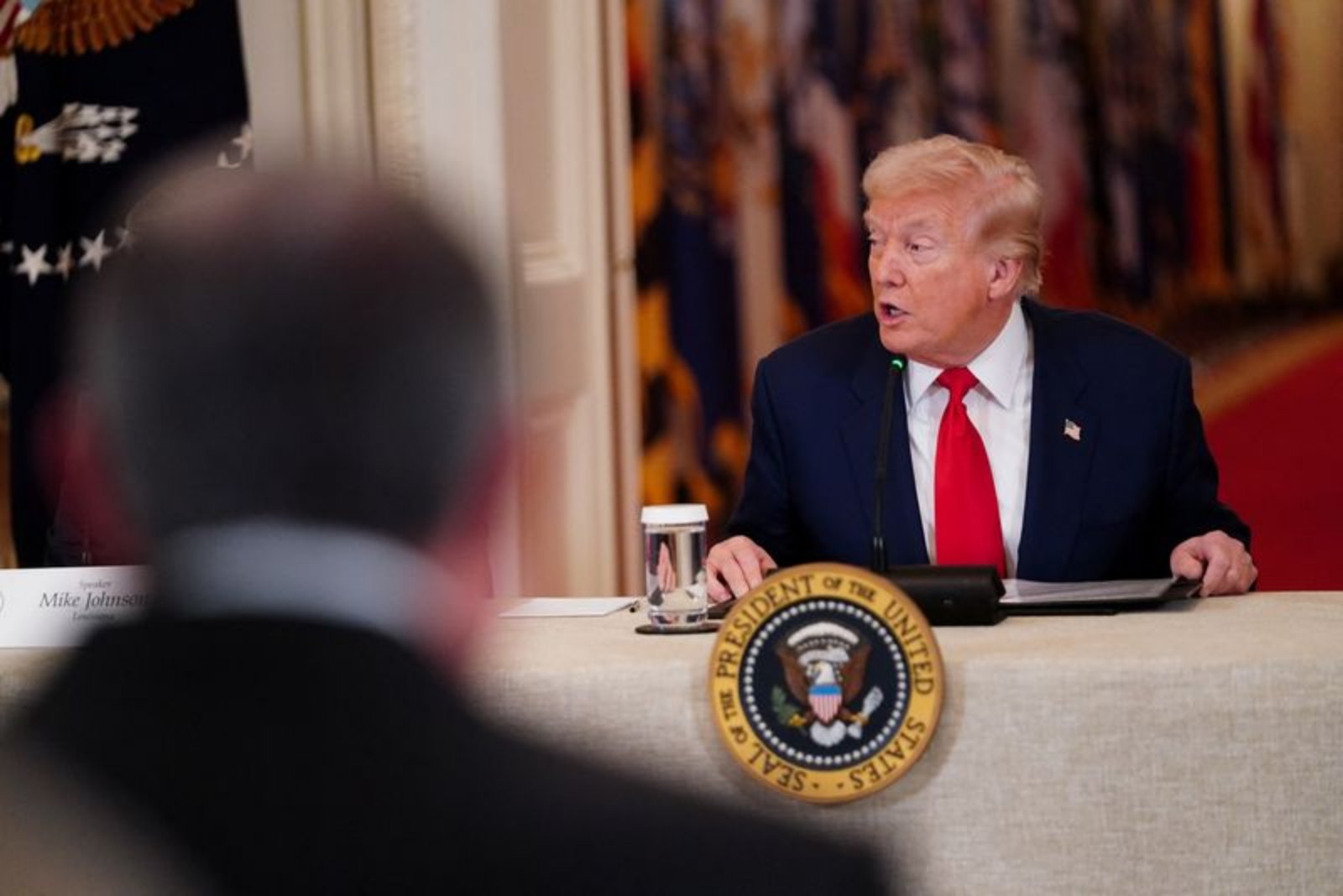
President Donald Trump on March 6 told a gathering of sports leaders in the White House East Room that the rapidly rising expense of underwriting college football is undermining other school athletic programs and needs to be addressed through legislation - and possibly an executive order.
Trump singled out name, image and likeness contracts for college players, saying they have become a costly obligation for institutions and are prompting some schools to discontinue sports outside of football, including fencing.
"We have to save college sports," he said at the event, framing the debate as a financial strain that threatens the breadth of collegiate athletics. He indicated that Congress should act to alter how NIL contracts are used, and added that he may resort to an executive order if lawmakers do not move quickly enough.
Until five years ago, the NCAA prohibited college athletes from receiving payment for the use of their name, image and likeness. A Supreme Court ruling in 2021 cleared the way for student-athletes to be paid for NIL, a change Trump referenced as a pivotal shift in the financial landscape of college sports.
"The amount of money being spent and lost by otherwise very successful schools is astounding," Trump said, describing the scale of the outlays associated with the new era of athlete compensation.
House Speaker Mike Johnson, who spoke at the same event, said lawmakers are working on legislation intended to address the issue and that the proposal enjoys bipartisan support. "We want to accomplish the necessary ends, and we think we’re very close," Johnson said.
Former Alabama football coach Nick Saban urged the creation of an effective revenue-sharing system and called for a solution to the growing eligibility window for some football players, noting concerns about athletes remaining eligible to play for six or seven years, into their mid-twenties.
The comments from the president, the House speaker and a prominent coach highlight the political and policy focus on how NIL-related payments and eligibility rules are reshaping the financial model for college athletics and prompting calls for federal intervention.