
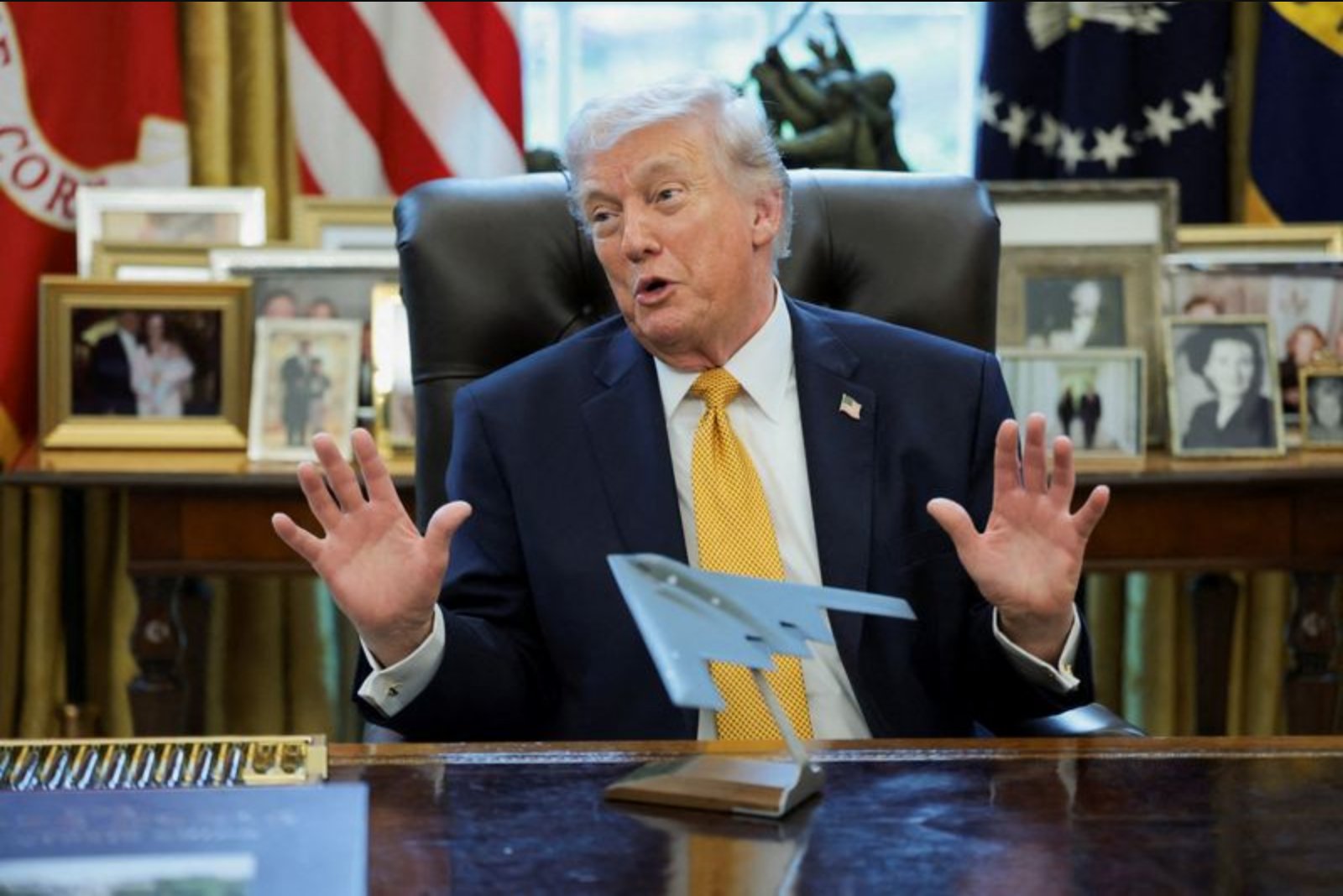
President Donald Trump on Monday reiterated that he does not believe someone with a learning disability should hold the office of president, using comments made by California Governor Gavin Newsom about his dyslexia as the basis for his view. Speaking in the Oval Office, Trump said Newsom has "admitted that he is a -- that he has learning disabilities," and that while he supports people with learning disabilities generally, he does not want such a condition for the nation's president.
"Honestly, I’m all for people with learning disabilities, but not for my president. I don’t want - I think a president should not have learning disabilities, okay?" Trump said to reporters. He acknowledged the remarks were controversial, adding: "And I know it’s highly controversial to say such a horrible thing - the president of the United States. Gavin Newscum admitted that he has learning disabilities, dyslexia, everything about him is dumb."
The comments were at least the third time in recent days that Trump has singled out Newsom over his dyslexia, a condition the governor has discussed publicly and in his book. Newsom, who is frequently mentioned as a potential Democratic contender for the 2028 presidential election, has traded heated barbs with Trump; the president has referred to the California governor using the derogatory nickname "Newscum."
Newsom has in earlier conversations described aspects of his academic and professional experience in relation to his dyslexia. At a February discussion with the mayor of Atlanta, Georgia, the governor spoke about having a lower SAT score and said he does not read speeches as governor because of his dyslexia. The International Dyslexia Association defines dyslexia as a learning disability involving difficulties in word reading or spelling that affect accuracy and speed.
Trump reiterated similar points during a Friday interview with Fox News’ Brian Kilmeade. In that interview he said: "He admitted he had learning disabilities. Somebody said, ’Well, what’s wrong with that?’ I said, ’That’s okay, but not for the president,’" and added, "Presidents can’t have a learning disability. If you have that, that’s not a good thing."
As of Monday, Newsom’s team had not immediately responded to the president’s latest public remarks. The exchange follows an earlier online remark by Trump last week calling Newsom "a cognitive mess," to which the governor replied on social media with a post that included: "I spoke about my dyslexia. I know that’s hard for a brain-dead moron who bombs children and protects pedophiles to understand."
The back-and-forth highlights a pattern of personal attacks between the president and a potential future rival. Both the president’s repeated targeting of Newsom’s dyslexia and the governor’s blunt social media rebuttal underline how private medical or learning information disclosed publicly by a politician can become focal points in political confrontation. The public remarks from both sides remain unaccompanied by substantive discussion in this reporting about policy differences or other aspects of governance.