
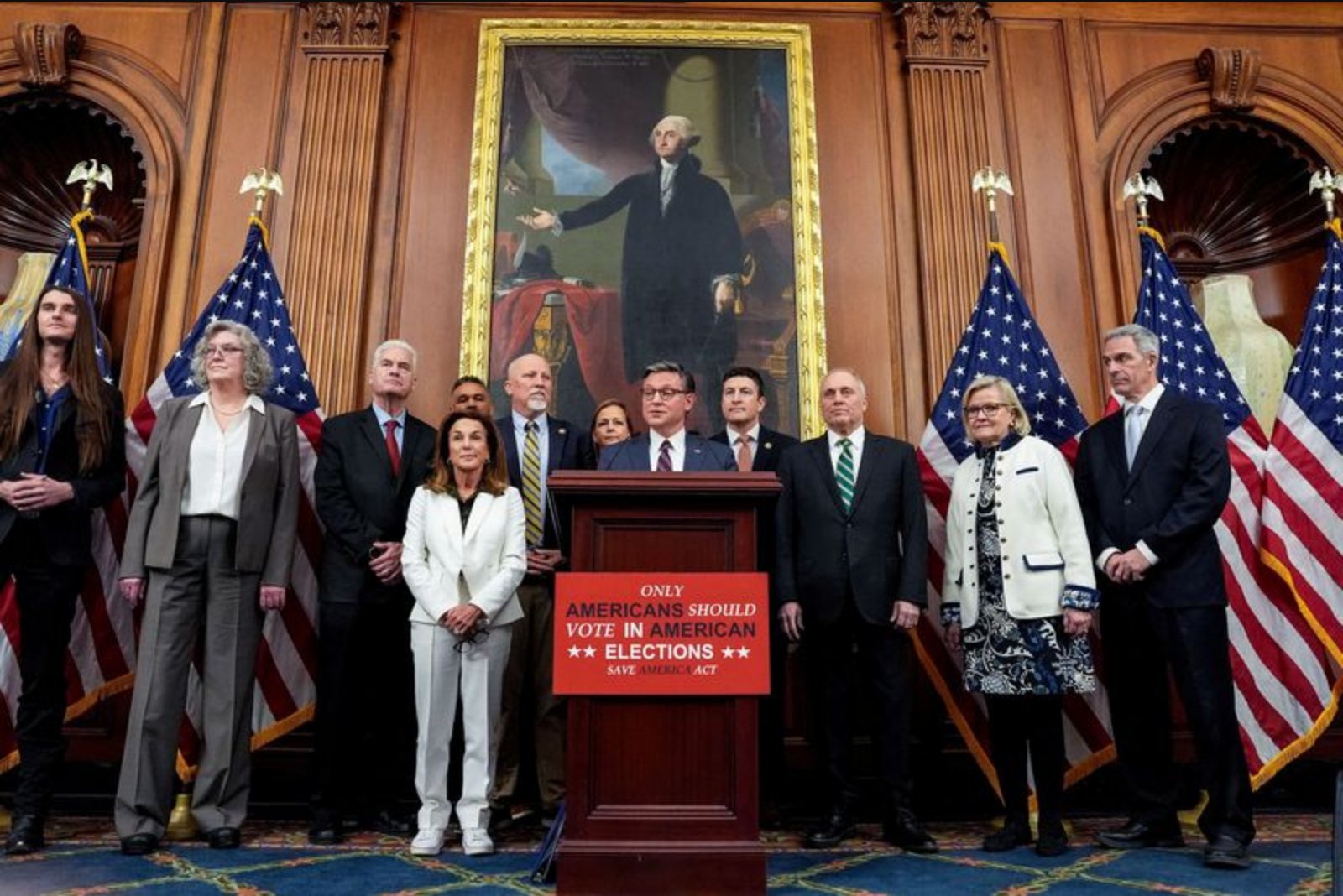
WASHINGTON, Feb 13 - President Donald Trump said on Friday he will move to require voter identification for the November midterm elections whether Congress enacts such measures or not, and that he intends to issue an executive order addressing the issue. He did not provide a legal justification for how the federal executive could impose such a requirement, nor did he offer specifics about the forthcoming order.
Trump is publicly supporting a bill approved by the House of Representatives that would require proof of citizenship to vote in U.S. elections. That measure, however, is not expected to gain traction in the Senate, where floor action is unlikely. The legislation is the most recent iteration of election-related proposals that first surfaced during the 2024 presidential campaign and that were motivated by the former president's assertions about the 2020 election.
In a post on Truth Social, Trump said: "I have searched the depths of Legal Arguments not yet articulated or vetted on this subject, and will be presenting an irrefutable one in the very near future!" He offered no further explanation about the legal theory he referenced.
The U.S. Constitution assigns primary responsibility for administering elections to state governments, and most voting operations are carried out by county and local officials. The contrast between federal action and state control of elections underscores a core structural tension surrounding efforts to change voting rules nationally.
Republicans control narrow majorities in both chambers of Congress. Despite that, the House-passed bill faces low odds of advancing in the Senate. The article of legislation is the latest in a line of measures that Congress has considered previously; similar proposals cleared the House on two occasions - last April and in 2024 - but failed to secure approval in the Senate.
Incumbent presidents' parties traditionally lose seats in midterm elections, a political reality noted alongside the unfolding policy dispute over voter identification and voting requirements. The president's public statements leave open the question of how an executive order would interact with state authority over election administration and with other branches of government.
Summary
President Trump announced his intention to require voter ID for the November midterms through an executive order if Congress does not act, while backing a House-passed proof-of-citizenship bill that is unlikely to advance in the Senate. He claimed to be developing a strong legal argument but provided no details.