
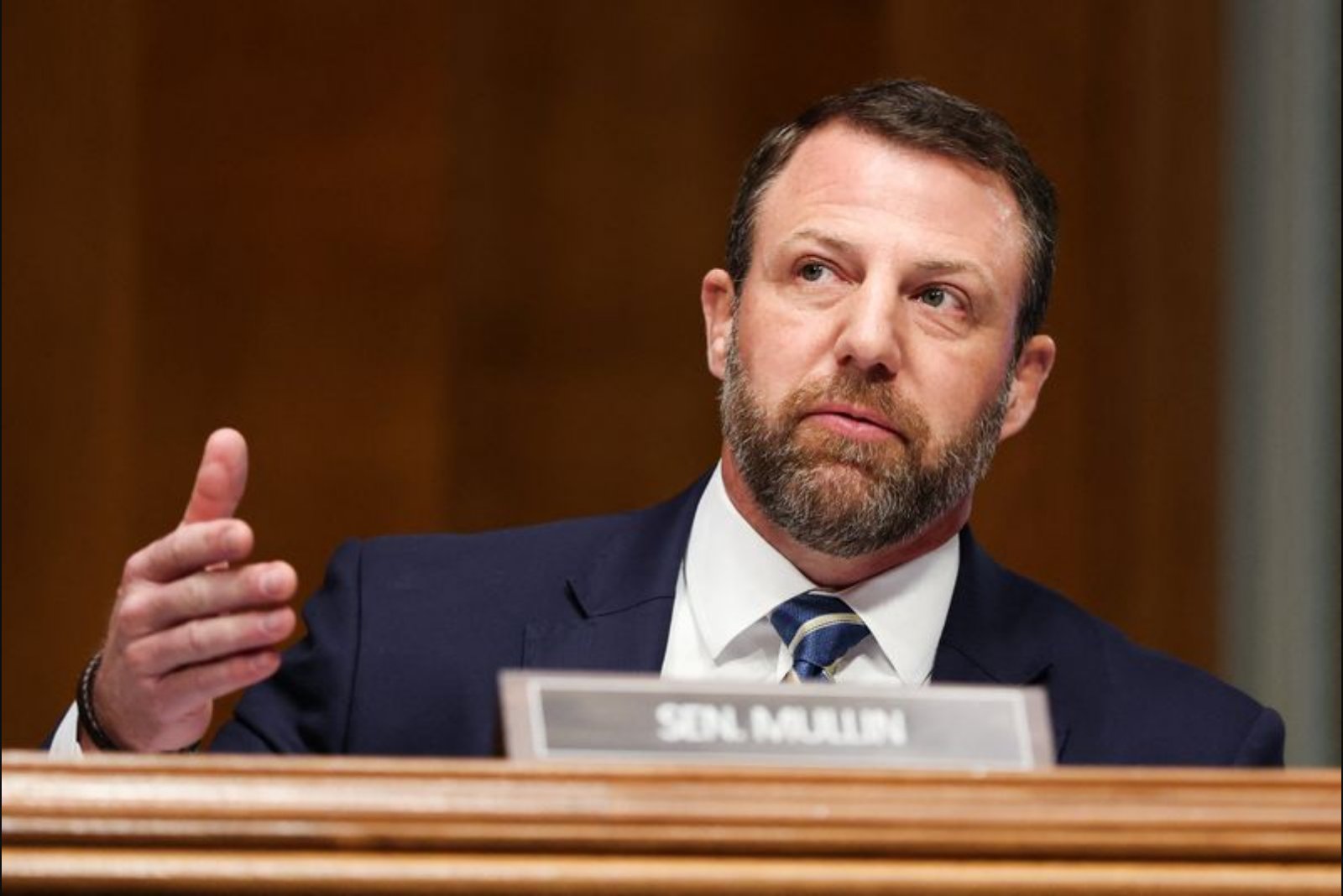
President Donald Trump said on Thursday that Senator Markwayne Mullin will take over as the United States Secretary of Homeland Security (DHS), a significant personnel change that amplifies questions about the future course of the administration’s immigration policies.
"I am pleased to announce that the Highly Respected United States Senator from the Great State of Oklahoma, Markwayne Mullin, will become the United States Secretary of Homeland Security (DHS), effective March 31, 2026," Trump wrote on Truth Social. At the same time, the president said that Kristi Noem, who has headed DHS through a period of aggressive immigration enforcement, will leave the department to serve as "Special envoy for The Shield of the Americas."
Background and political fallout
Noem, a former governor of South Dakota, became one of the most visible members of Mr. Trump's Cabinet after her January 2025 confirmation to lead the 260,000-employee Department of Homeland Security. She used social media to characterize immigrants in starkly negative terms, frequently highlighting cases involving alleged criminal offenders while employing vitriolic language, and participating directly in enforcement operations on the ground in locations such as New York City.
The secretary drew sharp criticism in January after she quickly described two U.S. citizens who were fatally shot by federal immigration agents in Minneapolis as having committed "domestic terrorism." Subsequent video footage that emerged following those deaths undercut the assertions made by Noem and other Trump administration officials that the two deceased, identified as Renee Good and Alex Pretti, had been violent aggressors. The public reaction to those deaths prompted the administration to shift toward a more targeted enforcement approach in Minnesota after months of broad sweeps that provoked clashes with residents opposing the crackdown.
The Minneapolis incidents also produced congressional consequences: Democrats in the U.S. House of Representatives moved to impeach Noem, and at least two Republican members of Congress publicly called for her removal. During congressional hearings in March, lawmakers from Democrats and a number of Republicans criticized Noem’s tactics and her management of DHS, raising concerns that included an approximately $220 million advertising campaign that heavily featured the secretary.
Operational style and enforcement actions
Under Noem’s leadership, masked immigration agents conducted operations in major cities including Los Angeles, Chicago and Washington, D.C., searching neighborhoods and even Home Depot parking lots for people suspected of violating immigration laws. The approach, which included detaining some U.S. citizens and deploying tear gas in street confrontations, dovetailed with a stated administration objective of substantially increasing deportations - a goal that fell short last year of the stated aim of 1 million removals.
Noem’s tenure also saw a shift in legal immigration policy. Consistent with the broader administration agenda, she moved to curtail certain legal immigration pathways and tighten vetting procedures. She ended several Temporary Protected Status programs that had provided work permits to hundreds of thousands of immigrants from countries including Venezuela and Haiti, actions that have drawn legal challenges.
She visited a maximum-security prison in El Salvador where Venezuelan immigrants deported by the administration were reported to be held without charges or access to lawyers. Critics say Noem’s rhetoric and enforcement strategy demonized immigrants and increasingly targeted non-criminal, working immigrants and families. During Noem’s time in charge, deaths in immigration detention reached a two-decade high while staff in DHS oversight offices were cut sharply.
Policy control and the question ahead
Despite Noem’s prominent public role, White House Deputy Chief of Staff Stephen Miller has been described as controlling the administration’s immigration policy. The appointment of Mullin and Noem’s reassignment raise central questions about whether the White House will pursue a more expansive mass-deportation strategy or continue moving toward more narrowly focused enforcement in areas where operations created political blowback.
Noem, 54, had posted harsh language on social media toward immigrants convicted of crimes, referring to some as "scumbags" even as statistics indicated that the number of non-criminals arrested by immigration authorities rose under the administration. Her public statements included recommending a sweeping travel ban after an Afghan immigrant was accused of attacking National Guard members in Washington, D.C.; she said she advised the president to impose "a full travel ban on every damn country that’s been flooding our nation with killers, leeches, and entitlement junkies."
The leadership change at DHS comes amid competing political pressures - public and congressional criticism of enforcement tactics, legal challenges to policy moves such as the ending of Temporary Protected Status programs, and an administration objective to reduce illegal border crossings. Officials and stakeholders will be watching to see whether the new DHS secretary maintains the aggressive tactics that defined much of Noem’s tenure or pursues a recalibrated approach.
Implications for oversight and operations
The turnover also highlights organizational and oversight concerns at DHS. The department’s large workforce and the recent reductions in oversight staff intersect with intense operational activity in urban enforcement operations and detention facilities. How the new leadership chooses to address oversight staff levels, detention conditions and enforcement priorities will be closely scrutinized by lawmakers and advocacy groups.
As the March 31, 2026 effective date for Mullin’s confirmation approaches, the administration faces ongoing scrutiny over the direction and consequences of its immigration agenda.