
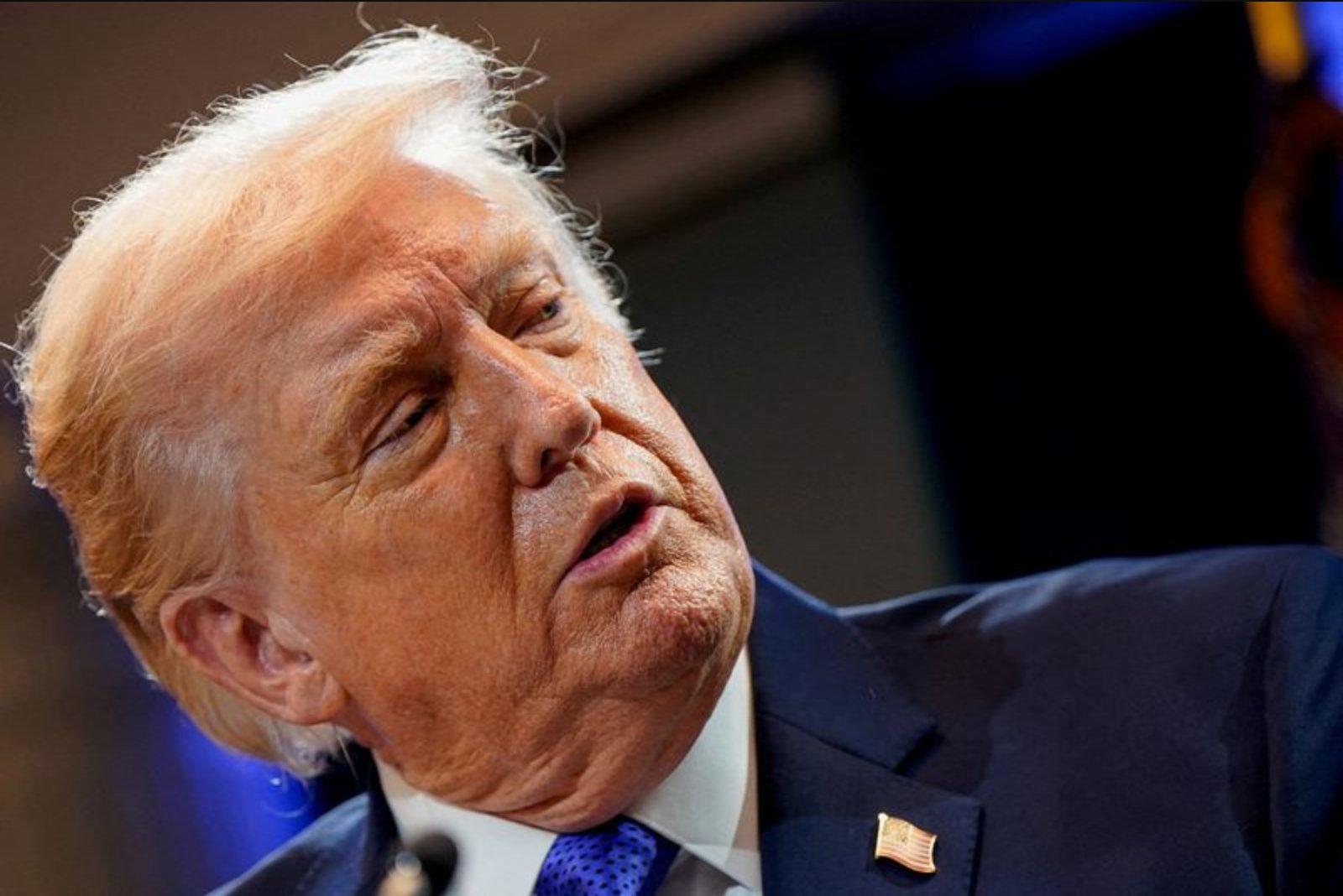
President Donald Trump staged a pointed and personal rebuke of the U.S. Supreme Court on Friday after the court struck down his administration's global tariffs, castigating six of the justices who joined the majority and lavishing praise on the three who dissented.
Speaking from the White House briefing room, Trump opened a roughly 45-minute statement by calling the decision "deeply disappointing," and said, "And I’m ashamed of certain members of the court - absolutely ashamed - for not having the courage to do what’s right for our country." He delivered the remarks from behind a dimly lit lectern and repeatedly assailed the motivations and patriotism of some justices while declining to provide evidence for an assertion that the court "has been swayed by foreign interests."
The Supreme Court’s opinion invalidating the tariffs was authored by Chief Justice John Roberts. It was joined by two conservative justices appointed by Trump during his first term, Neil Gorsuch and Amy Coney Barrett, and by the court’s three liberal members. The decision represented a notable setback for the president, who had relied on the tariffs as a central tool of his trade policy and had invoked a statute designed for national emergencies to impose them.
Trump singled out Gorsuch and Barrett for criticism, saying of them, "I think it’s an embarrassment to their families, you wanna know the truth, the two of them." By contrast, he offered effusive praise for the three dissenting justices - Clarence Thomas, Samuel Alito and Brett Kavanaugh - calling them "strong" and expressing pride in Kavanaugh, whom he pointedly thanked.
"I’d like to thank and congratulate Justices Thomas, Alito, and Kavanaugh for their strength and wisdom and love of our country, which is, right now, very proud of those justices," Trump said. He added, "When you read the dissenting opinions, there’s no way that anyone can argue against them."
Justice Brett Kavanaugh, one of Trump's appointees, authored a dissent joined by Thomas and Alito. In his dissent, Kavanaugh argued that the court’s ruling did not necessarily prevent the president "from imposing most if not all of these same sorts of tariffs under other statutory authorities," and that "the court’s decision is not likely to greatly restrict presidential tariff authority going forward." He wrote further, "In essence, the court today concludes that the president checked the wrong statutory box by relying on (an emergency economic powers law) rather than another statute to impose these tariffs."
Trump repeatedly referenced Kavanaugh's loyalty and qualifications during his remarks, noting that he appointed Kavanaugh to a lifetime seat on the court in 2018 and that he had supported him through a contentious Senate confirmation process in which Kavanaugh denied decades-old allegations of sexual assault. "I would like to thank Justice Kavanaugh for his, frankly, his genius and his great ability," Trump said. "Very proud of that appointment."
Beyond his targeted comments about individual justices, the president also leveled broader attacks at the three liberal justices who joined the majority, labeling them "the Democrats on the court" and alleging partisan opposition to measures he tied to strengthening the nation. "They’re an automatic no, just like in Congress. They’re an automatic no. They’re against anything that makes America strong, healthy and great again," he said. He added, "They also are a, frankly, disgrace to our nation, those justices."
President Trump's remarks marked a strikingly personal denunciation from a sitting president directed at the country's highest judicial body. While presidents have historically criticized Supreme Court rulings that go against their policies, the tone and personal nature of Trump’s comments, and his specific naming and shaming of justices he appointed, stood out for their intensity.
The exchange comes amid a broader pattern over the past year in which the court - which currently has a 6-3 conservative majority - has in several emergency decisions allowed expansive assertions of executive power, though Friday’s ruling represented a clear exception. Members of the administration and the president himself over the last year have also publicly criticized lower court judges whose rulings they viewed as obstructive since Trump returned to office in January 2025.
Summary
The Supreme Court struck down President Trump’s global tariffs in an opinion authored by Chief Justice John Roberts and joined by Neil Gorsuch, Amy Coney Barrett and the three liberal justices. Trump criticized six of the justices in personal terms and praised the three dissenters, including his appointee Brett Kavanaugh, whose dissent argued that similar tariffs might still be imposed under other statutory authorities.
Key points
- The court’s majority, authored by Chief Justice John Roberts and joined by Gorsuch and Barrett, invalidated tariffs imposed under an emergency authority.
- Trump publicly chastised the justices who joined the majority and praised the dissent by Justices Thomas, Alito and Kavanaugh.
- Kavanaugh’s dissent said the ruling did not necessarily prevent the president "from imposing most if not all of these same sorts of tariffs under other statutory authorities," and suggested the decision stemmed from reliance on an inappropriate statutory basis.
Sectors likely affected
- Trade-exposed industries and exporters/importers reliant on tariff policy.
- Manufacturing and supply-chain dependent sectors sensitive to changes in tariff authority.
Risks and uncertainties
- Legal uncertainty over the statutory basis for presidential tariff actions - the ruling hinged on the specific law the president used, and Kavanaugh suggested other statutes could be invoked.
- Increased political tension and criticism of the judiciary from the executive - Trump’s personal attacks on justices could add to institutional strain and public controversy.
- Market and policy volatility for sectors tied to trade policy, as the decision and public reaction create questions about future tariff authority and enforcement.
The article reflects the statements and judicial opinions delivered in the public remarks and court filings and does not introduce additional facts beyond those presented during the events described.