
Politics February 24, 2026

Trump Frames Economy as Strength While Voters Express Persistent Frustration

State of the Union highlights economic gains touted by the White House amid voter unease and geopolitical tensions

By Caleb Monroe
Trump Frames Economy as Strength While Voters Express Persistent Frustration

President Donald Trump used his State of the Union address to emphasize economic indicators he says are improving - including lower inflation, mortgage and gas costs, rising stock prices, increased oil output, foreign investment and gains in construction and factory employment. His portrayal contrasts with data and public sentiment indicating inflation stalled and ticked up last year, a net loss of factory jobs, and widespread voter dissatisfaction about the cost of living and his handling of the economy. Strategists warn that the message could complicate Republican efforts to retain control of Congress in November's midterms as tensions with Iran add to the backdrop.

Key Points

  • Trump emphasized falling inflation, mortgage rates and gas prices alongside gains in the stock market, oil production, foreign direct investment, and construction and factory jobs - impacting markets, energy and construction sectors.
  • Economic data cited elsewhere show inflation stalled and ticked up last year and that the economy lost factory jobs, which affects manufacturing and labor-sensitive sectors.
  • Public opinion remains skeptical: polling indicates 56% disapprove and 36% approve of the president's handling of the economy, a dynamic relevant for election-sensitive market sentiment.

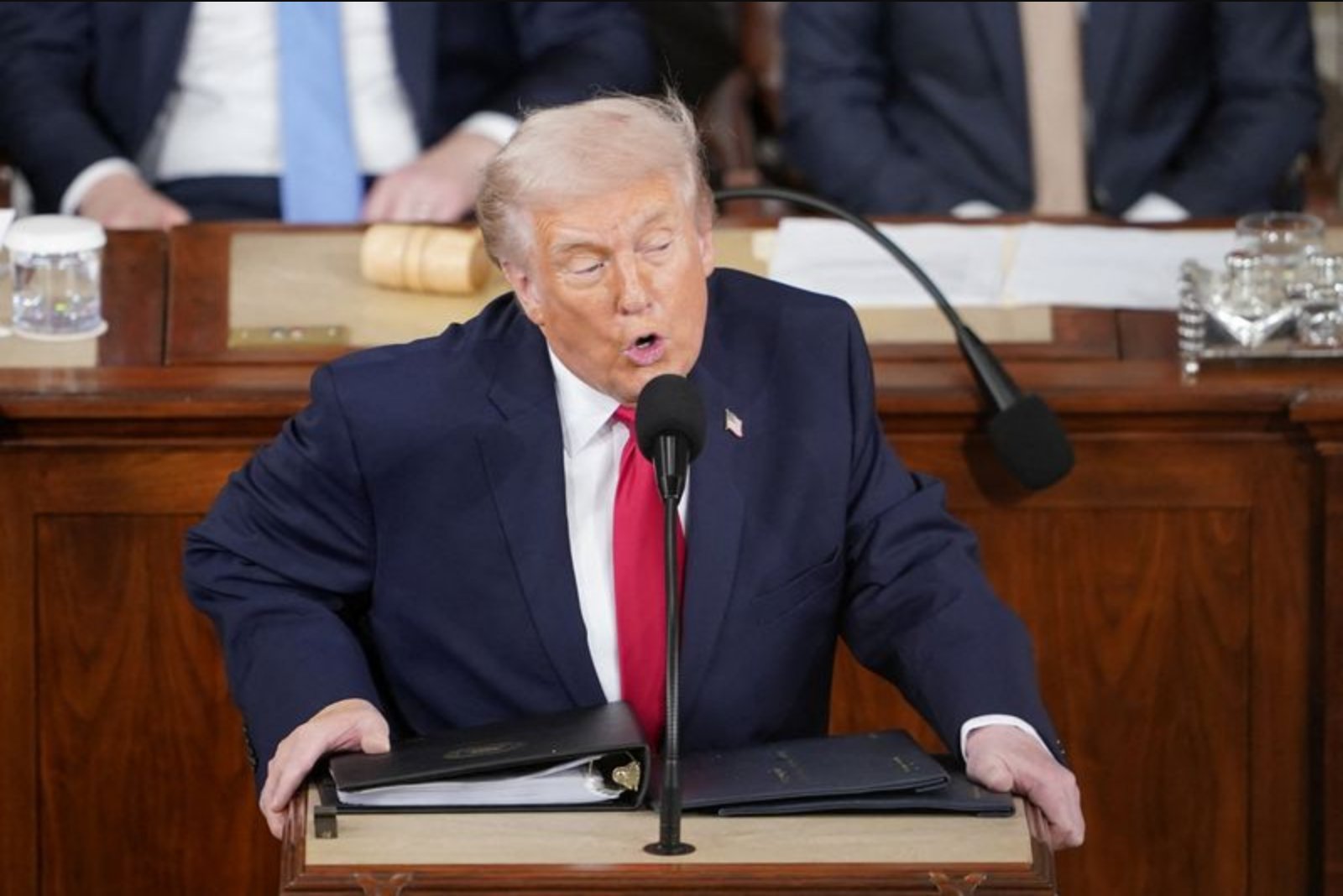
WASHINGTON, Feb 24 - President Donald Trump delivered his State of the Union address to a joint session of Congress on Tuesday, presenting an upbeat economic narrative as the White House seeks to consolidate Republican backing ahead of November's midterm elections.

Mr. Trump anchored much of his speech on financial themes, arguing that key measures are moving in a favorable direction. He said inflation, mortgage rates and gas prices are falling, while pointing to gains in the stock market, rising oil production, increasing foreign direct investment, and growth in construction and factory jobs.


Despite the positive framing, the president stopped short of fully acknowledging the ongoing strain many Americans feel from higher consumer prices. The broader data cited in recent reporting indicate that inflation stalled and even inched upward last year, and that the economy lost factory jobs over the same period.

Public sentiment presents a further complication for the administration's message. Polling shows a majority of respondents disapprove of Mr. Trump's handling of the economy, with 56% expressing disapproval and 36% approving. That disconnect between the White House narrative and voter perceptions is a concern for Republican strategists who view the president as the primary communicator of economic performance ahead of the midterm contests.


The address came as geopolitical tensions with Iran are on the rise and as voters continue to register frustration over the high cost of living. These broader pressures form part of the backdrop against which control of Congress will be contested: all 435 seats in the House are up for election in November, along with roughly one-third of the Senate. Democrats are aiming to win back majorities in one or both chambers.

Strategists have cautioned that the administration's optimistic economic message could be politically risky. If voters' lived experiences around inflation and labor market changes differ from the picture painted in the speech, the mismatch could influence voting behavior in ways that affect sectors sensitive to consumer demand and political uncertainty.

For now, the State of the Union emphasized growth and strength across several economic indicators, while the observable disconnect between those claims and some underlying data and voter attitudes underscores the political stakes leading into the midterm elections.

Risks

  • Political messaging that diverges from voters' economic experiences could harm Republican prospects in November, introducing electoral uncertainty that may affect equities and fixed-income markets.
  • Rising geopolitical tensions with Iran create an external risk that can influence energy markets and investor sentiment.
  • Persistent cost-of-living pressures and recent labor-market shifts, such as lost factory jobs, present ongoing downside risks for consumer-facing sectors and manufacturing.

More from Politics

Virginia Governor Criticizes Trump's Economic Record and Immigration Tactics in Democratic Response Feb 25, 2026 Rep. Al Green Removed From House Chamber After Displaying Protest Sign as President Took the Podium Feb 24, 2026 Senate Democrat Says FBI Director’s Travel and Choices Hindered High-Profile Probes Feb 24, 2026 U.S. Pulls Back on Proposed ICE Detention Site in Merrimack, New Hampshire Feb 24, 2026 Supreme Court Justices Could Be a Focal Point as Trump Delivers State of the Union Feb 24, 2026