
President Donald Trump used a portion of his annual State of the Union address to present a compact case for potential U.S. action against Iran, arguing that he would not permit what he described as the world’s top sponsor of terrorism to acquire a nuclear weapon. The remarks add to a broader public debate over an expanding U.S. military posture in the Middle East and come as Washington has not fully explained to the American public why it might be preparing its most forceful operation against Iran since the 1979 revolution.
About 90 minutes into his speech to a joint session of Congress, Trump enumerated what he portrayed as threats emanating from Tehran: support for militant groups across the region, the killing of protesters at home, advances in missile technology and an alleged restart of nuclear activities. "The (Iranian) regime and its murderous proxies have spread nothing but terrorism and death and hate," he said during the address.
In addition to accusing Tehran of reviving its nuclear program, Trump said Iran was working on missiles that "soon" would be capable of reaching the United States and held Iran responsible for roadside bombings that have resulted in the deaths of U.S. service members and civilians. The article noted that Iranian state media have claimed Tehran is developing a missile with the range to reach North America.
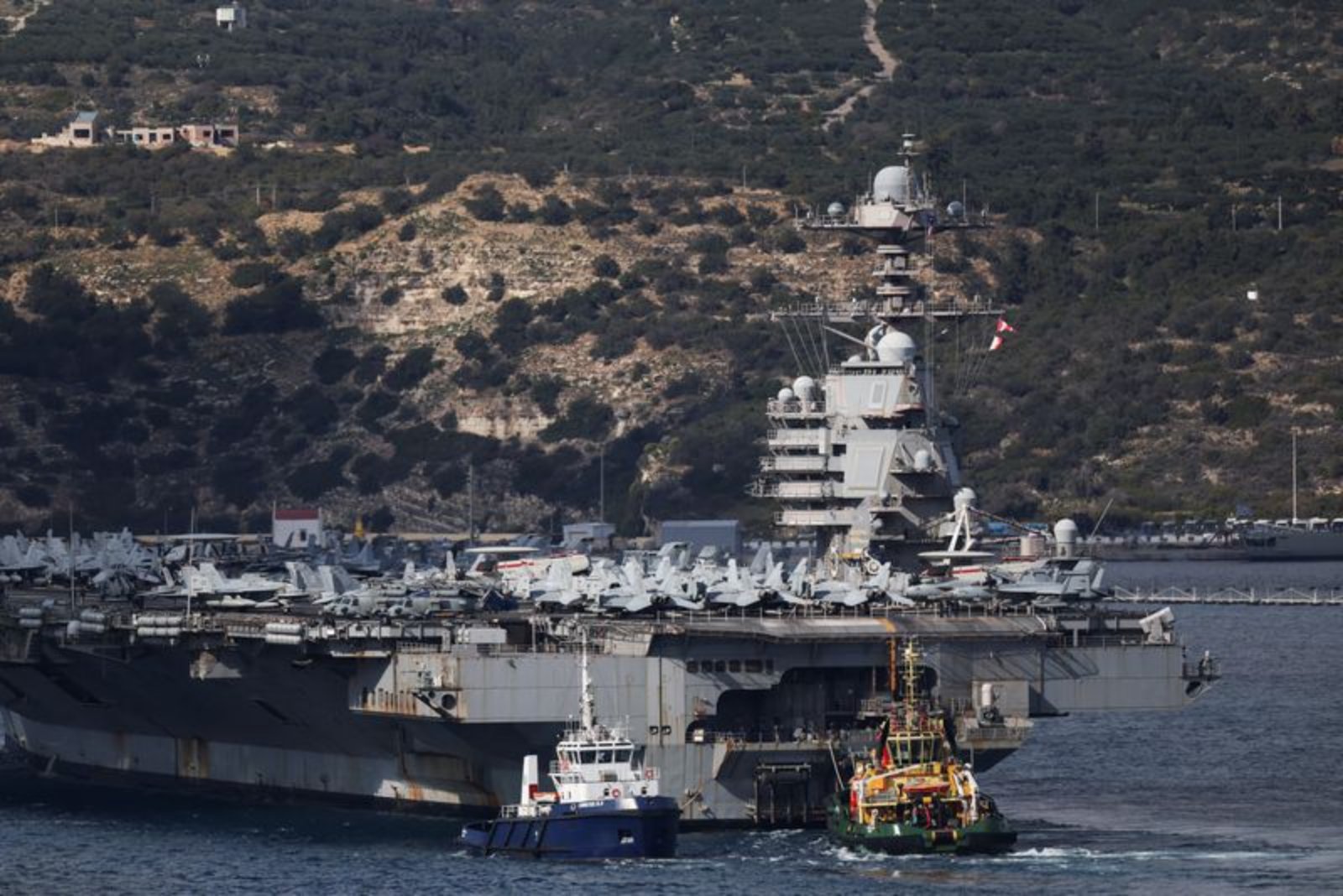
The lead-up to the State of the Union was dominated by the steady deployment of U.S. forces to the region and detailed preparations for a possible military confrontation with Iran. Officials preparing for such a contingency have warned that a conflict could extend for weeks if Tehran does not agree to resolve a long-standing dispute over its nuclear program.
Trump expressed frustration with negotiators who have not produced a resolution, saying in the speech, "They want to make a deal, but we haven’t heard those secret words, ’We will never have a nuclear weapon.’" The president repeated longstanding Iranian assertions that their nuclear work is for civilian energy purposes.
On the subject of domestic unrest in Iran, Trump blamed Tehran for the deaths of thousands of protesters during recent demonstrations. He cited a figure of 32,000 people killed, a number the article describes as far higher than most public estimates. Responding to the claims in the speech, Iran’s foreign ministry spokesperson Esmaeil Baghaei posted on X on Wednesday: "What is claimed about Iran’s nuclear program, Iran’s intercontinental ballistic missile, and the number of people killed in the January unrest is nothing but the repetition of a series of big lies."
Hours before the address, Secretary of State Marco Rubio held a briefing for the congressional "Gang of Eight" - the leaders of the Senate and House and the two chambers’ intelligence committee chairs - to discuss Iran. Senate Democratic Leader Chuck Schumer, speaking at a press conference shortly before the classified session, cautioned about secret military operations and urged transparency. "First and foremost, if they want to do something in Iran - and who the hell knows what it is - they should make it public and discuss it with the public and not keep it in secret. When you do these military operations in secret, it always causes longer wars, tragedy, more expenses and mistake(s)," Schumer said.
Advisers had counseled the president to emphasize domestic themes such as the economy and immigration, and Trump devoted the bulk of his nearly two-hour speech to those topics. He and his Republican allies have cultivated a political base energized by his "America First" approach and assurances to end long-standing foreign interventions. Nonetheless, the article points out that opinion polls suggest the party may face difficulty retaining control of Congress in the upcoming midterm elections, and that the public is wary of overseas military entanglements.
A Reuters/Ipsos poll from January cited in the article showed 69% of Americans agreeing with the statement that the United States should only deploy its military when facing a direct and imminent threat; 18% disagreed and the remainder were unsure or did not answer. Those survey results were noted in the context of concern about further foreign operations.
The president has previously ordered strikes on Iran, and the article recalls his claim last year in July that the strikes had "obliterated" the country's nuclear facilities. More recently, the piece reports, Trump aides have suggested Iran is approaching the capability to produce nuclear weapons. In Tuesday’s address, the president warned, "They (Iran’s leaders) want to start all over again, and are, at this moment again pursuing their sinister ambitions."
While asserting a willingness to seek peace where possible, Trump also reiterated a readiness to confront perceived threats. "As president, I will make peace wherever I can, but I will never hesitate to confront threats to America wherever we must," he said. The speech thus combined a continued emphasis on domestic priorities with a concise outline of the administration’s justifications for possible military action against Iran.
Summary
President Trump used part of the State of the Union to argue for potential action against Iran, citing Tehran’s regional behavior, alleged nuclear program restart, missile development and responsibility for deaths both of protesters and U.S. personnel. The remarks coincided with a significant U.S. military buildup in the Middle East and classified briefings to congressional leaders. The address largely focused on domestic policy, but the Iran discussion framed how the administration is presenting its case to the public.
Key points
- President Trump outlined specific allegations against Iran - support for militant groups, a resumed nuclear program, missile development and culpability for deaths - to justify potential military action; this has implications for defense and geopolitical risk assessments.
- The speech occurred against a backdrop of increased U.S. military forces in the Middle East and classified briefings for congressional leaders, signaling operational preparedness that can affect defense spending and regional energy supply risk perceptions.
- Public sentiment, as reflected in a Reuters/Ipsos poll, shows a strong preference for military action only in direct and imminent threat scenarios, a factor that could influence political calculations, including impacts on markets sensitive to political uncertainty.
Risks and uncertainties
- Escalation risk - The buildup of U.S. forces and preparations for potential conflict create the possibility of a protracted military engagement; sectors such as defense and energy could see heightened volatility.
- Political and public opinion risk - Domestic skepticism about foreign interventions and looming midterm elections introduce uncertainty about policy continuity and market reactions.
- Information and credibility disputes - Divergent claims over Iran’s nuclear activities, missile capabilities and protest casualty figures contribute to uncertainty, which may affect investor confidence in related sectors.
Tags: Iran, military, defence, politics, energy