
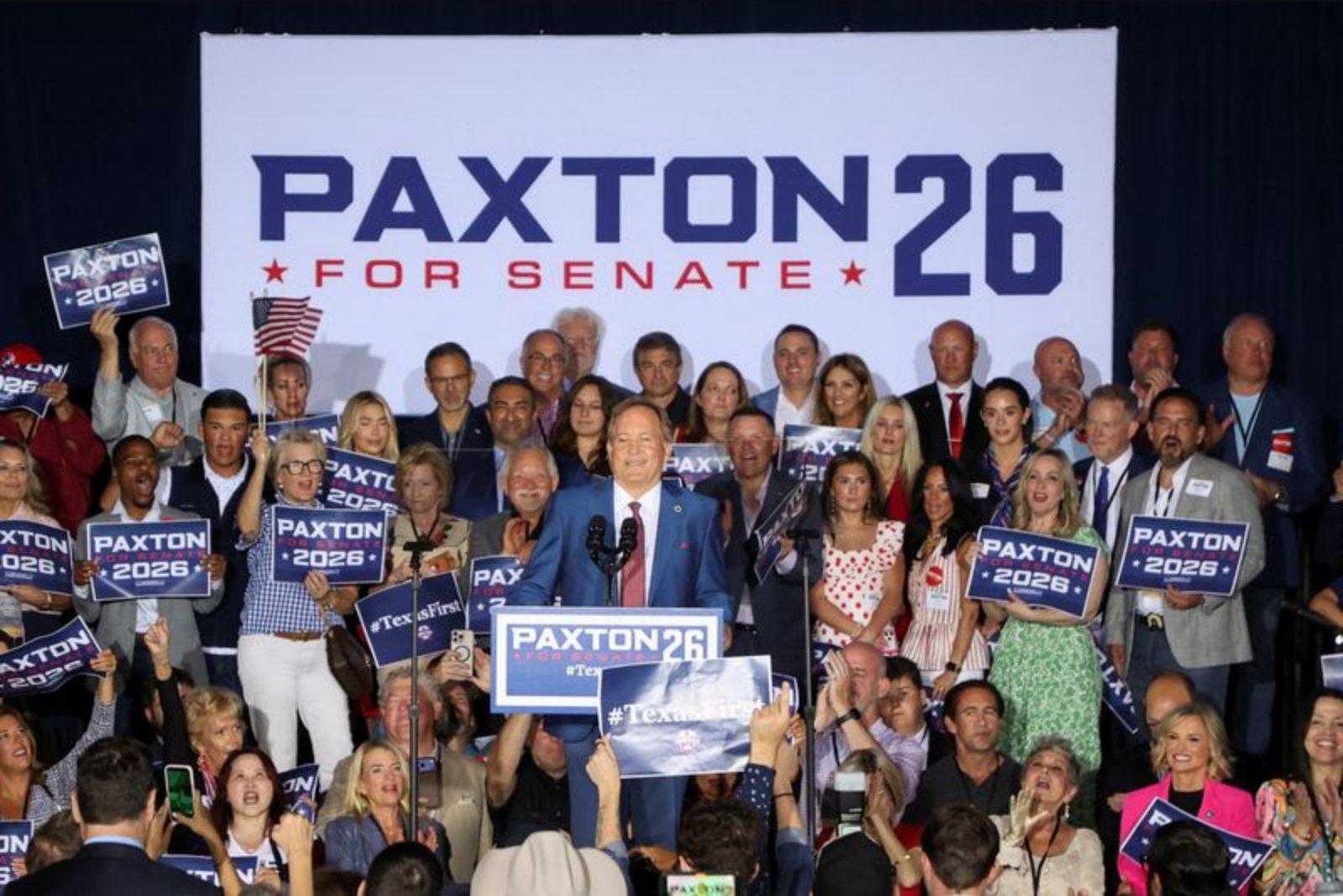
Ken Paxton, Texas attorney general, secured the Republican nomination for the U.S. Senate in a runoff election, unseating incumbent Senator John Cornyn and winning the right to challenge Democrat James Talarico in the general election. Paxton’s victory followed an endorsement from former President Donald Trump and was projected shortly after polls closed in Texas’ far western counties, which operate in a different time zone than much of the state.
In his victory remarks, Paxton declared he would be a focal point for Democratic attention in the fall - "Without a shadow of a doubt, I will be the Democrats’ No. 1 target in November," he said - and signaled that Texas would not yield to what he characterized as the "radical left." His win guarantees Senator Cornyn will leave office early next year and requires the Republican establishment in Washington to coalesce around a candidate it had largely opposed.
Cornyn, a four-term senator aged 74, faced a vigorous challenge from Paxton, a 63-year-old attorney general whose political career has been bruised by multiple controversies. Paxton won Trump’s endorsement last week and carried that momentum into the runoff. Cornyn had the backing of national Republican leaders in what became a high-stakes contest for the party.
Paxton will meet Democratic state Representative James Talarico, 37, in the general election. Talarico, a Presbyterian seminarian and a prominent fundraiser, begins the fall campaign after a three-month head start, having secured his party’s nomination on March 3 by defeating U.S. Representative Jasmine Crockett. Talarico’s campaign has pitched him to independent and moderate voters and emphasized his fundraising strength.
The general election matchup has immediate national implications. It could influence which party controls the U.S. Senate and is likely to attract substantial financial investment; campaign officials have suggested the contest may rank among the most expensive in U.S. history. Republicans currently hold a 53-47 majority in the Senate, meaning Democrats would need a net gain of four seats in November to take control.
Democrats are defending incumbents in two states that the former president won in 2024 - Georgia and Michigan - but party strategists calculate that holding those seats while flipping several others could secure a majority. Those potential flips include North Carolina, Maine, Ohio and Alaska. A competitive race in Texas, where no Democrat has carried a statewide contest since 1994, would broaden the Democratic path to a majority and potentially force Republicans to shift resources away from traditional battlegrounds.
Paxton’s nomination has provoked intense reactions across the political spectrum. Opponents pointed to a string of legal and ethical troubles that have dogged his tenure - he was impeached by the Texas House, has faced felony fraud charges, was reportedly the subject of FBI reporting by his own top aides, and is undergoing a divorce that has attracted public attention - matters he denies any wrongdoing on. Critics in Washington and within his own party had long viewed him as a risky general election prospect.
Internal warnings from Republican operatives underscored that concern. A Senate Republicans campaign arm memo distributed last year cautioned that a Paxton nomination "would hand Democrats an opening to flip Texas and cause Republicans to divert hundreds of millions of dollars that would otherwise be spent winning key battlegrounds." Democrats’ campaign organizations immediately framed Paxton’s victory as an opportunity for their side.
On the stump and in social media, reactions were loud and pointed. Supporters of Talarico accused Paxton of being the most corrupt politician in America in a new campaign video released on election night; Paxton’s backers, in turn, attacked Talarico over past comments on a nonbinary God and references to six biological sexes, with Paxton and the Republican National Committee chairman using the pejorative slogan "Tala-freak-o." The tenor of the campaign is already sharply negative: Cornyn’s operation had labeled Paxton "Crooked Ken" and deployed a provocative online dating-game style ad that invited users to swipe on women alleged to be Paxton’s mistresses. Paxton publicly urged Cornyn to cease negative advertising "for the good of our party" and announced adjustments to his ad schedule to close the primary on a more positive note so his team could "focus on beating the leftist lunatic in the fall."
Former President Trump publicly congratulated Paxton and committed to holding "some nice, big, beautiful rallies" for the nominee, writing that the campaign in Texas "will be FUN." Cornyn, in his concession remarks, said he trusted the voters of Texas and pledged to support the Republican ticket in November.
Outside the Senate race, voters in more than a dozen congressional districts decided runoffs, including the San Antonio-area 35th district, an open seat Democrats hope to win. In that contest, Trump-endorsed U.S. Air Force veteran Carlos De La Cruz beat Republican state Representative John Lujan. On the Democratic side, Johnny Garcia, a public information officer for Bexar County Sheriff Javier Salazar, defeated Maureen Galindo, a fringe candidate widely criticized for antisemitic comments, despite a Republican-aligned political committee known as Lead Left PAC spending nearly $1 million in support of Galindo.
Financial stakes and electoral math make the remainder of the cycle especially consequential. Republican and Democratic strategists will re-evaluate where to allocate funds and field operations in response to the Paxton nomination. Observers on both sides expect Texas to command a level of national attention and spending uncommon for the state in recent cycles.
Summary - Ken Paxton won the Republican runoff for U.S. Senate in Texas, defeating four-term incumbent John Cornyn after receiving former President Donald Trump’s endorsement. Paxton will face Democratic state Representative James Talarico in a race that could influence control of the Senate and prompt major shifts in national campaign spending.
- Key Points
- Paxton’s victory, aided by Trump’s endorsement, knocks Senator John Cornyn out of office and hands Republicans a nominee long opposed by the party establishment.
- The general election matchup against James Talarico is likely to be highly competitive and expensive, with implications for control of the Senate and national campaign resource allocation.
- Campaign activity and political advertising markets are likely to be affected as national committees and donors reassess spending priorities.
- Risks and Uncertainties
- Electoral uncertainty: A controversial nominee in a traditionally Republican statewide race increases the unpredictability of outcomes and could alter national strategic plans.
- Resource diversion: Republicans may need to reallocate substantial funds to defend a seat expected to be safe, potentially reducing investment in other battleground states - an uncertainty for campaign finance markets and media ad inventory.
- Negative campaigning escalates: Intensified personal attacks and aggressive ad strategies could further polarize the electorate and shape fundraising flows, with uncertain effects on turnout.