
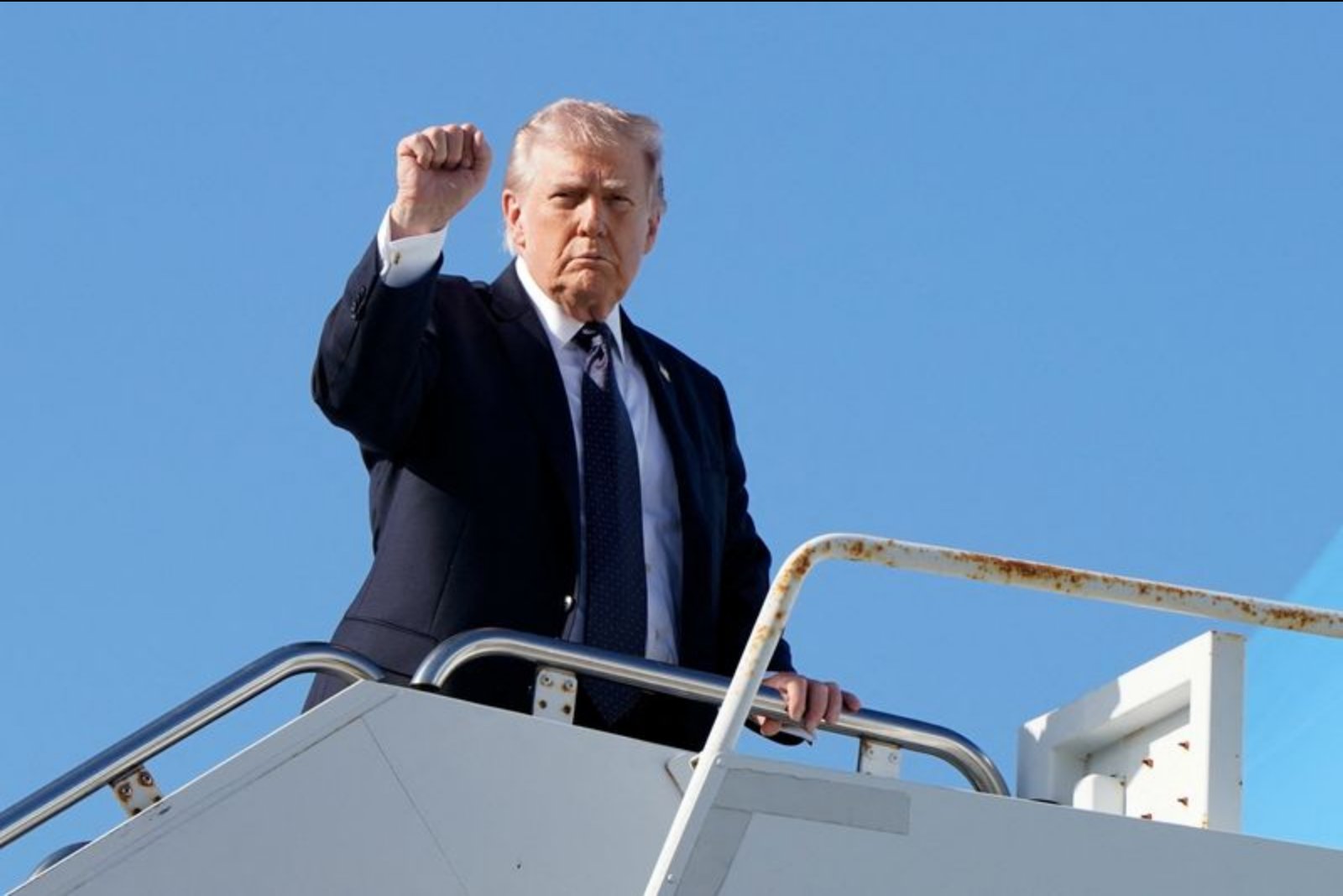
President Trump ordered large-scale strikes against Iran despite private cautions from senior aides that the military action could be hard to contain and carry material political risk for Republicans ahead of November’s midterm elections, two senior White House officials and a Republican close to the administration said.
Foreign policy hawks in Washington largely praised the attack, which they view as a rare opportunity to confront Tehran’s authoritarian leadership. Yet some officials within the White House worried that the decision to use force could undermine Republican chances of maintaining control of Congress, particularly when voters are more focused on household expenses than international conflicts.
According to the officials, Mr. Trump repeatedly sought briefings before the strikes aimed at understanding how military action might be presented as a demonstration of strength at home. Those briefings were met with warnings from top aides that U.S. intelligence offered no clear guarantee against an escalation once the strikes began. The aides cautioned that the administration was exposing its political prospects to the risks of an uncertain aftermath.
Ultimately, the president aligned with colleagues who argued that decisive military action would portray him as a strong leader, even if that choice entailed longer-term political hazards, the officials said. They do not anticipate immediate fallout. Instead, the expectation is for what one described as a "slow-burn effect" - the political consequences accruing over time depending on how long the confrontation endures, the extent of any retaliatory actions, the count of American casualties and resulting movements in gasoline prices.
A Reuters/Ipsos poll taken Sunday found only one in four Americans approved of the strikes that led to the death of Iran’s leader. Roughly half of those polled said they believe Mr. Trump is too willing to deploy military force, including one in four Republicans. That poll concluded prior to the military announcement of the first American deaths linked to the operation.
White House press secretary Karoline Leavitt defended the action in a statement, saying: "The President’s decision to launch Operation Epic Fury is one that presidents of both parties have contemplated for more than fifty years, but none had the courage to execute. Right now, the White House’s main priority is working alongside the Pentagon and the interagencies to ensure the continued and ultimate success of the operation."
Domestic agenda versus military action
In the run-up to the strikes, some senior White House staff and political advisors urged the president to continue emphasizing issues that polls consistently place at the top of voter concerns - healthcare and affordability - as he had during his State of the Union address a few days earlier. Those advocates had viewed domestic economic issues as central to shoring up Republican standing ahead of the midterms.
The weekend strikes, however, illustrated how rapidly that approach can be set aside. Mr. Trump told interviewers on Sunday that the Iran operations were expected to take four to five weeks, and he publicly prepared the nation for additional American fatalities after the U.S. military announced three service members had been killed.
Rob Godfrey, a Republican strategist, summarized the political tension, saying the contrast between a State of the Union focused on affordability and a near-immediate military operation in the Middle East is not only jarring but likely hard to reconcile with midterm voters. He added that ensuring voters accept that contrast will be among the administration’s most pressing political tasks in the coming weeks.
One informal adviser to the president, who has been present at White House meetings recently, argued the greater electoral peril may not come from swing or independent voters but from the president’s core MAGA supporters. Non-interventionism had been a component of Mr. Trump’s 2024 campaign messaging for some constituents, the adviser said, and a change in posture could lead some of those supporters to stay home for the midterms, where turnout typically falls from presidential-election levels.
With 58% of Americans disapproving of Mr. Trump’s overall performance in office in a February Reuters/Ipsos poll, the administration faces the challenge of producing strong turnout among base voters to offset potential slippage and prevent Democratic gains that could flip the U.S. House and threaten Senate margins.
Vulnerabilities in the House map
White House political models are examining how a protracted U.S. engagement in Iran, further casualties and higher fuel costs could erode support in competitive congressional districts, according to the officials. They view the House map as particularly exposed; Republicans hold a slim majority there and dozens of swing districts could be sensitive to even modest changes in voter attitudes.
The modeling identifies several vulnerable Republican members who may face difficulties reconciling votes on war-powers measures or addressing a widening foreign conflict while their local campaigns try to emphasize pocketbook issues. Specific names highlighted as potentially affected include Colorado’s Gabe Evans, Wisconsin’s Derrick Van Orden and Pennsylvania’s Rob Bresnahan.
A senior Republican operative working to preserve the party’s majorities in Congress said foreign interventions generally carry more downside politically for Mr. Trump than upside. The operative noted that foreign policy victories often fail to register strongly with voters, while entangling foreign conflicts typically do register negatively.
The operative suggested that unless the operation unravels, foreign policy may not dominate midterm voters’ decisions. The capture of Venezuelan leader Nicolas Maduro in a raid earlier this year, which produced no American deaths, generated little political backlash. Yet since that operation in early January, Mr. Trump’s approval rating fell from 42% to 39%, according to the most recent Reuters/Ipsos polling cited by officials.
Analysts quoted by officials say a short, decisive conflict that led to a dismantling of Iran’s nuclear program and replacement of its leaders would likely be viewed more favorably than a drawn-out war resulting in many American casualties.
Supporter reactions and the broader political calculus
Interviews with supporters of the president indicate that while a significant minority express unease about his growing willingness to use military force, many are prepared to accept a shift from his prior image as a self-described peacemaker to a more aggressive military posture.
"This totally blindsided me, I didn’t even know this was even being thought about," said BJ Moore, an 83-year-old Trump voter from Atlanta, Georgia, referring to the Iran operation. He added: "No one wants to be involved in a war, but Iran just killed thousands of their own people, so I’m fine with what Trump did."
Within the White House, officials continue to weigh how the next few weeks of the campaign season will be affected by the military action, focusing on potential shifts in voter turnout and the political messaging necessary to connect the operation to domestic priorities that matter to midterm electorates.
Summary
The president proceeded with broad military strikes against Iran despite internal cautions about escalation and electoral consequences. Administration models anticipate a gradual political impact that will depend on conflict duration, the scale of any Iranian response, American casualties and changes in fuel prices. Republicans are particularly concerned about vulnerable House districts and possible disengagement by some of the president’s base.