
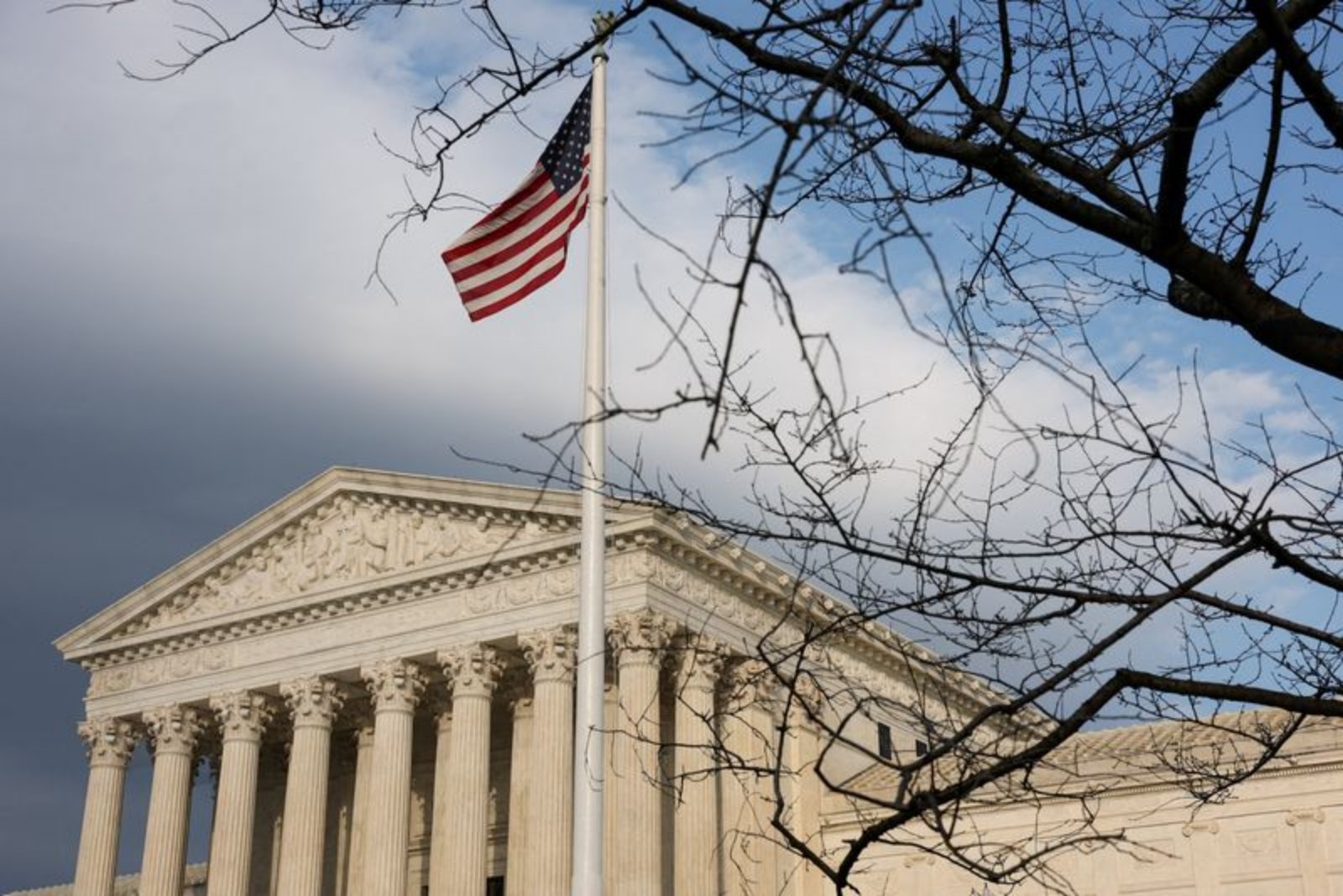
Since President Donald Trump returned to the White House, his administration has pursued a deliberate campaign at the Supreme Court aimed at limiting the ability of federal judges to restrain executive actions. That effort has taken the form of dozens of emergency petitions asking the court to intervene when lower courts have enjoined or otherwise blocked policies the administration sought to implement.
An analysis of those emergency filings reveals a striking pattern: in the requests filed by the Justice Department since February 2025, nearly every one - 97% - asserts that the district judge in the case was improperly interfering with presidential power under the Constitution and applicable statutes. By comparison, emergency petitions filed over a four-year span by the prior administration under President Joe Biden made that claim in just 26% of cases.
Those statistics reflect more than a litigation tactic. Legal scholars and former judges interviewed for this report say the filings represent a broader attempt to constrict judicial review and thereby expand the executive branch's unilateral authority. The arguments in the briefs extend beyond the proposition that a judge erred on a point of law; they challenge the very legitimacy of judicial scrutiny in disputes that implicate executive prerogatives.
How the filings frame judges
In the Justice Department's emergency requests, the administration frequently argues that the district court lacked power to review the executive action at issue or to provide the relief plaintiffs sought. The analysis shows 68% of the Trump administration's emergency petitions argued the judge had no authority to review the action or lacked jurisdiction over the case, while only 16% of the Biden administration's petitions made that contention. Additionally, 71% of the Trump-era requests claimed the lower court lacked the power to issue the relief - such as orders freezing a policy - that the plaintiffs had obtained; under Biden, that figure was 63%.
The use of such jurisdictional and remedial challenges signals a two-pronged approach: not only disputing the legal merits of a decision, but also urging the Supreme Court to treat certain executive acts as beyond judicial reach. A Justice Department official familiar with the strategy, speaking on condition of anonymity, defended the approach, saying many of these matters fall within areas where the justices have historically shown deference to the president - for example, in immigration and management of the federal workforce.
"It should come as no surprise that this department is more forceful in defending Article II prerogatives," the official said, referring to the constitutional provision that vests executive power in the president. The official also pointed to the department's strong record at the Supreme Court in emergency matters as evidence that the legal posture is consistent with longstanding principles of judicial deference in certain domains.
Courts and outcomes
The Supreme Court, with a 6-3 conservative majority that includes three justices appointed by the president, has granted many of the administration's emergency requests. In a series of fast-moving, high-stakes rulings - which the court typically handles in emergency matters with limited briefing and no full oral argument - the justices have often allowed the administration to proceed with contested policies while lower courts' orders were in effect.
Among the actions the court has permitted are the president's removal of federal employees, restrictions on participation in the military by transgender personnel, and expedited deportations in certain circumstances, according to the analysis of emergency decisions. In several 5-4 rulings where the court provided reasoning, the justices lifted lower-court blocks on federal grant cuts and on the administration's use of an 18th-century statutory authority to accelerate deportations, finding in those instances that lower courts lacked jurisdiction to resolve the disputes because they belonged in another forum.
The Supreme Court also addressed the controversial practice of nationwide or "universal" injunctions - orders by lower courts that block a policy across the country. The court, responding to a case brought by the administration, curtailed the broad reach of such injunctions in a landmark decision last June. That ruling limited a tool plaintiffs and some lower courts had used to prevent nationwide application of executive policies, although the court did not resolve the underlying legality of the policy at issue in that case. The high court will hear further arguments on the legality of that specific directive at a scheduled oral argument on April 1.
Legal experts' perspectives
Scholars and former judges interviewed for this report interpret the administration's legal posture as an intentional effort to shrink the scope of judicial oversight of the executive branch. Payvand Ahdout, an expert on presidential power and the federal courts at the University of Virginia School of Law, said the administration's briefs are not limited to claims that a judge reached an incorrect outcome.
"The administration is attacking the ability of federal judges to question or review the executive actions," Ahdout said. "As the administration seeks to assert more unilateral power, robust judicial review is a problem for them."
Barbara Lynn, a recently retired federal judge from Texas, criticized the public dimension of the administration's approach, noting how rhetoric and litigation together can narrow the accepted role of the judiciary. "The administration's position stated in briefs and argument is for a very narrow view of judicial review and judicial power. And that then manifests itself in the public square as: if judges move out of that more limited role, they're crooks and corrupt," Lynn said. "That is a sad, inappropriate development, and runs the risk of there being, essentially, no checks and balances in this country if that view prevails." Lynn was appointed by former President Bill Clinton.
Some commentators see continuity with legal trends the Supreme Court had already begun to embrace, while others view the current strategy as a more aggressive application of those trends to a wider set of executive actions. John Yoo, a law professor at the University of California, Berkeley who previously served in the Justice Department during President George W. Bush's administration, said the filings seek to accelerate limits on judicial involvement in managing the executive branch.
"They are trying to accelerate things that the Roberts court itself had already started, which is to narrow judicial involvement in ... the president's management of the executive branch," Yoo said.
By contrast, Eric Segall, a Georgia State University College of Law professor who worked in the Justice Department under President George H.W. Bush, described the tone of the briefs as framing each emergency as an existential threat. "They make it sound like every case is a five-alarm fire that will destroy the presidency of the United States if judges get involved," Segall said.
Philip Pro, a retired federal judge from Nevada appointed by President Ronald Reagan, described the litigation posture as treating judges who disagree with the administration as obstacles. "If I don't agree with you as a member of the judiciary, then you're an obstruction because I want to do what I want to do, whenever I want to do it, wherever I want to do it, and you can't tell me otherwise," Pro said.
Examples cited in filings
The Justice Department's emergency filings have labeled district court orders as an unlawful encroachment on presidential prerogatives. In a case concerning the removal of thousands of federal employees, the department warned of an "ongoing assault on the constitutional structure," telling the Supreme Court that "Only this court can end the interbranch power grab."
When a district judge blocked the administration's plan to cut teacher-training grants as part of a policy targeting certain diversity initiatives, the administration urged the high court to stop judges from acting as "self-appointed managers of executive branch funding." In litigation over deportation plans that would send migrants to countries where they have no ties, the Justice Department characterized the judge's restrictions as "wreaking havoc" and as usurping the executive's immigration authority.
Those arguments reflect a consistent rhetorical framing in which judicial actions are described as seizures or usurpations of power that rightfully belong to the president. The legal strategy often pairs those characterizations with jurisdictional claims that courts lack authority to hear the dispute or to fashion the relief granted to plaintiffs.
Administrative compliance and public rhetoric
The push to limit judicial oversight has unfolded alongside public attacks on judges by the president and by administration officials. Critics and some sitting judges have expressed concern that elements within the executive branch have, at times, defied district court orders. The administration's public denunciations have used pejorative language to describe judges who ruled against its policies.
Those public comments include direct criticism of the Supreme Court when justices declined to endorse a presidential action; in one recent exchange the president called justices who opposed a broad tariffs policy "lapdogs" influenced by foreign interests.
Some former judges warn that coupling pointed public rhetoric with litigation that seeks to shrink judicial power heightens the risk of eroding checks and balances. They argue that if the narrow view of judicial review advanced in the briefs becomes accepted practice, it could leave fewer institutional constraints on executive action.
The Lisa Cook matter
The Supreme Court's handling of a high-profile dispute over an attempted removal of a Federal Reserve governor illustrates the tensions at stake. The president sought to remove Federal Reserve Governor Lisa Cook, citing mortgage fraud allegations that she denies; Congress had provided certain protections for Fed officials, and a federal judge blocked the firing.
The administration asked the Supreme Court to lift the injunction, and the court scheduled a rare oral argument in January on the emergency request. During argument, some justices expressed skepticism toward the administration's contention that courts lack authority to review the stated cause for termination or to reinstate an official removed from office.
Chief Justice John Roberts questioned the government's sweeping claim that courts could not order reinstatement if there was any level of cause for removal. "If there is any level of cause ... then you can't be right about the idea that courts can't order anybody who's been removed to be reinstated," Roberts told Solicitor General D. John Sauer, who argued for the administration.
A decision in the Cook matter could be issued at any time. The case highlights a broader theme in the administration's litigation strategy: testing the boundaries of judicial review in contexts that touch on separation-of-powers concerns and institutional independence.
What remains unsettled
Because the Supreme Court often issues orders in emergency matters with little published explanation, it can be difficult to determine precisely which legal theories persuaded the justices in any given case. The court's decisions sometimes provide scant reasoning, leaving uncertainty about whether the rulings reflect acceptance of the administration's narrow view of judicial power or instead a case-specific determination.
That ambiguity complicates efforts to predict how far the high court will go in restricting lower courts' power to review executive actions. The administration's high rate of success in emergency appeals, combined with the court's recent limitations on nationwide injunctions, signals a shift in the practical balance between executive initiative and judicial oversight. Yet the limited explanations accompanying those decisions mean the contours of the new balance remain, for now, indistinct.
Conclusion
The Trump administration's sustained and highly structured use of emergency petitions at the Supreme Court has reframed numerous disputes as contests over the proper reach of judicial authority. Through frequent claims that judges are exceeding their constitutional role or lack jurisdiction to adjudicate particular disputes, the Justice Department has advanced a vision of constrained judicial review for a wide set of executive actions.
Legal experts and former judges are divided over whether the strategy merely seeks to apply precedent more broadly or represents a fundamental effort to remove a principal check on executive power. With key cases still pending and the Supreme Court often offering limited written explanations in emergency matters, the final shape of judicial authority vis-a-vis the presidency remains unsettled.