
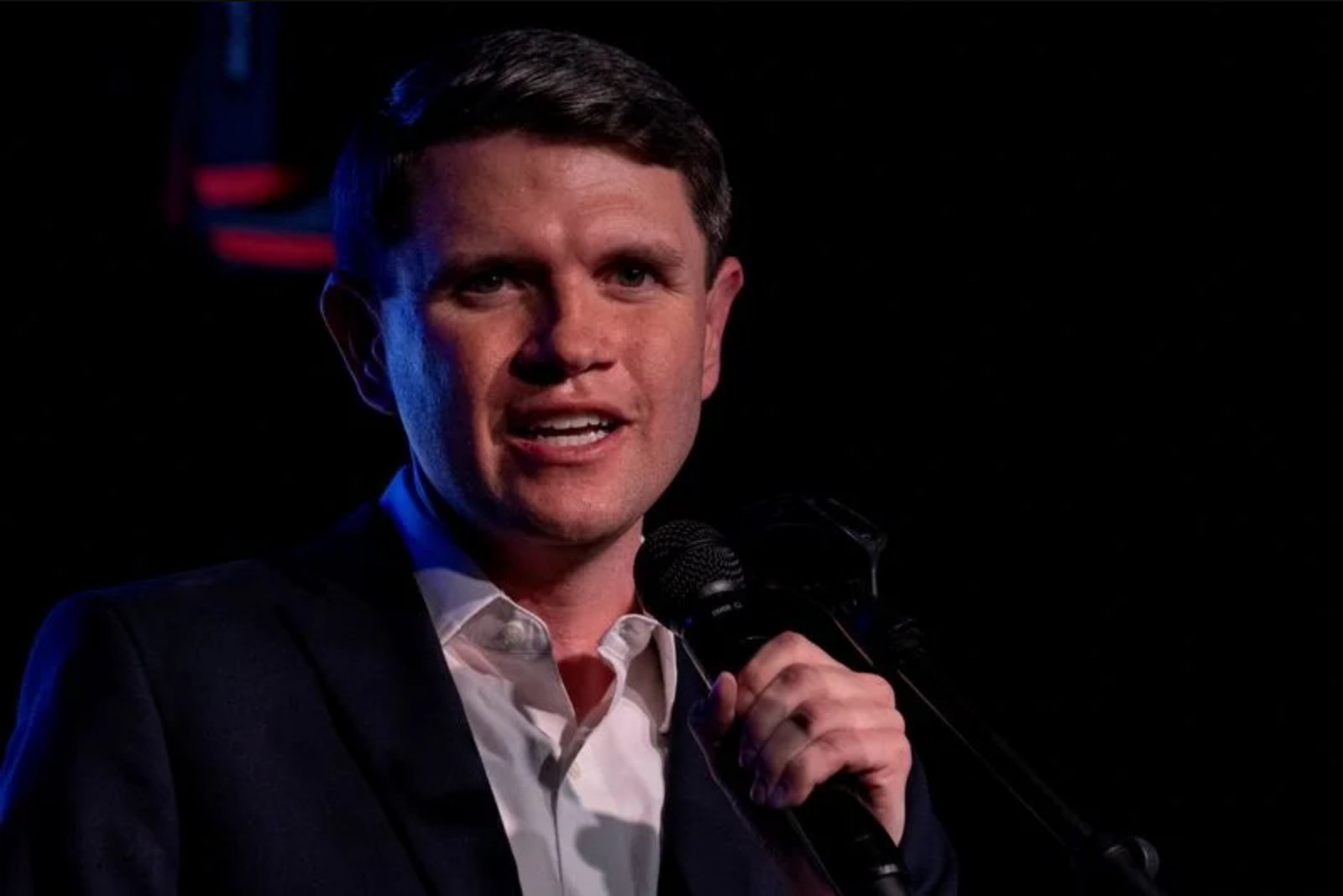
With the November midterm elections approaching, the contest for a U.S. Senate seat in Texas has become a testing ground for a familiar Republican playbook that emphasizes cultural flashpoints over pocketbook concerns. The Democratic nominee, James Talarico, has been singled out in a wave of advertisements and social posts that highlight past comments and portray him as out of step with conservative Texas values.
Social media posts and attack ads have zeroed in on Talarico’s past remarks and public image. On May 22, Texas congressman Brandon Gill posted on X that Talarico "wants to trans your kids." In subsequent days, White House Deputy Chief of Staff Stephen Miller made a false claim on the same platform that Talarico himself was "transgender." Online ads labeled the state representative and seminarian a "woke weirdo," recycling earlier, controversial quotations to paint him in a polarizing light.
Republicans are leaning into these themes as they confront political liabilities elsewhere. According to the campaign landscape described by operatives and strategists, the party has been pressed by voters over high gasoline prices and an unpopular war in Iran. Faced with those headwinds, Republicans appear to be reverting to cultural issues - such as gender identity - that they consider more dependable for mobilizing core and persuadable voters in the run-up to November.
Some of the critiques are tailored specifically to Talarico, 37, a rising figure in Democratic circles who frequently frames his progressive positions through the lens of his Christian faith. Other lines of attack are designed to resonate with Texas' electorate more broadly; the state has not elected a Democrat to the Senate since 1988. Political operatives say this pattern reflects a national approach the GOP used successfully in 2024 and hopes to repeat in 2026 to blunt broader electoral challenges.
The outcome in Texas matters beyond the state itself. Democrats face a narrow path to reclaiming the Senate, and a victory in Texas could materially improve their chances. At the same time, Democratic strategists argue that the Republican nominee, state Attorney General Ken Paxton, is weakened by a set of scandals and personal controversies, including corruption allegations and reported marital infidelities.
A poll released on Friday by Texas Public Opinion Research indicated a close contest, with Talarico holding a narrow lead of 47% to 44% over Paxton among likely voters. For Democrats, the way Talarico responds to repeated cultural attacks could serve as an early barometer of messaging strategy: whether to confront such assaults directly or to pivot back to economic and policy questions.
Talarico’s response and campaign approach
Talarico’s campaign has emphasized economic themes while accusing Republicans of trying to rehash "old, tired culture war fights." In a CBS interview he conceded that some previous remarks had "missed the mark," citing a 2021 comment in which he said that "God is nonbinary." At the same time, his team has leaned into some of the criticism in a tongue-in-cheek manner, offering supporters "I’m a Talafreako" T-shirts.
Speaking to reporters at a campaign stop in San Antonio on Friday, Talarico characterized the attacks as tactics designed to divide voters. "This is how puppet politicians like Ken Paxton stay in power," he said. "They divide us by party, by race, by gender, by religion, by culture ... And I think Texans are done being divided."
The Paxton campaign did not provide a response to a request for comment. Samantha Cantrell, a spokeswoman for the National Republican Senatorial Committee - the party’s Senate campaign arm - defended the focus on cultural issues as an effort to inform voters about Talarico’s positions. "Saying that God is non-binary is a very, very radical leftist viewpoint," she said.
Strategic debate among Democrats
Democratic strategists praised Talarico’s direct handling of the attacks. Yemisi Egbewole, a Democratic strategist and former adviser to President Joe Biden, applauded his approach of acknowledging missteps and addressing them head-on. "He just addressed straight to camera across multiple outlets that his comments were cringe, and characterized himself as being a bit provocative," Egbewole said. "I think you’ve just got to knock it out of the way, right away."
Those strategists urged other Democratic campaigns to heed the lesson as Republicans attempt to switch conversations away from economic concerns. Polling indicates a broad public dissatisfaction with President Donald Trump’s stewardship of the economy - a traditional strength for his party - underscoring Democrats’ need to defend pocketbook issues while also responding to social and cultural critiques.
Cultural appeals and local resonance
Appeals to cultural traditionalism have particular resonance in Texas, where religious conservatism and questions of social norms play a pronounced role in politics. Paxton himself has framed the contest in those terms, posting on X on Saturday that the race is a matter of values: "James Talarico is a threat to our values, our way of life, and the future of Texas," he wrote. "This is a fight about: Is Talarico a nontraditional Democrat who would be acceptable to God-fearing people in East Texas?"
Analysts described the GOP’s effort as an attempt to portray Talarico either as unacceptable to mainstream Texas voters or as a figure who appeals primarily to urban progressive enclaves. "Republicans need to mobilize voters," said Daron Shaw, a politics professor at the University of Texas at Austin and a member of the bipartisan Fox News polling team. He added that the objective in part is to make Talarico "just unacceptable to Texas voters," a line of attack aimed not only at the party base but at non-MAGA Republicans and independents.
Republicans have repeatedly circulated inaccurate claims intended to portray Talarico as alien to Texas culture, including assertions - echoed by Paxton and former President Trump - that he is vegan. Talarico has rebutted those charges with a personal note, saying he has been eating barbecue since before Paxton’s first indictment.
Looking ahead
Campaign strategists and operatives on both sides view the Texas race as an early indicator of tactics and messaging that could shape the national midterm landscape. For Democrats, the task is to counter cultural attacks without allowing those narratives to eclipse economic and policy debates that are central to many voters. For Republicans, the strategy is to use culturally resonant themes to offset policy vulnerabilities stemming from energy prices and foreign policy concerns.
How voters in Texas respond to these dueling approaches over the coming months could reverberate beyond the state, given the tightness of control in the U.S. Senate and the significance of a potential Democratic pickup. At the same time, the race will test whether cultural messaging can overcome the liabilities attached to the Republican nominee.