
Voting in primary elections across Texas, North Carolina and Arkansas on Tuesday marked the formal start of this midterm season, as party nominees for November’s general election begin to be decided. The outcomes of these early contests will shape the field for races that will ultimately determine control of the U.S. House of Representatives and one-third of the Senate’s 100 seats during President Donald Trump’s final two years in office.
The immediate political backdrop is complicated by recent foreign policy developments. The elections occur days after U.S. military strikes against Iran, and some White House aides have privately expressed concern that the action could present political risks for the president and his Republican Party. Those concerns come as public attention, according to campaign polling and commentary cited by party officials, has emphasized domestic issues such as affordability and immigration.
For control of the House, Democrats face a relatively narrow hurdle: they would need to flip three Republican-held seats to win a majority of the chamber. By contrast, winning a Senate majority appears more difficult for Democrats, who enter the cycle with longer odds. Observers note that President Trump’s approval ratings have declined and that the president’s party typically loses seats in midterm elections. A Democratic majority in either chamber would be positioned to block much of the president’s legislative agenda and could initiate investigations into his administration.
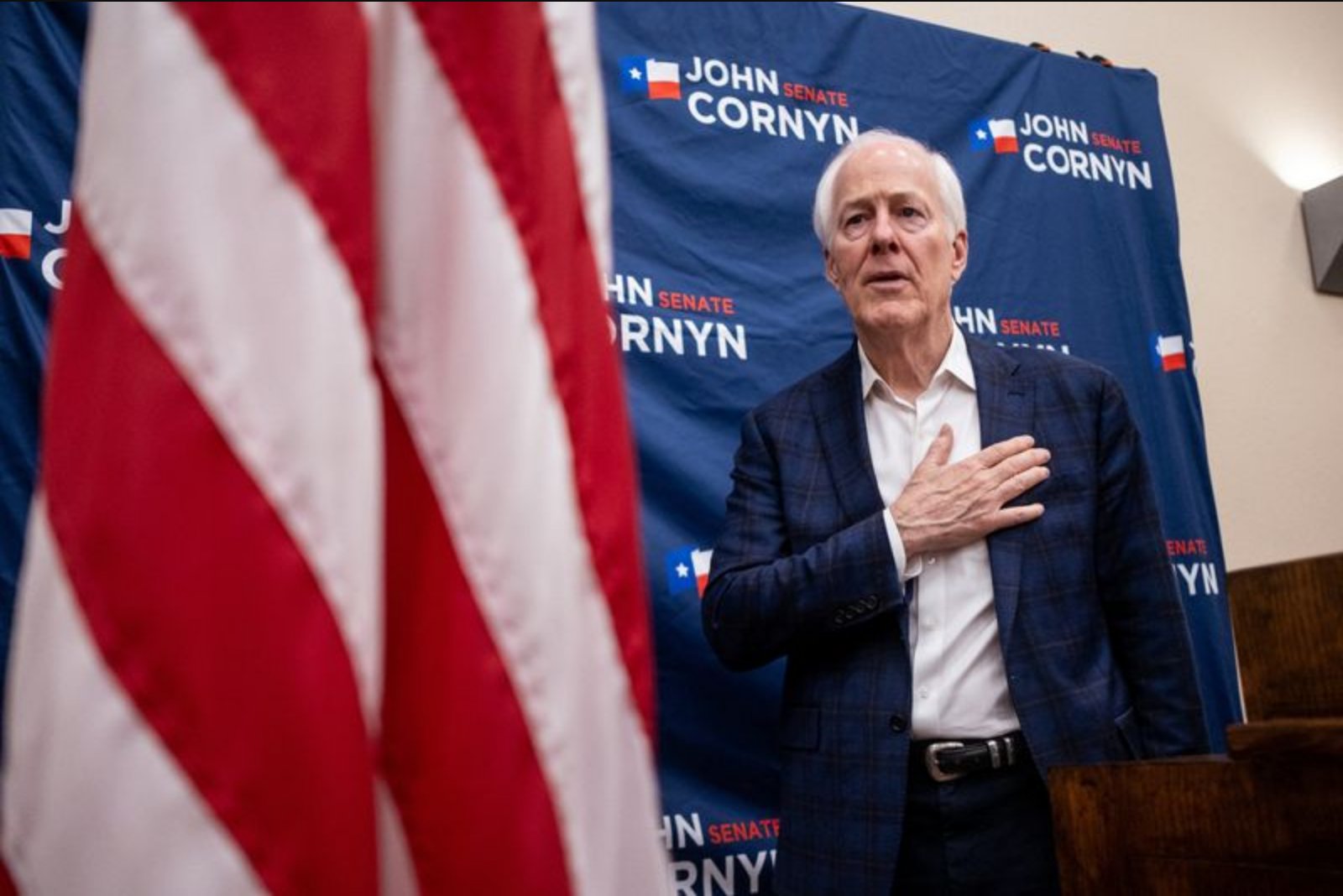
At the center of Tuesday’s attention is the bruising Republican Senate primary in Texas, which has become an early test of intra-party divisions. Incumbent Republican John Cornyn, a long-serving establishment conservative, faces a strong challenge from Texas Attorney General Ken Paxton, a more populist, pro-Trump figure. Paxton remains popular with the president’s MAGA base even as he contends with a series of personal and legal scandals.
Cornyn has warned that a Paxton nomination could transform what is typically a reliably Republican seat into a contest that jeopardizes the party’s narrow Senate majority. Paxton, in turn, has criticized Cornyn as disconnected from the state’s voters. Both candidates have emphasized their support for President Trump and have backed the recent military strikes in Iran; the president has not issued a formal endorsement in the primary.
Senate Republican leadership has rallied to Cornyn’s side, and allies of Cornyn have dramatically outspent Paxton on advertising, with AdImpact reporting $69 million to $4 million in favor of Cornyn. With another conservative candidate, U.S. Representative Wesley Hunt, also competing, the primary is expected to move to a run-off election in May between the two highest finishers.
On the Democratic ticket in Texas, state Representative James Talarico and U.S. Representative Jasmine Crockett were locked in a close contest. Talarico has centered his campaign on his Christian faith and has explicitly sought to appeal to some Republican voters. Crockett, by contrast, has built a national profile with forceful public denunciations of President Trump. While Democrats have long harbored ambitions of winning statewide office in Texas, the party has not secured a statewide victory since 1994. Party officials, however, suggest that Paxton’s history of scandal - including surviving an impeachment by Republican lawmakers, facing a securities fraud indictment and a contentious divorce - could leave him vulnerable if he becomes the party’s November nominee.
Some analysts nevertheless observe that Paxton would likely remain the favorite in statewide general election voting given the conservative tilt of Texas’ electorate. "Ken Paxton is still a Republican in a very Republican state that's got a turnout machine that understands how to win elections," said Brandon Rottinghaus, a political science professor at the University of Houston.
North Carolina’s primary will also be consequential. Republican Thom Tillis’ retirement created an open Senate seat in a state often described as competitive. Democrats are backing former Governor Roy Cooper as their preferred candidate; Cooper faces only token opposition within his party and has won statewide contests six times. On the Republican side, Michael Whatley, a former Republican National Committee chairman who has secured President Trump’s endorsement, has held a substantial lead in public polling over a field of more than half a dozen other Republican candidates.
Tuesday’s balloting also marks the first use of newly drawn congressional maps in Texas and North Carolina. Republican state lawmakers redrew U.S. House district lines last year at the president’s urging to try to increase Republican representation, a move that has intensified national debate over redistricting. The new maps have already produced head-to-head matchups that could displace incumbents.
In Texas, several sitting House members faced particularly difficult paths to renomination. Republican Tony Gonzales has been pressed by a conservative social media personality in his primary and has resisted bipartisan calls to resign after allegations of a relationship with a female staffer who later died by suicide; Gonzales has denied any wrongdoing. In the Houston region, newly configured districts pitted Democratic Representatives Al Green and Christian Menefee against one another after the redistricting dismantled Green’s prior seat.
As the primaries proceed, the early results will offer a reading on party organization, candidate appeal and how voters are weighing national security actions against pressing domestic concerns heading into a pivotal November general election.