
HOUSTON, Feb 27 - The Republican primary in Texas has taken on outsized national importance as the party defends a slim Senate majority. What many saw as one of the GOP’s safest Senate seats now appears far less secure, according to campaign rhetoric and public polling, turning the nomination fight into a contest with implications for control of Congress.
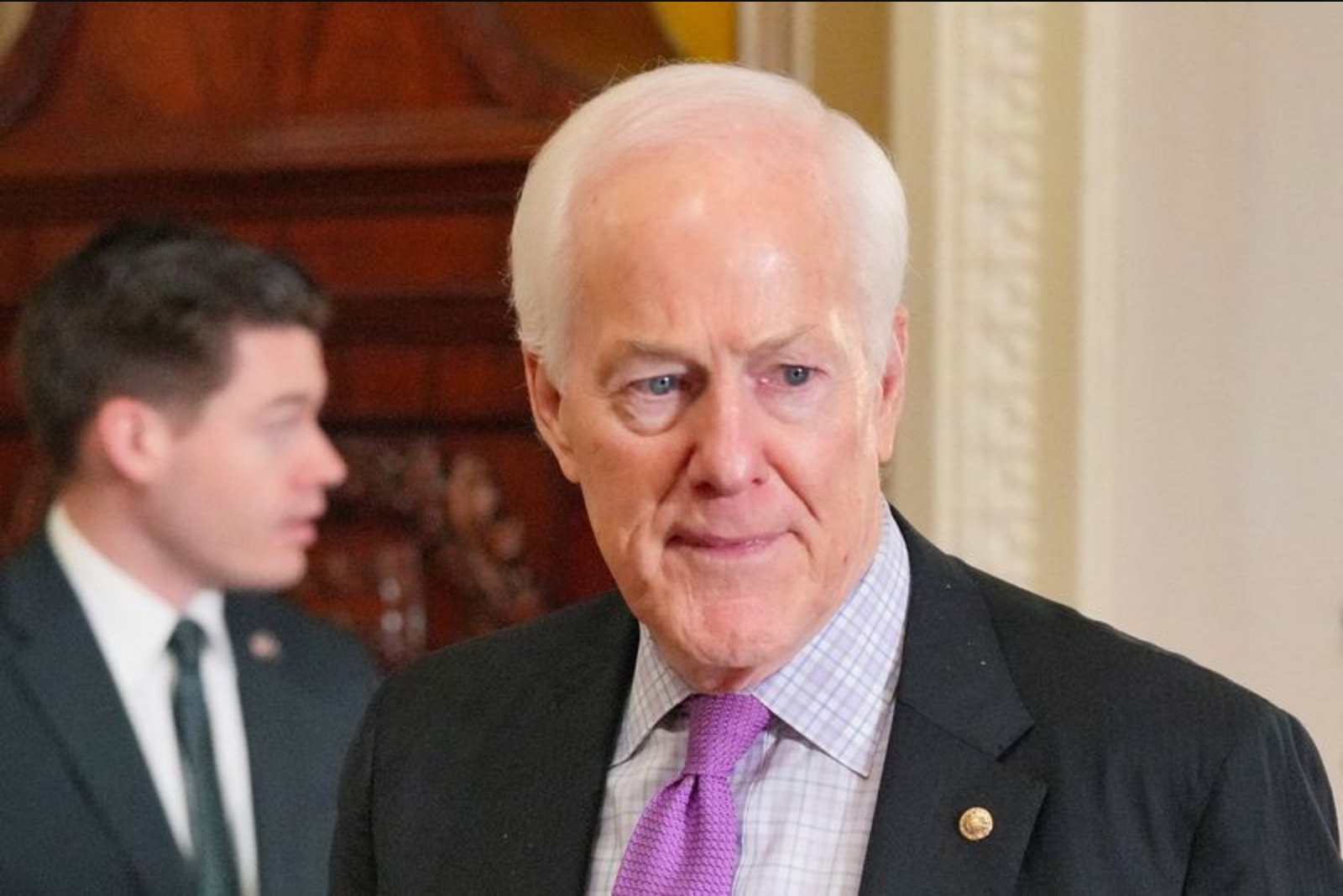
Incumbent Senator John Cornyn, 74, a long-serving establishment conservative first elected to the Senate in 2002, finds himself trailing Texas Attorney General Ken Paxton, 63, in state opinion polls. Paxton has cultivated a high profile as a staunch ally of former President Donald Trump, using aggressive legal actions against Democrats on issues like abortion, transgender rights and voting procedures to bolster his standing among conservative voters.
If Paxton emerges as the Republican nominee in Tuesday’s primary - or in a May 26 runoff if no candidate clears the 50% threshold - he would face a Democratic challenger in the November midterm contest. Analysts cited in campaign coverage say Paxton’s hardline positions and his record of controversies could make winning a general election more difficult for him, potentially converting a comfortably Republican statewide contest into a tight race.
Cornyn has warned repeatedly in the closing days of the primary campaign that a Paxton nomination would be disastrous for the GOP ticket nationally. The senator has framed his argument around electability, contending that Paxton’s controversies and ideological posture would be a liability down-ballot and could cost Republicans their narrow Senate majority. "Ken Paxton will be the kiss of death for Republicans on the ticket in November of 2026," Cornyn said after speaking to a small group of supporters outside an organic eatery and sports bar in Houston on February 19.
Paxton has pushed back against those attacks, accusing Cornyn of fear-mongering and expressing confidence that his record as state attorney general will appeal to voters in a general election. After a rally outside Houston on February 20 he told reporters, "You look at my record, I’ve done more in two weeks for the voters and the constituents of Texas than he’s done in 40 years." He dismissed Cornyn’s character-focused strategy as political posturing and accused the senator of dishonesty about both his own record and Paxton’s.
The primary field also includes U.S. Representative Wesley Hunt, 44. Political observers expect the contest to narrow to a runoff between Cornyn and Paxton, given the dynamics of the three-way race. Analysts say the contest is driven more by perceived proximity to Trump than by differences in policy: all three candidates claim alignment with the former president, but they occupy different places on the conservative spectrum. At an event in Nacogdoches on February 18, Hunt noted a muted television showing Trump and told supporters, "I was with him last week. He is a good man."
Trump is scheduled to travel to Texas on Friday to deliver a speech on the economy, and his endorsement - which he has not yet given - could influence undecided primary voters. Earlier this month he told reporters aboard Air Force One that he likes and supports "all three of them."
Cornyn has drawn the backing of Senate Republican leadership and former Governor Rick Perry. Allies of the senator have invested heavily in the race, reportedly putting more than $60 million into efforts to blunt Paxton’s momentum. Cornyn has repeatedly emphasized character and electability, pointing to Paxton’s list of controversies that he says will be damaging in a general election. Those controversies include Paxton’s 2023 impeachment by the Texas House on allegations of misuse of public resources, bribery and abuse of public trust - charges for which he was acquitted in the state Senate.
"I know he still thinks he’s bulletproof even with all the scandals and the baggage ... Well, I guarantee in a general election it will be a dead weight around the neck of Republicans up and down the ticket," Cornyn said at the Houston campaign stop.
Public polling shows Paxton with a lead in the primary, reflecting his appeal among the conservative base. Political analysts quoted in campaign reporting note that voters may be less deterred by scandals than in past cycles, and that conservative voters in Texas are seeking candidates who present themselves as uncompromising fighters. Paxton’s aggressive legal pursuits, including high-profile actions against Texas immigration groups and challenges he characterizes as addressing illegal voting, have drawn praise from conservative activists and helped build his profile.
Cornyn’s career has been defined by legislative compromise and working across the aisle, positions that have at times put him at odds with elements of Trump’s base. He drew criticism from Trump supporters after saying in 2023 that Trump could not win another election, and earlier by refusing to participate in 2021 efforts to overturn the 2020 election results. In his most recent statewide contest in 2020, Cornyn won reelection by nearly 10 percentage points - outperforming Trump’s margin in Texas that year.
Political scientists and analysts say a Paxton victory in the primary would illustrate a broader ideological shift within the Texas Republican Party, where more hardline, Trump-aligned candidates have increasingly displaced older, more establishment-oriented figures. That trend was reflected in Trump’s large margin of victory in Texas in the 2024 presidential election, and it manifests within the narrower and more ideologically skewed Republican primary electorate.
"If we were talking about the general election, we’d be talking about Cornyn winning comfortably," said Cal Jillson, a political science professor at Southern Methodist University. "But the Republican primary electorate is just such a sliver of the total electorate and so skewed toward MAGA at this point that it gives Paxton a clear advantage."
Analysts note that Paxton has established an electoral track record in statewide contests, having won elections for attorney general in 2014, 2018, and 2022. Still, those same analysts and Cornyn’s supporters agree that a Paxton nomination would likely make the November contest more competitive, potentially forcing the national party to devote substantial resources to fend off a Democratic challenger.
Polling released ahead of the primary indicates Paxton holds the narrowest advantage in hypothetical general election matchups against the Democratic contenders mentioned in campaign coverage: U.S. Representative Jasmine Crockett and state Representative James Talarico. By contrast, Representative Hunt, while less known among the general electorate, posts larger leads over Democratic opponents in those same matchups.
For Republicans, the stakes are clear: Democrats need to flip four Senate seats in November to seize control for the final two years of the current presidential term, a scenario that would alter the legislative landscape and oversight of the executive branch. While a Democratic victory in Texas would be an upset - no Democrat has secured a statewide race in Texas since 1994 - the dynamics of this primary have introduced fresh uncertainty about how solidly Republican the state will remain in the coming election cycle.
The Texas primary, combined with contests in North Carolina and Arkansas, officially launches the 2026 midterm nomination season. Observers will be watching not just the immediate result but the longer campaign trajectory, including whether a runoff becomes necessary and how national figures and party apparatuses respond if Paxton secures the nomination.
The contest has laid bare the tension within the Republican Party between electability-focused establishment figures and insurgent, Trump-aligned conservatives. How that tension resolves in Texas could reverberate beyond the state's borders if it changes the composition of the Senate and the distribution of campaign resources ahead of the general election.