
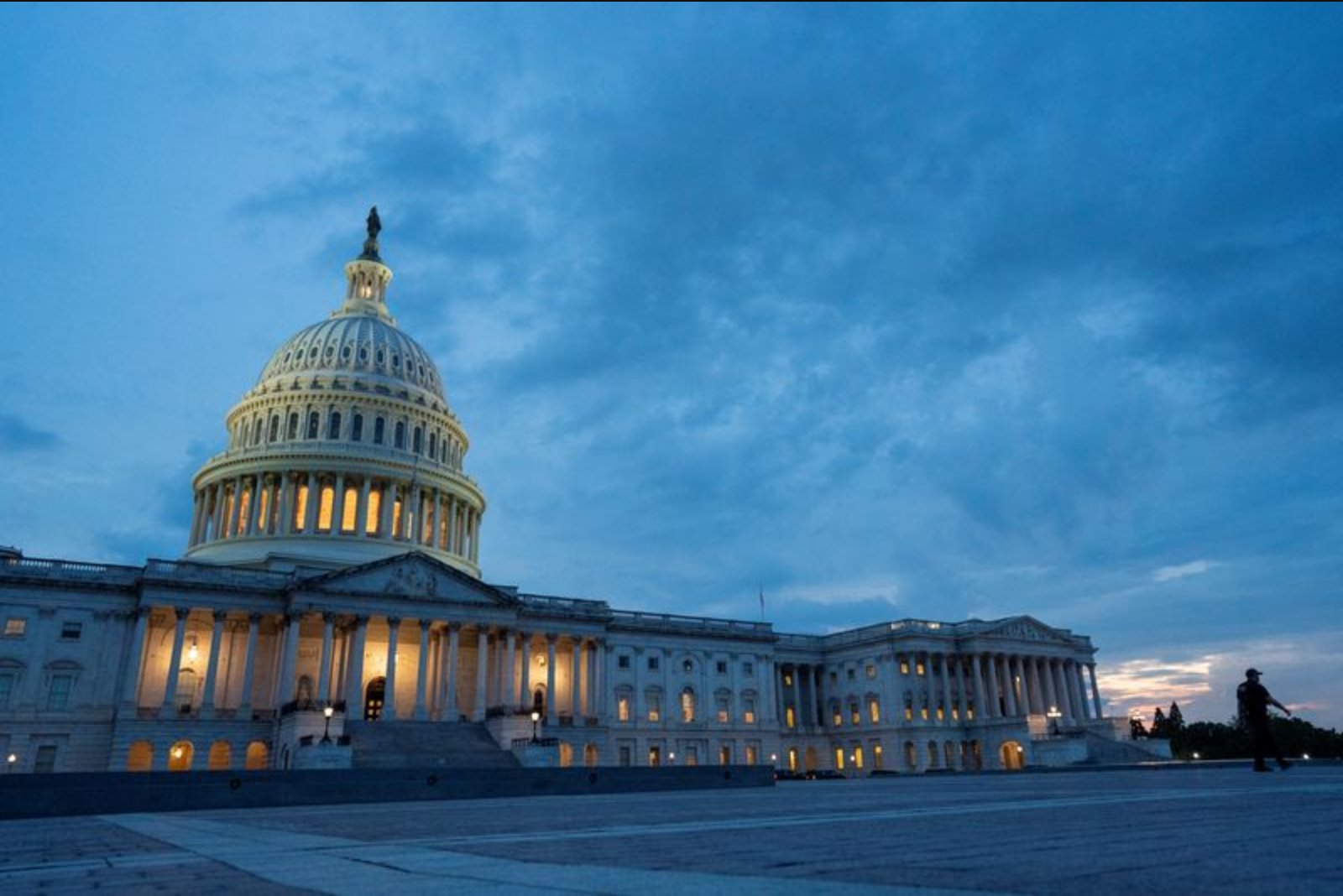
Republicans enter the 2026 midterm cycle defending a narrow majority in the U.S. House of Representatives, while Democrats aim to flip enough seats to seize control of the chamber - a change that would permit greater oversight powers, including investigations into the Trump administration. Party primaries scheduled over the next several months will select the fall contenders, and some of those contests could provide early signals about voter preferences, party cohesion, and the competitiveness of the general election.
TEXAS - Multiple Districts to Watch
Texas 23rd District: A scandal-plagued incumbent faces a right-wing challenger (March 3)
Republican Representative Tony Gonzales is defending his seat amid new allegations surrounding an extramarital relationship with a staffer who later died by suicide. Local media reports have published text messages that allege the affair, and Gonzales is the subject of an ethics inquiry in Congress. Several House Republicans have publicly urged him to resign, and Gonzales has denied wrongdoing.
His Republican primary opponent is Brandon Herrera, a YouTube personality with a right-wing following who narrowly missed defeating Gonzales in the 2024 primary by about 350 votes. Herrera, known online as "the AK Guy," operates a firearms business and has been criticized for making inappropriate comments about veteran suicide and the Holocaust on his channel. The district stretches across a large swath of southern Texas from San Antonio to El Paso and is considered reliably Republican, though observers say the seat could become competitive in November depending on the nominee.
Texas 2nd District: A mainstream Republican targeted by the right (March 3)
Representative Dan Crenshaw, a combat veteran who lost an eye during service in Afghanistan, maintains a conservative legislative record but has faced criticism from right-wing media for backing aid to Ukraine and for voting to certify the 2020 election results. Notably, he is the only Republican House incumbent in Texas this cycle not to receive former President Trump’s endorsement. Crenshaw is being challenged in the primary by Steve Toth, an ordained pastor and one of the most conservative figures in the Texas Legislature. Observers suggest that a successful primary challenge to Crenshaw would signal consequences for Republicans who occasionally diverge from Trump-aligned positions.
Texas 21st District: A high-profile nonpolitician leads a crowded GOP field (March 3)
Former Major League Baseball player Mark Teixeira is the front-runner in a broad Republican field seeking to represent the Hill Country area between Austin and San Antonio. Teixeira, who earned a World Series ring with the New York Yankees, has no prior electoral experience but is backed by former President Trump, Texas Governor Greg Abbott, and several senior House Republicans. With more than 10 candidates on the ballot, Teixeira may fail to secure the required majority, which would force a runoff election on May 26.
Texas 15th District: A celebrity candidate faces a policy-focused primary opponent (March 3)
Democrats see opportunity in the 15th District, where Tejano music star Bobby Pulido is seeking to unseat incumbent Republican Monica De La Cruz. Pulido has energized part of the Democratic base, but he faces a primary challenge from Ada Cuellar, an emergency-room physician who contends Pulido’s stance on abortion rights is insufficiently protective. Pulido describes himself as personally opposed to abortion while supporting its legality, and Cuellar is positioning herself as more strongly pro-choice.
Texas 18th District: A veteran Democratic incumbent confronts a primary threat after redistricting (March 3)
Representative Al Green, a Democrat in Congress since 2005, has drawn national attention for confrontations with the president, most recently when he protested a White House video during a State of the Union address and was escorted from the chamber for holding a sign. Following Republican-led redistricting, Green now faces a primary against Democratic Representative Christian Menefee; both incumbents were placed in the same downtown Houston district. Menefee, 37, leads by a substantial margin in available polls, a dynamic that reflects pressure among Democratic voters for generational turnover after last year’s presidential campaign.
NORTH CAROLINA - Contested Seats
North Carolina 1st District: Republicans vie for a competitive seat (March 3)
Republican mapmakers redrew districts to make it easier to challenge Democratic Representative Don Davis in what remains the state’s only competitive House seat. Retired Army Colonel Laurie Buckhout, who lost to Davis by less than two percentage points in 2024, heads a five-member Republican primary field. A Buckhout primary victory would suggest a competitive general election campaign in the fall, while an upset by a lesser-known contender could improve Davis’s prospects for retention.
North Carolina 4th District: A Democratic rematch tests progressive influence (March 3)
In the Research Triangle, incumbent Democratic Representative Valerie Foushee is facing a primary rematch from Durham County Commissioner Nida Allam, who would be the state’s first Muslim elected official if victorious. Allam is backed by progressive organizations such as Justice Democrats and the Working Families Party, which are also challenging other sitting Democrats they view as insufficiently oppositional to former President Trump. Foushee bested Allam by nine points in 2022, making this contest an early indicator of whether the party’s progressive wing is gaining leverage.
GEORGIA 14TH DISTRICT: Replacing a polarizing incumbent (March 10)
The open seat left by former Republican Representative Marjorie Taylor Greene has prompted a crowded field of about 15 candidates in this strongly conservative part of northern Georgia. Former district attorney Clay Fuller earned Trump’s endorsement, but that backing has not cleared the field of challengers. Fuller has emphasized a platform focused on economic development and pledged to move beyond Greene’s combative approach, while other contenders such as former state Senator Colton Moore present themselves as more ardently supportive of the former president.
ILLINOIS 9th District: A large Democratic primary for an open seat (March 17)
Sixteen Democrats are competing to succeed a retiring incumbent in a district that covers northern Chicago neighborhoods and surrounding suburbs. The leading figures include Kat Abughazaleh, a progressive Palestinian-American social media influencer who faces criminal charges related to an October immigration protest; Evanston Mayor Dan Biss, who is endorsed by the retiring representative Jan Schakowsky; and state Senator Laura Fine. The crowded field reflects both the seat’s desirability and intra-party divisions over endorsements and policy priorities.
KENTUCKY 4th District: Trump targets a prominent GOP dissident (May 19)
Former President Trump has endorsed retired Navy SEAL Ed Gallrein in an effort to unseat Representative Thomas Massie, a libertarian-leaning Republican who has challenged party orthodoxy. Massie voted against Trump’s major tax and spending bill last year and led efforts to release millions of government records related to Jeffrey Epstein. Massie, an MIT-trained lawmaker who has represented northern Kentucky since 2012, has historically won primary contests by large margins. Trump encouraged Gallrein to run and endorsed him before he had formally entered the race.
These primaries encompass a range of dynamics: personal scandal and ethics probes; ideological fights within both parties; high-profile entrants with celebrity or nonpolitical backgrounds; and crowded fields for open seats. The outcomes will not only determine fall matchups but could also reveal whether party activists prioritize loyalty, generational change, or ideological purity. For markets and policy watchers, the broader implication is that control of the House could shift investigative priorities in Washington and alter the tenor of oversight, which in turn can affect political risk considerations for investors.
As these contests advance, the states listed above - particularly the multiple Texas primaries and the competitive North Carolina seat - will be closely monitored for signs of volatility and for insights into how each party might perform in the November general election. Voters across these varied districts will shape the balance of power and the scope of congressional scrutiny in the next term.