
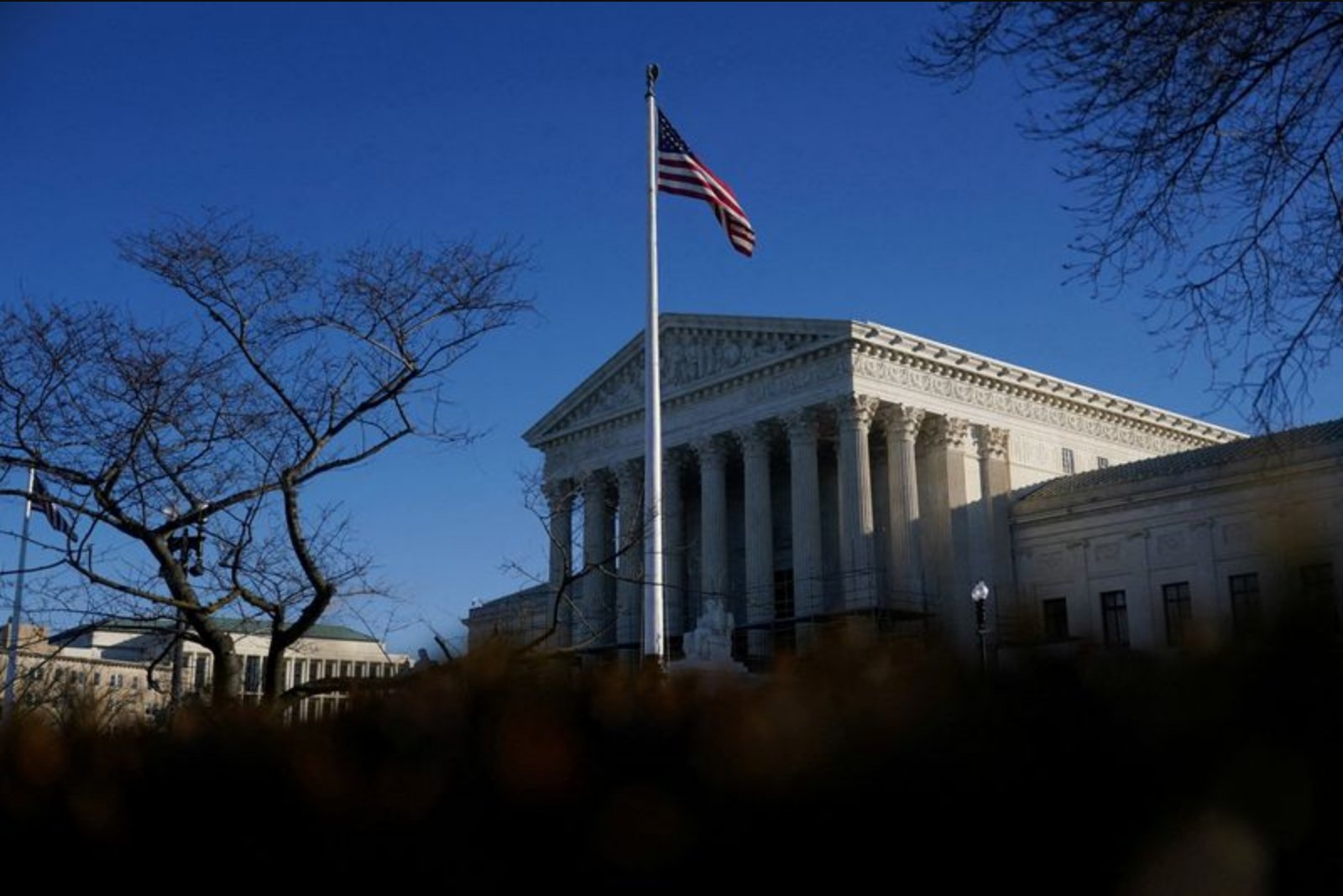
The U.S. Supreme Court’s 2019 decision in Rucho v. Common Cause is widely viewed by legal scholars as the key legal turning point that enabled a sharp escalation in partisan redistricting nationwide. By concluding that federal courts should not review claims of partisan gerrymandering, the decision removed a judicial constraint that had previously curtailed extreme mapmaking, and critics say it has helped trigger a competitive surge in efforts to redraw electoral districts to favor one party or the other.
That dynamic has come into focus this year as states with the country’s largest delegations have produced sharply partisan congressional maps that the Supreme Court recently allowed to stand. The Texas legislature, acting with encouragement from Donald Trump, adopted a new U.S. House map intended to turn as many as five Democratic-held seats over to Republicans. California’s legislature then responded by producing its own map designed to flip as many as five Republican-held seats to Democrats. Because Texas and California are the two most populous states, their maps affect more House seats than any others and have outsized influence on the balance of power in Congress.
Legal analysts say Texas and California set the tone for similar efforts in other states this election cycle. Heavily skewed plans have been pursued by Democrats in Virginia, Maryland and New York, while Republicans have sought comparable outcomes in Missouri, Ohio, North Carolina and Florida.
Harvard Law School professor Nick Stephanopoulos, a long-standing critic of the court’s 2019 ruling, described Rucho as the opening move that led to what he called a "gerrymandering-fest around the country." Stephanopoulos said that if federal courts retained a clear, enforceable standard for policing partisan gerrymanders, much of the present activity would be curtailed and some of it might not occur at all.
The Supreme Court in Rucho held that claims of partisan gerrymandering present political questions not suitable for resolution in federal courts. The ruling left intact other judicial protections, including prohibitions on mapmaking driven primarily by race, although the Court has in recent rulings made those race-based claims harder to prove. State courts remain available forums for some challenges, but their responses have been uneven: while a number of state courts have struck down gerrymanders since Rucho, many others have not, Stephanopoulos said.
The political stakes tied to control of the House and Senate are acute. Republicans currently hold a narrow 218-214 majority in the House, making individual seats highly consequential. Losing either chamber would hinder the legislative priorities tied to the Republican agenda and could open the way to investigations by a Democratic-led Congress into the administration. Whether the tit-for-tat mapmaking ultimately produces a lasting partisan advantage for either party remains uncertain, but public polling already signals broad discontent: an October Reuters/Ipsos poll cited in court filings found that 61% of Americans - including 75% of Democrats and 55% of Republicans - viewed recent redistricting efforts such as those in Texas and California as "bad for democracy."
Justin Levitt, a law professor at Loyola Marymount University and a former White House adviser on democracy and voting rights, framed the popular sentiment bluntly: "Voters fervently hate this," Levitt said, adding that the public reaction is justified.
Although partisan gerrymandering is not a new phenomenon, the timing and intensity of the current round of mapmaking set it apart. Traditionally, redistricting follows the once-per-decade census, when state legislatures redraw district lines to reflect population changes. What legal scholars characterize as mid-decade redistricting - maps adopted outside the standard post-census cycle - has been rare since major Supreme Court rulings on redistricting in the 1960s. University of Kentucky law professor Joshua Douglas called the current pattern "unprecedented in the modern era," and said that the Rucho decision, combined with political incentives, has produced "this race to the bottom that we’re seeing today."
Douglas and others emphasize that modern mapping techniques have further enabled the partisan push. Advances in computing and voter data have made it possible to design districts with high precision. J. Miles Coleman, an elections analyst at the University of Virginia’s Center for Politics, noted that gerrymandering evolved into a more technical practice in the 1990s when computer software allowed mapmakers to refine districts down to the census block level. Coleman argued that the Court’s restraint in Rucho has encouraged partisan mappers on both sides to test the limits of what they can do, with a mindset of "if we can get away with pushing the envelope, why not try it?"
Before Rucho, federal courts had struck down some particularly extreme partisan gerrymanders on constitutional grounds, finding that the maps were so biased as to violate rights guaranteed by the Constitution. In the Rucho opinion, Chief Justice John Roberts acknowledged that excessive partisan gerrymandering can produce results that "seem unjust" and are "incompatible with democratic principles," but he concluded that federal courts are not the right venue to resolve such disputes because doing so would entangle the judiciary in inherently political judgments.
The Rucho ruling did not remove all legal constraints. Mapmaking that is principally motivated by race remains subject to judicial scrutiny, though recent Supreme Court decisions have raised the bar for successful challenges of this sort. Moreover, because the Supreme Court’s ruling applies to federal courts, state courts retain the authority in some cases to address gerrymandering issues under state law. The extent to which state judiciaries intervene, however, has varied widely across jurisdictions.
The Supreme Court’s most recent actions have directly influenced the electoral landscape. The Court revived the Texas congressional map after a lower court had found it likely constituted an unlawful racial gerrymander and had blocked its use. In a separate action, the Court also upheld California’s new congressional plan. Both decisions came in cases where challengers alleged illegal use of race in drawing districts. Defenders of the California plan, including lawyers for Governor Gavin Newsom, told the justices that the evidence showed districts were motivated by partisanship rather than race.
In a concurrence joined by conservative Justices Clarence Thomas and Neil Gorsuch, Justice Samuel Alito wrote that challengers to the Texas map had not demonstrated that race, rather than political advantage, was the predominant factor in the map’s design. Alito suggested the challengers should have presented an alternative plan that achieved the legislature’s partisan objectives while offering greater racial balance, referencing a 2024 redistricting opinion he authored.
Alito addressed the dissenters directly, asserting that "the impetus for the adoption of the Texas - like the map subsequently adopted in California - was partisan advantage pure and simple."
Liberal Justice Elena Kagan dissented from the Court’s revival of the Texas map, offering a more reflective tone by recalling "those innocent days - prior to Texas’s redistricting - when partisan gerrymanders seemed undemocratic or at least unsavory, rather than a mark of political conviction or loyalty."
As the midterms approach, mapmaking remains a central and contentious element of the political contest. State legislatures continue to hold primary responsibility for redistricting in most states, and the combination of political motivation and technological precision has elevated the importance of map design in determining electoral outcomes. Whether the partisan tit-for-tat over maps ultimately translates into durable shifts in Congressional control is still an open question, but the legal realignment set in motion by Rucho has clearly changed the strategic landscape for both parties.
For investors and market watchers, the immediate implications are political risk and uncertainty over the legislative environment. Control of Congress can affect the prospects for legislation relevant to fiscal policy and oversight of the executive branch, and the ability of one party to entrench its advantage through redistricting may prolong policy uncertainty. At the same time, public opposition to recent redistricting efforts is substantial and cross-partisan, suggesting potential political and legal friction as the election season unfolds.
Ultimately, scholars and practitioners interviewed by the Court’s decisions see a fundamental tension at play: modern mapmaking has become a high-tech, intensely political instrument of power, and the removal of federal judicial review has left the resolving mechanism to the political process and to state-level legal systems. How that balance plays out in the months ahead will be central to understanding the shape and stability of U.S. electoral competition.