
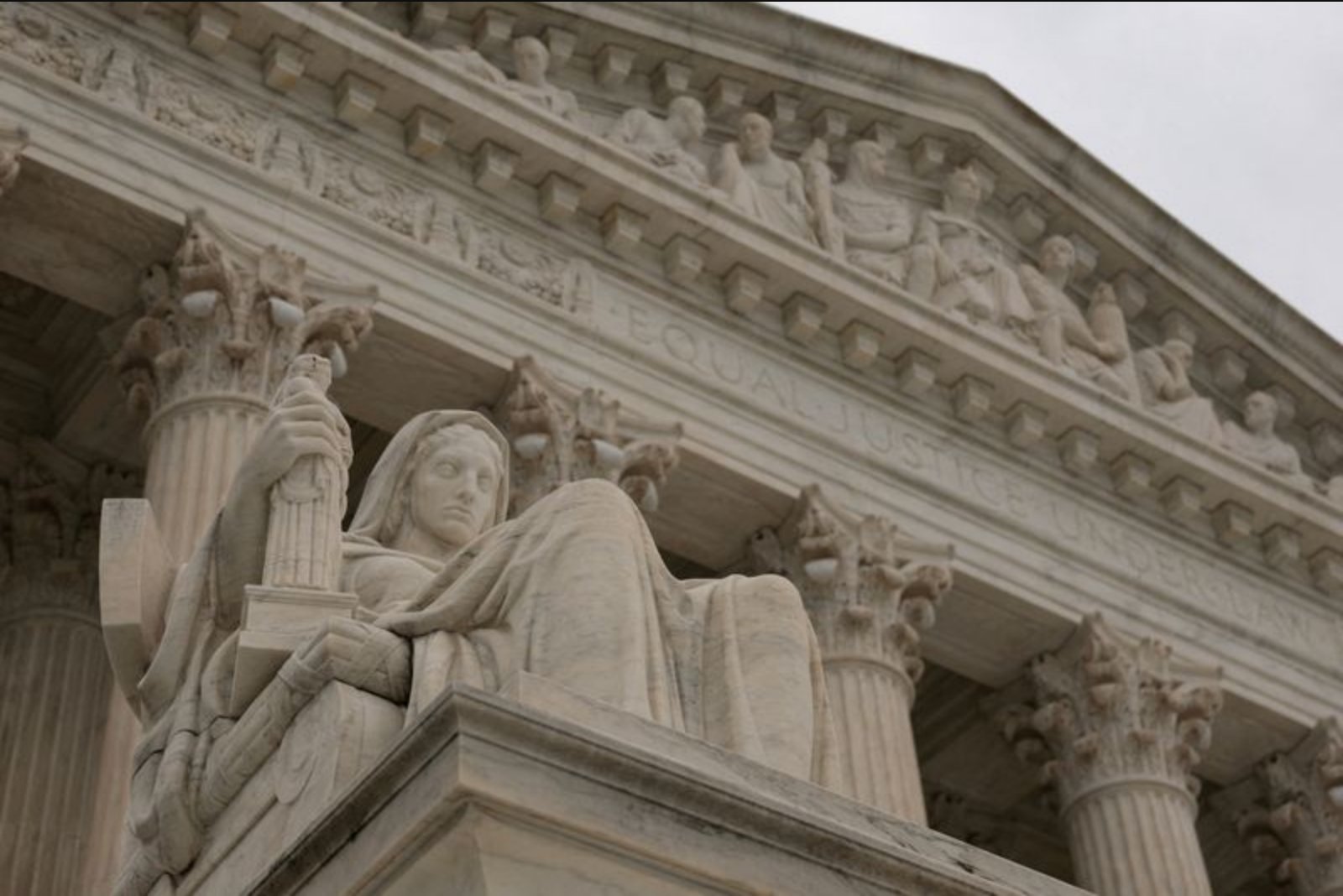
WASHINGTON, May 26 - The U.S. Supreme Court on Tuesday sided with the Trump administration in a dispute over whether federal immigration judges may bring a direct First Amendment challenge in court to a government policy that limits what they can publicly say. In an unsigned decision, the justices reversed a ruling by the Richmond-based 4th U.S. Circuit Court of Appeals and returned the case to that court for further proceedings.
The high court's ruling did not address the underlying question of whether the speech restraint itself violates the Constitution. That policy, adopted by the Executive Office for Immigration Review during President Donald Trump's first term, requires immigration judges to obtain prior approval before engaging in any "official" speech - defined in court records as appearances where a judge is invited due to their official position, expected to discuss agency policies, programs or subject matter directly related to their duties, or to otherwise appear on the agency's behalf.
Procedural history and immediate holdings
The National Association of Immigration Judges sued in 2020 to block the policy, arguing it infringes First Amendment protections against government abridgment of speech. A federal judge in Virginia dismissed the suit in 2023, citing the Civil Service Reform Act of 1978 and concluding that the dispute should be channeled through independent administrative bodies typically tasked with adjudicating certain federal worker complaints.
Under that statutory scheme, the Office of Special Counsel can determine whether to refer matters to the Merit Systems Protection Board for adjudication, rather than allowing immediate access to federal court. The 4th U.S. Circuit, however, departed from that route in June 2025, finding that President Trump's removal of the heads of agencies that normally handle these complaints raised substantial questions about whether the immigration judges could obtain a fair hearing before those agencies. The appeals court instructed the trial judge to conduct fact-finding on whether the agencies remained sufficiently independent to provide meaningful relief.
The federal government appealed that order to the Supreme Court. The high court on Tuesday found fault with the 4th Circuit for resting its decision on an argument that had not been presented by any party in the litigation. By reversing and remanding, the Supreme Court prevented the lower court's fact-finding directive from moving forward as issued.
Remaining issues left unresolved
The Supreme Court's decision preserved the distinction between procedural posture and the substantive constitutional claims. It did not resolve the central First Amendment challenge to the speech restriction enacted by the Executive Office for Immigration Review. Nor did it reach the question of whether immigration judges may, as a matter of law, bring such a challenge directly in federal court irrespective of the administrative remedies ordinarily required.
Separately, the judges' association had sought review of the lower court's view that, so long as the relevant agencies function, challenges like this belong before the agencies rather than in court. That appeal was denied by the Supreme Court on Tuesday.
Policy continuity and broader legal context
The policy at issue was evaluated but ultimately left in place by the Biden administration and has been maintained by the current Trump administration. The National Association of Immigration Judges continues to assert that the restriction impermissibly curtails constitutionally protected speech.
The Supreme Court also criticized a broader pattern noted in the appeals court's analysis: President Trump has removed a number of independent agency heads even where statutes were designed to make such officials removable only for cause. That pattern has fed a separate, pending Supreme Court case in which the administration argues that statutory removal protections themselves unconstitutionally limit presidential authority. The high court is expected to decide that removal-protection dispute by the end of June, according to the record in this matter.
Related emergency rulings and pending immigration cases
The court has issued a series of emergency rulings since President Trump returned to office in matters touching immigration policy. Those emergency decisions have included allowing the administration to deport migrants to countries other than their own and to revoke temporary legal status for hundreds of thousands of Venezuelan immigrants. The Supreme Court is also expected to rule by the end of June on the legality of a presidential directive to restrict birthright citizenship and on the administration's efforts to revoke temporary protections for more than 350,000 Haitians and about 6,100 Syrians living in the United States.
What remains uncertain
With the Supreme Court's remand, factual questions about agency independence - and whether they preclude direct court review of the judges' First Amendment challenge - will likely resurface in the lower courts. The justices' decision narrows the procedural path to immediate judicial relief but leaves open the substantive constitutional questions that will determine whether the speech policy can stand.