
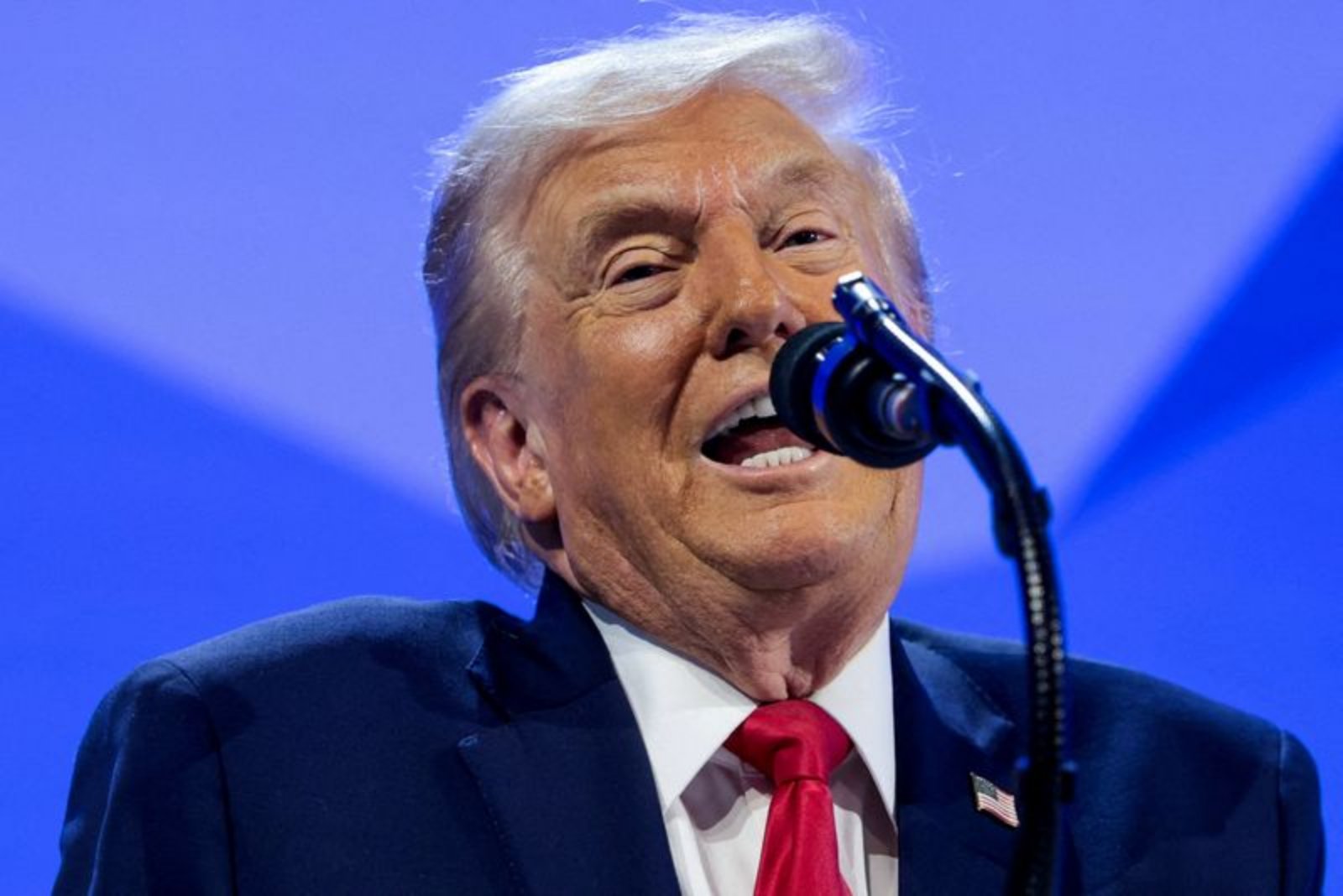
President Donald Trump, critical of the U.S. Supreme Court's decision that invalidated his broad tariff measures, is likely to see some of the justices in person when he presents his State of the Union address on Tuesday night. The annual speech often places the nine justices in the public glare and, this year, could spotlight frictions created by a 6-3 ruling issued last Friday that rebuked the president's use of emergency tariffs.
The high court found that Trump had exceeded his authority by sidestepping Congress and imposing tariffs under a federal statute designed for national emergencies. The 6-3 decision included three conservative justices in the majority - Chief Justice John Roberts, Neil Gorsuch and Amy Coney Barrett - who joined the court's three liberal members. Trump appointed Gorsuch in 2017 and Barrett in 2020. Roberts has been chief justice since his 2005 appointment by former President George W. Bush and has now served in that role for more than two decades.
Following the ruling, Trump publicly denounced the court and the six justices who sided against his tariffs. He said he was "ashamed" of the three conservative justices who voted with the liberal bloc, calling them "fools and lapdogs for the RINOs and the radical-left Democrats." The phrase RINO, meaning "Republican in name only," is sometimes used by conservative Republicans to disparage fellow party members perceived as insufficiently loyal.
Trump singled out Justices Gorsuch and Barrett by name, stating they were "an embarrassment to their families" for their votes in the tariff case. He also alleged, without providing evidence, that the court had been "swayed by foreign interests." At the same time, Trump praised the three justices who ruled in his favor on the case and offered particular commendation for his 2018 appointee Brett Kavanaugh.
Supreme Court justices commonly attend the State of the Union, and some of the current justices are anticipated to be seated in the U.S. House of Representatives chamber for the address to a joint session of Congress. The court has not announced which justices will attend on Tuesday. When present, they customarily wear their judicial robes and remain expressionless while the president speaks.
Attendance at the address carries symbolic significance. Brown University political science professor Corey Brettschneider described the justices' presence as something that "sends a message of stability" and "conveys that these aren’t enemy institutions." That symbolic role may be tested this year given the recent public exchanges and the broader political context surrounding the tariff decision.
The question of how the justices should participate in the State of the Union has been debated for years. Roberts, who has attended every State of the Union since joining the court, has publicly questioned the value of the tradition. In a 2010 speech at the University of Alabama, Roberts said he found it "very troubling" to see members of one branch of government standing and cheering while the court, obliged by protocol to remain seated and expressionless, is placed in a visibly awkward position. "To the extent the State of the Union has degenerated into a political pep rally," he said at the time, "I’m not sure why we’re there."
Roberts voiced those observations after then-President Barack Obama criticized a Supreme Court ruling during a State of the Union, an exchange that produced a sharp reaction on the bench. Conservative Justice Samuel Alito, who was present for that speech, shook his head and appeared to mouth "not true," departing from the typical impassive demeanor expected of justices. Alito has not attended the State of the Union since, calling the tradition "very awkward."
In a 2015 interview with the American Spectator, Alito reflected on the dilemma justices face when presidents' remarks blur the line between nonpartisan appeals and partisan advocacy. He described occasions where the bench risks looking foolish if it remains motionless or is caught off guard by applause prompted by the president's rhetoric.
The late Justice Antonin Scalia also declined to attend the speech in the past, once describing it as a "childish spectacle." Attendance levels among the justices have varied over recent years; four justices were present for Trump's last formal State of the Union in 2020.
Interactions between presidents and the justices in the State of the Union setting have occasionally been personal. In his address to Congress last year, Trump reached for Chief Justice Roberts, clasped his hand and patted him on the shoulder, saying: "Thank you again. I won’t forget." That gesture came after a 2024 Supreme Court decision authored by Roberts that granted Trump broad immunity from prosecution for official acts while he served as president. Trump later explained he had been thanking Roberts for administering the oath at his inauguration.
Presidential criticism of the court's rulings has been a recurring feature of recent State of the Union addresses. In his 2024 speech, President Joe Biden addressed justices who were present and critiqued the court's 2022 decision that limited abortion rights, saying: "With all due respect, justices, women are not without ... electoral or political power."
There have been occasions when no justices attended at all. The last time all nine members of the court were absent from a State of the Union was in 2000, near the end of President Bill Clinton's second term; at the time the court issued a public statement attributing the absences to "travel changes and minor illnesses."
As the State of the Union approaches, the presence or absence of individual justices will be watched closely for what it may signal about relationships among the branches of government and the court's posture toward highly political occasions. This year, the backdrop of a recent 6-3 ruling that invalidated presidential tariff action is likely to make that scrutiny more intense.