
In a series of high-profile election-law decisions, the U.S. Supreme Court's conservative majority has permitted several Republican-drawn congressional maps to stand, even where those maps were challenged and at times blocked by lower courts. The sequence of rulings - permitting a Texas map last December and clearing the way for new Louisiana and Alabama maps this spring - has drawn scrutiny for what some legal experts call an uneven application of the long-standing Purcell principle, which counsels caution in altering voting rules close to an election.
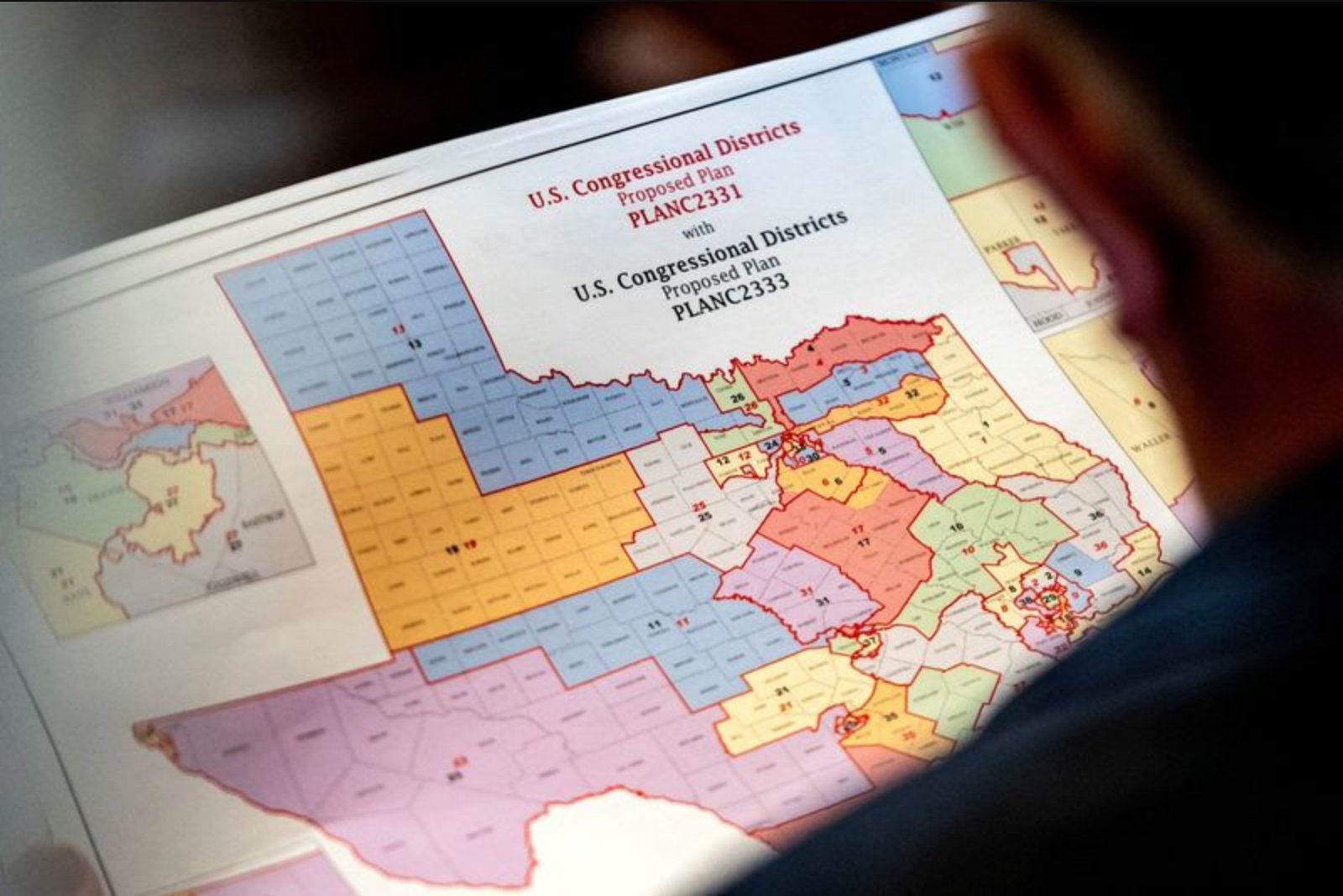
The Texas decision, issued last December, allowed the state to proceed with a newly drafted voting map that advantaged Republican candidates. The court criticized a lower courthouse order that had blocked the map on the grounds that it came "on the eve of an election." At that point, state party primaries were roughly four months away, and the general election was about 11 months off.
That December action invoked the Purcell principle, originating from a 2006 opinion in Purcell v. Gonzalez. In that case the Supreme Court removed a lower court block on an Arizona voter-identification law imposed 33 days before the midterm elections that year. The doctrine, as understood by many jurists, advises courts to avoid last-minute changes to election rules because such changes risk confusing voters and disrupting the electoral process.
Yet later this spring the court reached results that produced similar partisan effects while arriving at different procedural postures. In separate decisions, the justices permitted Louisiana and Alabama to adopt reconfigured House maps that were widely seen as benefiting Republicans. Those authorizations came just days before in-person voting was due to begin in primary contests and in the wake of thousands of mail ballots already cast.
In Louisiana, the court's 6-3 ruling struck down one of the state's two majority-Black congressional districts. The decision, which featured conservative justices in the majority and liberal justices dissenting, was issued on April 29 - three days before early voting was slated to begin for Louisiana's May 16 primary election. The timing intensified concerns about late-change disruptions to an active vote.
Alabama's case offered a particularly striking example of the court's differing approach to the Purcell principle. In January 2022 a federal court had blocked a Republican-drawn Alabama map that the lower court found unlawfully denied Black voters an additional district in which they comprise a majority or come close to doing so, likely in violation of the Voting Rights Act. The next month, however, the Supreme Court ruled that the contested map should remain in force to avoid disrupting an upcoming primary election, with Justice Brett Kavanaugh concurring and joined by Justice Samuel Alito. Kavanaugh wrote: "When an election is close at hand, the rules of the road must be clear and settled."
Four years later the conservative majority again allowed that same map to be used. On May 11 the court lifted a judicial order that had blocked Alabama's disputed map, doing so eight days before the state's scheduled primaries. The court issued no explanatory opinion accompanying the action. In response to the ruling, Republican Governor Kay Ivey postponed the primaries for four House races whose district boundaries were affected, effectively voiding votes that had already been cast in those contests.
Observers note that the outcomes in Texas, Louisiana and Alabama have each produced results favorable to Republicans at a moment when the party is aiming to hold its congressional majority heading into November's midterm elections. The decisions, taken together with another major development this spring, have strengthened Republican prospects in several Southern states.
Last month the Supreme Court's conservative majority also dismantled a central provision of the 1965 Voting Rights Act in a separate ruling, a move that experts said opened the path for Republican-led Southern states to reconfigure or eliminate Democratic-leaning majority-Black and majority-Latino districts ahead of the midterms. Black and Latino voters, the article noted, generally support Democratic candidates.
The broader contest over redistricting has taken an unusual mid-decade turn. At the urging of former President Donald Trump, Republican-led Texas redrew its political map late last year seeking to flip five Democratic-held U.S. House seats. Democratic-run California followed with its own redrawing designed to target five Republican-held seats. Multiple states have since entered the dispute, producing a patchwork of map changes and legal challenges.
Legal scholars interviewed about the pattern of rulings offered differing interpretations of the court's approach. Some questioned whether the Purcell principle remains a coherent, consistently applied doctrine. University of Kentucky law professor Joshua Douglas said: "I’ll just say that the Purcell principle is not really a principle anymore, at least if we think 'principle' means it is going to be consistently applied." He added: "Cynics would say this is politics all the way down, and there’s evidence of that given that the court seems to be letting Republican-controlled states implement new maps when previously it had stopped lower court rulings against some of those maps."
By contrast, University of Notre Dame law professor Derek Muller offered a narrower reading of the recent rulings. Muller suggested they share a common thread: restoring the actions of state legislatures that lower courts had blocked. "The cases," Muller said, "may inject uncertainty into elections due to their timing. But it’s not because the court has changed the rules. It’s because the court has stepped back and allowed the legislature to act."
Additional observers pointed to procedural and institutional features that complicate public understanding. Part of the confusion stems from the fact that many of these decisions have been issued through the court's emergency docket - often called the shadow docket - where rulings are resolved on an accelerated basis and sometimes without full explanations of legal reasoning. UCLA law professor Richard Hasen, who coined the term Purcell principle a decade ago, remarked on the practical effect of the timing in one high-profile decision: "The court issued the opinion as people were voting, knowing it was going to lead to this frenzy," Hasen said. "If the court was actually concerned about upsetting election rules on the eve of an election, it would either have issued (it) earlier or later."
Observers have also documented swift state actions following the court's decisions. Four Republican-led Southern states - Louisiana, Tennessee, Alabama and South Carolina - moved quickly to alter several House districts with substantial Black populations in time for the midterm contests.
Critics of the recent rulings argue that the conservative justices have blurred the Purcell principle's original restraint-based intent, using it selectively to allow Republican maps while blocking changes in other circumstances. Justin Levitt, a law professor at Loyola Marymount University who served as a White House adviser on democracy and voting rights, said the conservative justices appear to have substituted the Purcell principle's broad command for judicial restraint with a more ad hoc test: "When we like what's happening, we rule." Levitt added: "I am not quick to accuse the court of indulging purely partisan leanings, but man, oh man, they're making it real difficult to try and figure out what they're doing, if not that."
The decisions and the debate around them underscore persistent tensions in election law between stability, judicial intervention and state legislative authority. While some legal scholars see coherence in restoring legislative maps that lower courts had halted, others view the timing and apparent inconsistency as eroding confidence in neutral application of procedural principles.
What remains clear from the recent string of rulings is that the court's actions have produced tangible changes in how several Southern states will structure their congressional representation for the upcoming midterms. Those changes arrive at a politically charged moment, amid efforts by both parties to consolidate electoral advantages and as courts continue to play an outsized role in resolving disputes over how lines are drawn and who gets to vote in which districts.
Summary
- The Supreme Court's conservative majority has allowed Republican-favoring congressional maps in Texas, Louisiana and Alabama to proceed, sometimes close to primary voting.
- Legal debate centers on whether the Purcell principle is being applied consistently or selectively, with critics arguing that recent rulings favor Republican-controlled states.
- These decisions follow another major ruling that removed a key protection of the Voting Rights Act, collectively enabling Southern states to reconfigure majority-Black and majority-Latino districts ahead of the midterms.
Key points
- The court permitted Texas to move forward with a Republican-leaning map last December, citing concern about last-minute changes before elections.
- In late April and early May the court cleared Louisiana and Alabama to use maps that alter majority-Black districts, actions critics say came too close to voting and benefitted Republican interests.
- These rulings, together with the court's recent alteration of a major Voting Rights Act provision, have advantaged Republican-led efforts to redraw districts mid-decade.
Risks and uncertainties
- Timing risk - Late changes to voting maps can create voter confusion and logistical disruption during primaries, an uncertainty with direct implications for election administration and outcomes.
- Perception of politicization - The uneven application of the Purcell principle has heightened concerns about the court's consistency, potentially eroding public confidence in impartial judicial oversight of elections.
- Mid-decade redistricting uncertainty - The recent decisions increase the likelihood that partisan map changes will persist into the midterms, raising legal and political uncertainty that could affect campaign strategies and voter mobilization efforts.