
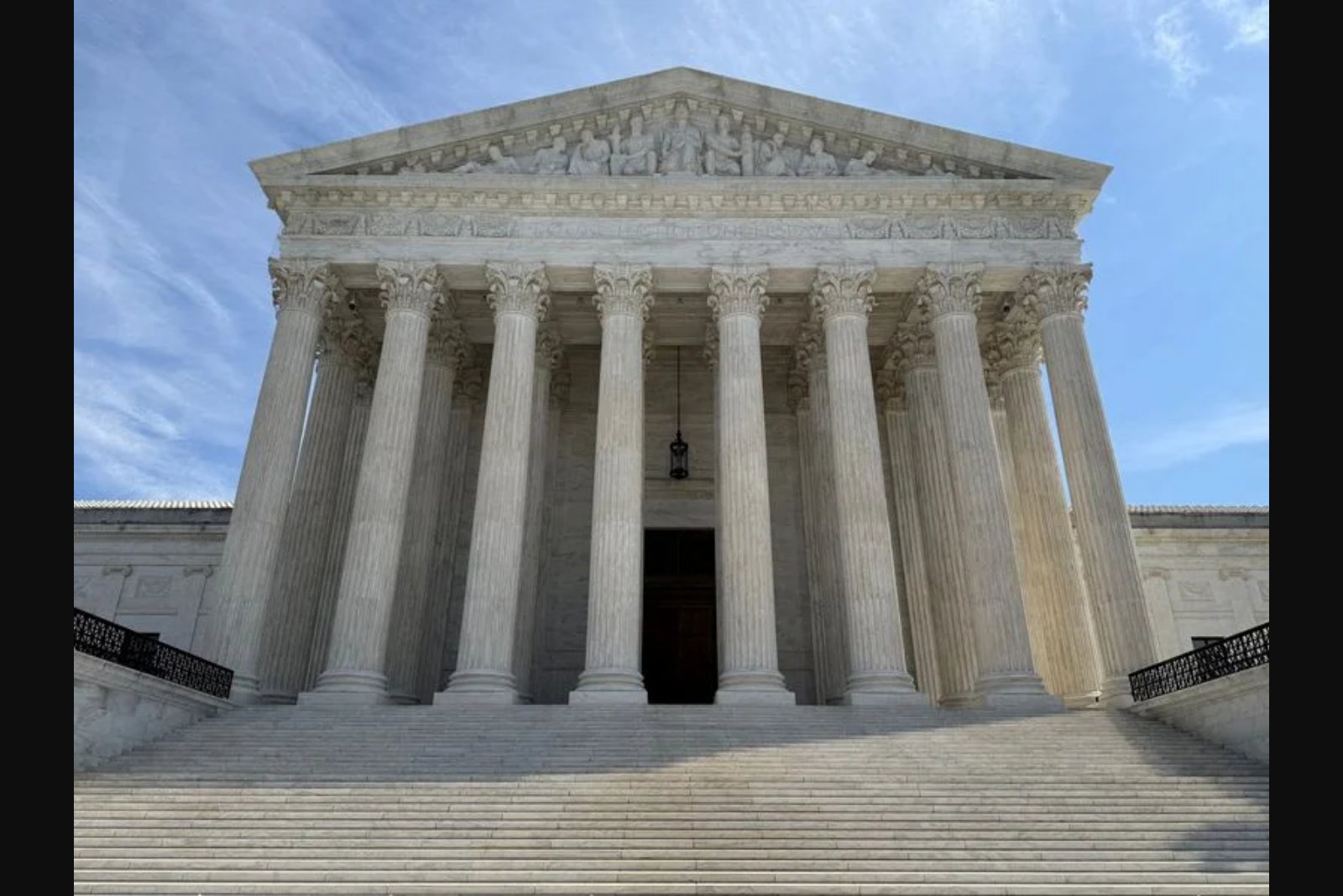
The U.S. Supreme Court has already handed Republican candidates an advantage this year through a decision that narrowed a central provision of the Voting Rights Act, and it may deliver further rulings that shape the November midterms. In two cases argued earlier this year, the Court could rule in ways that alter how mail ballots are handled and how party spending coordinates with candidate campaigns - outcomes that analysts and party operatives say could benefit President Donald Trump’s party.
Court calendar and stakes
The Court - dominated by a 6-3 conservative majority - is expected to issue verdicts in both cases by roughly the end of June. The decisions come as Republicans seek to defend narrow House and Senate majorities in the November 3 midterm elections. Control of either chamber would directly affect the ability of Democrats to check or slow the White House agenda and to pursue investigations into the administration, should they win.
Both matters now before the justices carry implications for electoral mechanics and campaign finance that intersect with partisan strengths and vulnerabilities. One case, brought by Republican officials in Mississippi, targets state rules that allow ballots postmarked by Election Day to be counted if they arrive within five business days afterward. The other, which stems from litigation involving U.S. Senator JD Vance and other Republican candidates, seeks to loosen restrictions on spending coordinated between political parties and the campaigns they support.
Context: recent Voting Rights Act decision
Earlier this spring the Court’s conservative bloc issued a ruling in a case from Louisiana that undercut a core provision of the Voting Rights Act, making it more difficult to challenge electoral maps as racially discriminatory under that law. Legal scholars say the immediate effect of that ruling is to open opportunities for Republican state legislatures to redraw district boundaries, potentially dismantling Democratic-held House seats with large Black or Latino populations across the South.
Observers have described that ruling as an immediate electoral gain for Republicans. Washington University in St. Louis School of Law professor Travis Crum called it a "boon for Republicans." The court’s Louisiana decision, in short, has cleared a path for redistricting that could yield lasting advantages in House representation.
Case one - coordinated party spending
The campaign finance dispute centers on longstanding federal law governing how political funds may be raised and spent in U.S. federal elections. Since 1971, the law has treated spending by a political party that is independent of a candidate’s campaign as an independent expenditure that is not subject to limits. But expenditures that are coordinated between a party and a campaign have been restricted.
Republican challengers, including JD Vance when he ran for the U.S. Senate in Ohio in 2022, appealed a lower court decision that upheld those limits on coordinated party expenditures. They argue such restrictions violate the First Amendment by abridging freedom of speech, and they have asked the Supreme Court to strike them down. Conservative justices have signaled openness to that line of reasoning in the past - notably in the Court’s landmark 2010 Citizens United v. FEC decision, which relied on First Amendment grounds to invalidate other campaign finance limits.
Among supporters of the current restrictions, the argument is that limits on coordination help guard against corruption. Without them, critics say wealthy donors could funnel large sums to candidates via party committees and thereby sidestep individual contribution limits designed to reduce undue influence.
Conservative election lawyer Dan Backer has countered that removing coordinated-spending limits would strengthen political parties, which he contends exert a more moderating influence on U.S. politics than independent special interest groups. "The overall political system is benefited by very strong parties," Backer said. He has represented Republican candidates and right-leaning groups in related litigation.
University of Minnesota political science professor Timothy Johnson said a decision favoring the Republicans appears likely based on the tenor of oral arguments, and that such a ruling could let the GOP leverage its fundraising edge. At the end of April, three major Republican committees - the Republican National Committee, the National Republican Congressional Committee and the National Republican Senatorial Committee - reported holding $251 million in cash and no debt. That cash position was roughly double the approximately $125 million held by their Democratic counterparts, who were carrying more than $17 million in debt.
Johnson noted that the monetary edge for Republican party committees could translate into rapid coordination with candidates if limits are overturned. "Once that ruling comes down, there could be coordination between those committees and candidates pretty instantaneously," he said, while also acknowledging that some Democratic candidates in high-profile races have strong individual fundraising that could offset part of the advantage.
Election law specialists also note an unresolved question that could follow from a favorable ruling for the Republicans: whether party committees would be entitled to the same discounted rates for television and radio advertising that candidates have traditionally received. That issue would raise new legal questions that have not yet been fully tested in the courts.
Case two - mail-in ballot timing
The Mississippi litigation asks the Court to invalidate state provisions that permit ballots to be counted if they are postmarked by Election Day and received within five business days thereafter. The dispute turns on whether federal statutes that set the dates for federal elections preempt state rules that allow ballots to arrive after Election Day.
Arguments in that case were heard in March, and during oral argument a majority of the justices appeared ready to invalidate Mississippi’s postmark grace period. If the Court were to strike down the Mississippi law and impose a strict requirement that ballots arrive by Election Day, such a standard could ripple through other jurisdictions. The National Conference of State Legislatures reports that 14 states, plus Guam, Puerto Rico, the U.S. Virgin Islands and Washington, D.C., currently count ballots that are received after Election Day if they were postmarked on or before Election Day.
The practical partisan consequences are notable because mailed ballots are used disproportionately by Democratic voters. Data cited from the MIT Election Lab shows that in the 2024 election, 37% of Democratic voters said they cast ballots by mail, compared with 24% of Republicans. In 2020 - the election conducted during the COVID-19 pandemic - the gap was even wider: 60% of Democratic voters cast mail-in ballots versus 32% of Republican voters.
Since former President Trump began casting doubt on the security of mail voting after the 2020 election, the method has become less popular among some Republican voters, despite remaining common among older and more rural Republican constituencies. Trump in March signed an executive order seeking to tighten mail-in voting rules, a directive that prompted legal challenges contending it encroached on states' constitutional authority to regulate elections.
The Democratic National Committee filed a brief warning of what it described as "disastrous consequences" if the Court rules for the Republicans and imposes an inflexible deadline on when ballots must be received. The DNC argued that invalidating laws like Mississippi’s could disenfranchise large groups of voters, including military personnel stationed away from home, overseas citizens, rural voters, elderly and disabled voters, and those without reliable transportation.
Election administration experts caution about the operational difficulties of changing rules so near to a major election. Chris McIsaac, a researcher at the R Street Institute, said requiring ballots to arrive by Election Day is reasonable in principle, but implementing new deadlines months before an election would create administrative burdens. He pointed to the need for election offices to revise voter communications and instructional materials that are distributed well in advance.
Legal analysts also invoked the Purcell principle - a judicial doctrine that counsels against altering voting rules close to elections to avoid voter confusion - as a mechanism by which the Court could strike down a state law but nonetheless leave it in place for the upcoming midterms to prevent disruption.
How these rulings intersect with broader electoral dynamics
Experts caution that the magnitude of any practical advantage depends on multiple moving parts. The Voting Rights Act decision earlier this year already created a legal and political environment more permissive of map changes that could reduce the number of Democratic-held districts with sizable Black and Latino populations in the South, a demographic tilt that historically favors Democratic candidates.
At the same time, Republicans face headwinds in the November contests. Public opinion polling shows President Trump with low approval ratings as of spring, pressured in part by an unpopular foreign war with Iran and the higher gasoline prices linked to it. Analysts also note the historical pattern in which the president’s party often loses congressional seats in midterm elections.
Should the Court hand Republicans victories in the coordinated-spending and mail-ballot cases, the party could reinforce the structural advantages created by the Voting Rights Act ruling and its existing fundraising strength. But the degree to which those legal outcomes will translate into additional House or Senate gains is uncertain and will depend on campaign execution, candidate-level fundraising, voter turnout patterns and the administrative choices of state election officials.
What to watch next
Rulings in both the coordinated-spending and mail-in ballot cases are anticipated by around the end of June. Political strategists, campaign committees and election officials will be watching closely for guidance on whether coordinated expenditures between parties and campaigns are permissible without limits, and whether federal law preempts state allowances for ballots received after Election Day so long as they were postmarked by Election Day.
Practical consequences could include accelerated coordination between party committees and candidates if spending limits are loosened, and potential administrative upheaval or last-minute rule changes if the Court restricts postmark grace periods for mail ballots. Both outcomes, combined with the recent Voting Rights Act ruling, would intersect with fund-raising dynamics and redistricting processes to shape competitive contours heading into November.
Conclusion
The Supreme Court’s pending decisions are poised to influence key elements of the U.S. electoral system at a critical moment. With slim majorities at stake in both chambers of Congress and rulings expected before the summer, legal shifts on campaign finance and mail-in voting could recalibrate the competitive landscape for the midterms. How substantially those decisions alter the outcome of the November elections will depend on how state officials, party committees and campaigns adapt to any new legal parameters and on voter responses to changing rules and broader political currents.