
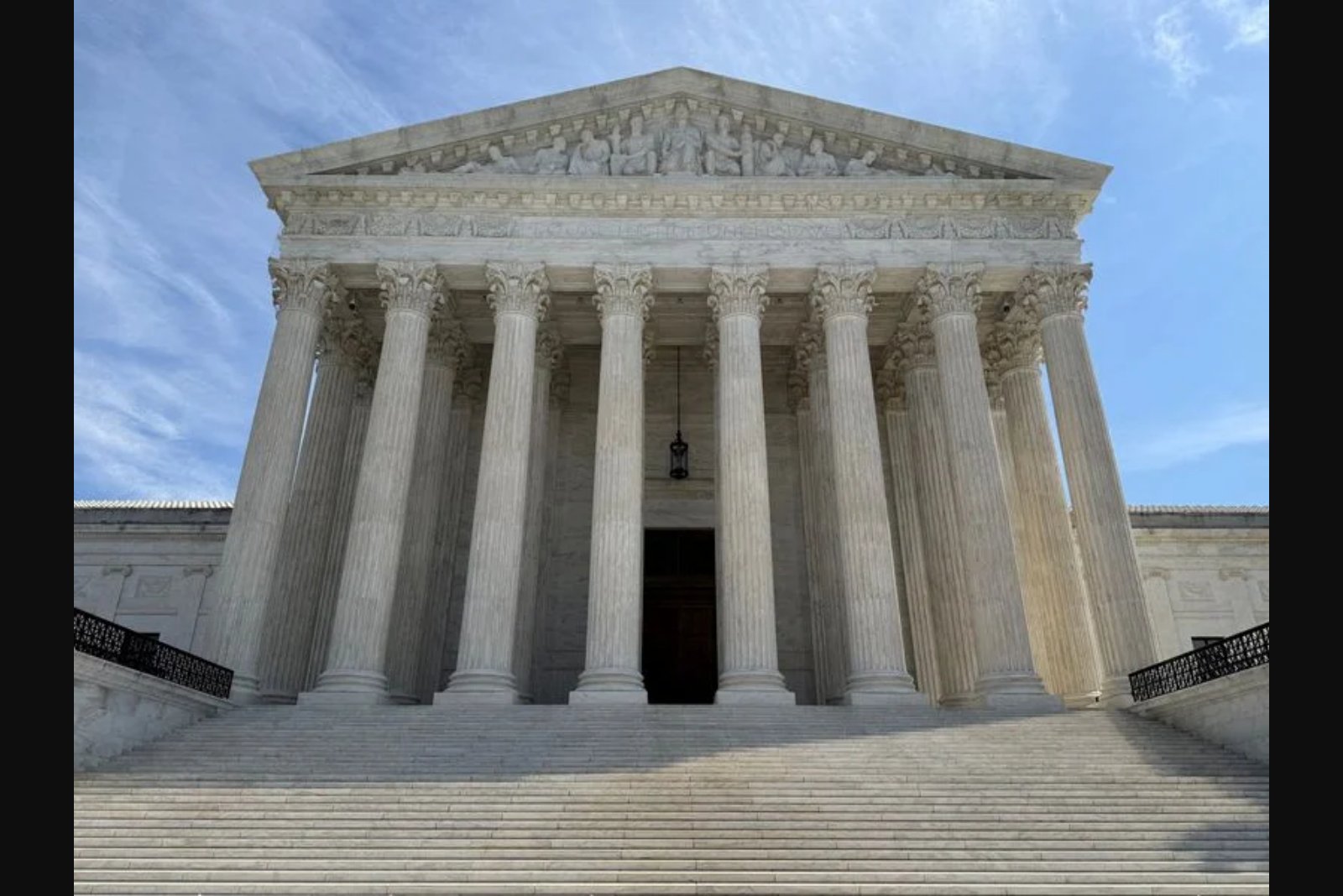
On June 2, the U.S. Supreme Court intervened to allow Alabama to proceed with a congressional map favored by Republican lawmakers that would reduce the number of districts where Black voters constitute a majority or near-majority from two to one. The high court halted a federal three-judge panel's order that had barred the state from adopting the plan, a move that the court's three liberal justices opposed in dissent.
The Republican-backed map was crafted to shift a U.S. House district currently held by a Black Democratic congressman toward Republican control. Supporters of the map said the state would suffer "irreparable harm" if forced to use the alternative map approved by the lower court. In filings to the Supreme Court, Alabama Republicans argued that the court-drawn map would be a racially gerrymandered plan that failed to meet the state's districting objectives.
"Worse still, voters will be forced to vote under a court-drawn racially gerrymandered map that does not meet Alabama's legitimate districting goals," the state wrote in its petition to the justices.
Opponents, represented by the NAACP Legal Defense Fund, countered that the state lacks any legitimate interest in advancing racial discrimination through its maps. In their filing, the group's lawyers urged the court to reject claims that using the lower court-approved map would itself cause harm, noting that "states have no legitimate interest in furthering racial discrimination, including by using a map that a court has found to be a product of intentional discrimination."
The lower federal panel, sitting as a three-judge court, had ruled that the Republican-crafted map intentionally discriminated against Black voters in violation of the U.S. Constitution's equal protection guarantee and therefore could not be used for upcoming elections, including the 2026 congressional cycle. Alabama appealed that decision to the Supreme Court and sought immediate relief from the panel's May 26 judicial block.
This development comes amid a broader and unusually frenetic round of mid-decade redistricting concentrated in Southern states. Those efforts accelerated after an April Supreme Court decision that substantially weakened protections under the Voting Rights Act. Since that ruling, several Republican-led states have moved to redraw congressional boundaries in ways that critics say dilute Black voting strength. Tennessee enacted a new plan that fractured a majority-Black, Democratic-held district in Memphis, while Louisiana adopted a map that would reduce the number of districts with sizable Black populations.
Litigation over Alabama's congressional map has bounced between the three-judge panel and the Supreme Court in recent years. Republican legislators in Alabama have attempted to reinstate a map they approved in 2023 that the same three-judge panel previously found discriminatory. That earlier map would reduce the count of districts where Black voters make up a majority or near-majority from two to one among Alabama's seven U.S. House seats. Black residents make up roughly one-quarter of Alabama's population.
On May 11, the Supreme Court temporarily granted Alabama's request to lift the three-judge panel's earlier order barring the use of the Republican map. In their dissent at that time, the court's three liberal justices suggested the three-judge panel retained the authority to reimpose its block on maps it found unlawful, including the plan now pursued by state Republicans. The panel subsequently concluded that the map Alabama sought to implement likely still violated the Voting Rights Act, even after the Supreme Court's April ruling in the Louisiana case raised the bar for proving vote dilution.
Following the panel's renewed injunction, Alabama officials returned to the Supreme Court seeking another stay. The high court's action on June 2 put the state-level map back into play while litigation continues, and it leaves open the prospect that the three-judge panel could again attempt to block the plan.
Legal observers and litigants have emphasized that the sequence of rulings underscores persistent uncertainty about which maps will govern upcoming elections. The back-and-forth between a federal trial court and the nation's highest court illustrates how redistricting fights can produce rapidly shifting legal outcomes - a dynamic with clear implications for political strategy as parties position themselves ahead of the November midterms.
Redistricting is the decennial process of redrawing legislative district lines to reflect population changes captured by the U.S. census. Traditionally conducted by state legislatures at the start of each decade, the current round of mid-decade mapmaking is highly unusual. The present flurry of activity was catalyzed in part by political maneuvers begun last year, when former President Donald Trump encouraged Republican-controlled Texas to redraw its congressional map in an effort to flip multiple Democratic-held seats. That push helped spark similar efforts in other states, both Republican- and Democratic-led.
For Alabama, the immediate legal battle focuses on whether a map that reduces the number of districts with Black majorities or near-majorities can withstand judicial scrutiny under the Constitution and applicable voting laws. Litigation is ongoing, and the state's plan remains subject to further orders from both the Supreme Court and the federal three-judge panel.
Contextual note: The Supreme Court's action on June 2 occurred within a broader pattern of redistricting disputes across the South, and the outcome of the Alabama litigation is likely to remain unsettled until the courts issue final rulings.