
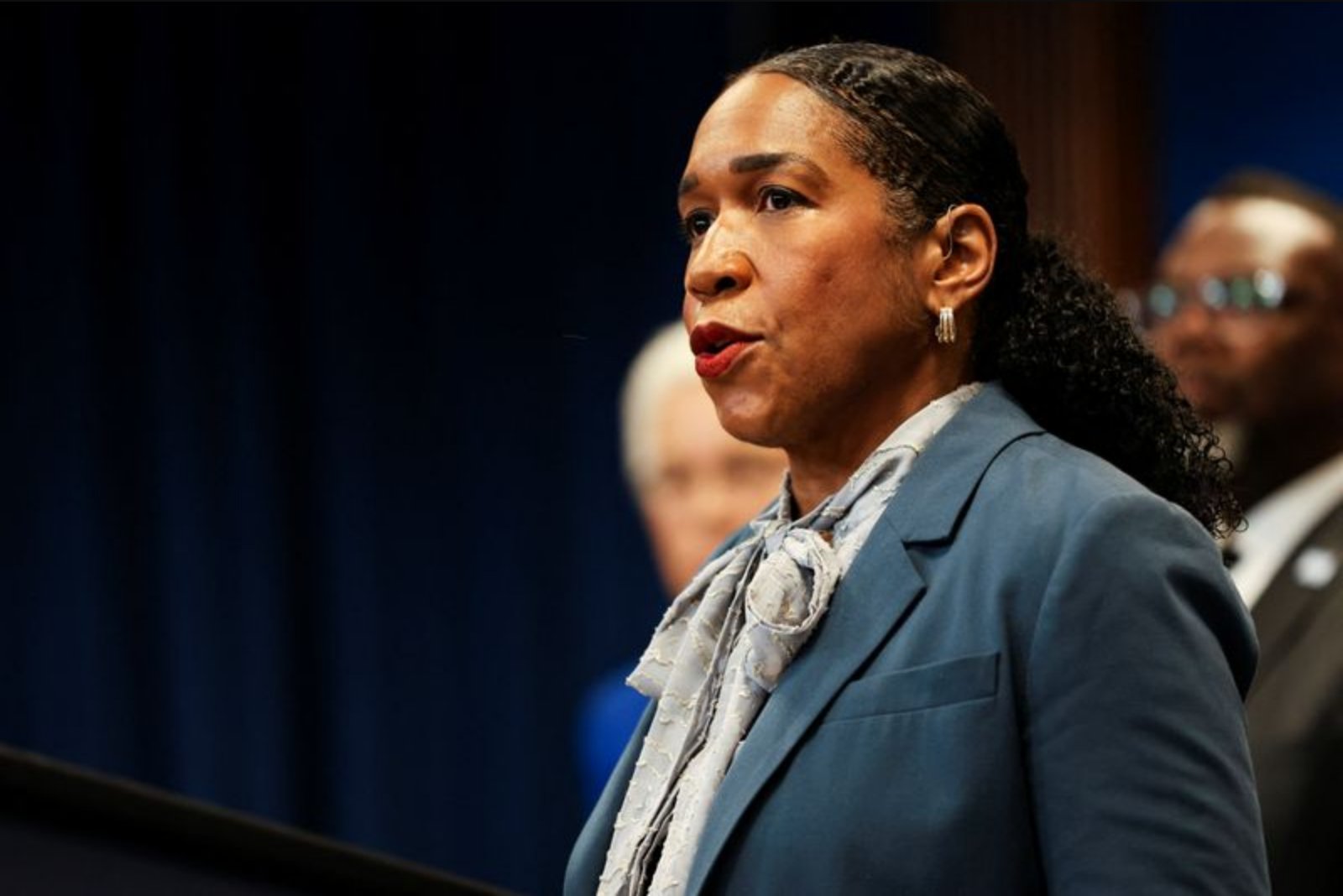
CHICAGO, March 17 - Illinois Lieutenant Governor Juliana Stratton won the Democratic primary on Tuesday to replace retiring U.S. Senator Dick Durbin, putting her on course to compete in the November general election in a state that leans strongly Democratic.
Stratton, 60, overcame a field of 10 other Democratic contenders for the nomination, including U.S. Representatives Raja Krishnamoorthi and Robin Kelly. She secured the endorsement of Governor J.B. Pritzker and was broadly regarded as the most progressive among the leading candidates.
Her campaign emphasized substantial federal policy shifts, most prominently an increase in the federal minimum wage to $25 per hour from the current $7.25. On immigration enforcement, Stratton adopted the most far-reaching position among the top contenders, backing the elimination of the U.S. Immigration and Customs Enforcement agency. At a victory event, she declared, "Courage will bring this fight straight to Donald Trump’s door," and amid cheers she added, "We will fight to abolish ICE."
Democratic leaders are framing their midterm message around the cost of living in the United States, arguing that the incumbent president has not relieved pressures on household budgets. Those issues include rising costs for groceries, fuel, healthcare and child care - themes Democrats say will underpin their campaigns.
Krishnamoorthi, 52, who placed second in the primary contest, urged the party to rally behind Stratton, calling on Democrats to "continue the lasting legacy that Senator Durbin leaves behind." Durbin’s legislative work on immigration reform, and his long-running effort to secure protections for young immigrants known as "Dreamers," was highlighted as a key element of that legacy.
If Stratton wins the general election in November and takes office when the Senate convenes in January, she would become the sixth Black person serving in the U.S. Senate - a new record - assuming Senator Cory Booker of New Jersey is re-elected, as expected.
On the Republican side of the Illinois U.S. Senate race, former state Republican Party Chairman Don Tracy was projected the winner in that primary.
Beyond the Senate contest, the Illinois Democratic primary cycle served as a test of progressive influence within the party and as an opening for new lawmakers to emerge. The primary season follows announcements that Durbin and two other long-tenured members of Illinois’ congressional delegation are retiring, creating several open seats.
In statewide terms, Illinois is considered a solidly Democratic state, and none of its races are widely expected to be competitive in the November midterm elections. Nationally, President Donald Trump’s approval rating was reported at about 39% in the most recent Reuters/Ipsos opinion poll cited during the campaign season, and Democrats have posted a series of recent electoral gains including winning the Virginia governorship, prevailing for a runoff in a heavily Trump-leaning Georgia district, and nominating a more moderate Senate candidate in Texas.
The immigration factor
Immigration policy and enforcement emerged as a central theme in the Illinois primary. Mass arrests tied to the Trump administration’s deportation program and subsequent protests in Chicago were influential in shaping debate. Stratton positioned herself at the furthest left of the leading candidates on the issue, asserting that "ICE cannot be reformed."
Representative Robin Kelly, 69, had in January introduced an impeachment resolution against a former official connected to immigration enforcement, while Krishnamoorthi argued for removing what he described as "Trump’s ICE" without necessarily calling for the permanent closure of the agency.
National control of Congress remains in play. Republicans held a 53-47 majority in the Senate and a 218-214 majority in the House at the time of the primary, with three vacancies. Political analysts noted the historical tendency for the incumbent president’s party to lose seats in midterm elections, suggesting Democrats faced a stronger chance to capture the House while the path to a Senate majority appeared more difficult.
In Illinois’ House races, a number of Democratic and Republican candidates competed to win nominations for the seats being vacated by Representatives Danny Davis, 84, and Jan Schakowsky, 81. Both represent reliably left-leaning Chicago-area districts. Nominees who emerged to replace them navigated significant opposition spending, much of which was identified as coming from groups aligned with pro-Israel positions and from corporate crypto interests.
There were also notable primary contests in three other open House seats, including those contested by Krishnamoorthi and Kelly as they pursued the Senate seat. The results in these contest lines are part of a broader turnover in Illinois’ congressional delegation and reflect an internal recalibration among Democratic voters in the state.