
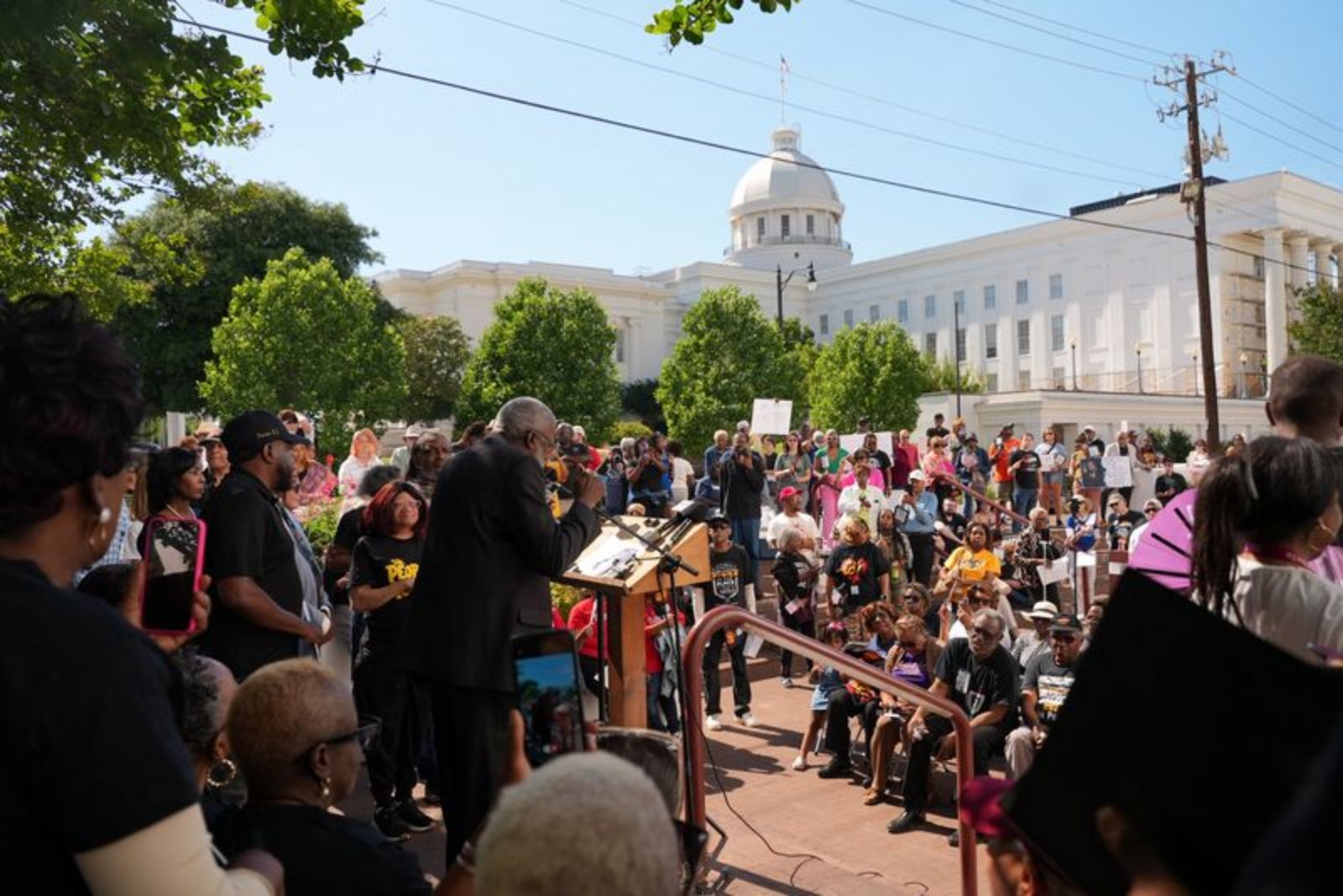
Republicans in a number of states, particularly in the South, have moved aggressively over the past year to redraw congressional district lines in ways that could preserve or expand their narrow majority in the U.S. House of Representatives. What began as a partisan contest following last summer's push by national leaders has intensified, and two recent court decisions have materially shifted the balance in favor of Republican mapmakers.
In the months since parties launched competing plans - including a Republican-backed map in Texas aimed at several Democratic-held seats and a Democratic response in California targeting Republican incumbents - control of the congressional map has been contested in legislatures and courts across the country. As of this spring, the partisan skirmish had largely stabilized, but the U.S. Supreme Court's ruling that weakened protections for majority-Black districts and a Virginia Supreme Court decision overturning a Democratic-backed map have handed Republicans a fresh advantage.
That advantage could translate into tangible gains in the House. Republicans are now positioned to increase their edge by as many as 10 seats nationwide, according to the sequence of legislative approvals and court rulings. For Democrats, the calculus is stark: flipping just three Republican-held seats compared with the 2024 map would return them to the majority, making each contested district potentially decisive.
State snapshots - Republican advances and attempts
The following state-by-state breakdown summarizes how redistricting disputes have unfolded and where the partisan balance may shift.
Tennessee - One seat
On May 7, Tennessee Republican lawmakers approved a new congressional map that dismantled a majority-Black district centered in Memphis. The move was the first explicit use of the U.S. Supreme Court decision that reduced federal protections for majority-Black districts under the Voting Rights Act. The district's current representative, Democrat Steve Cohen, announced he would not seek reelection following the redistricting, effectively assuring Republicans of control of all nine of the state's House seats in November.
South Carolina - Effort failed
On May 26, the state Senate rejected a proposed map that would have broken up the district represented by Democratic U.S. Representative Jim Clyburn. The plan had already cleared the state House, but several Republicans joined Democrats in the Senate to block the measure despite pressure from the White House. Republicans continue to hold the other six U.S. House districts in the state.
Alabama - Possibly one seat
A three-judge federal panel on May 26 blocked Alabama from advancing a map that would have eliminated one of two U.S. House districts that are majority or near-majority Black, finding lawmakers had intentionally harmed Black voters in drawing the lines. Alabama Republicans have appealed that order to the U.S. Supreme Court, which previously lifted an earlier block from the same panel and instructed the judges to re-examine the map in light of the high court's April decision that weakened portions of the Voting Rights Act. In Alabama, Democrats currently hold the two districts with significant Black populations while Republicans control the other five seats.
Texas - Up to five seats
The U.S. Supreme Court in early December allowed a Republican-backed Texas map to take effect that targets five Democratic-held seats. That ruling reversed a lower court determination that the map likely discriminated against minority voters. Governor Greg Abbott signed the map into law in August after lawmakers finalized it. Earlier in the process, more than 50 Democratic state lawmakers left Texas to delay a vote; they later returned. Under the 2021 Republican-drawn map, Republicans already held 25 of Texas' 38 seats.
Florida - Up to four seats
Governor Ron DeSantis drew a new map intended to flip four Democratic-held seats and convened a special legislative session in late April where the Republican majority enacted it. Democrats have pledged to challenge the map in court, pointing to a state constitutional provision that prohibits the legislature from drawing districts explicitly for partisan advantage. Republicans currently control 20 of the state's 28 seats after the governor and legislature passed a map in 2022 that also flipped four Democratic seats.
Missouri - One seat
In September, Republican Governor Mike Kehoe signed a new map into law that dismantled a Democratic-held seat based in Kansas City. That change increases the Republican advantage to seven of the state's eight congressional seats.
Ohio - Up to two seats
State law required a new map for 2026 in Ohio because the previous plan was approved without any Democratic votes. The bipartisan redistricting commission - composed of five Republicans and two Democrats - unanimously adopted a compromise map in October. That map increases Republican prospects to flip two Democratic-held seats, though not to the extent Democrats had feared. Republicans now hold 10 of Ohio's 15 congressional districts.
North Carolina - One seat
In October, the Republican-controlled state legislature approved a map designed to flip a Democratic seat, which would give Republicans control of 11 of the state's 14 U.S. House seats. State law limited the Democratic governor's ability to influence the process.
Louisiana - Possibly one seat
Following a U.S. Supreme Court finding that Louisiana's congressional map was an unconstitutional racial gerrymander, Republican Governor Jeff Landry suspended the state's May 16 primary for the U.S. House. On May 28 the Republican-majority state House passed a new plan that eliminates one of two districts with significant Black populations, both currently held by Democrats. The state Senate is expected to approve the new map, a change that would likely give Republicans the opportunity to flip the seat in November. Republicans already hold four of the state's six districts.
Indiana - Effort failed
Indiana's Republican-majority state Senate rejected a proposed map intended to flip the state's only two Democratic House seats, a rebuke to national Republican pressure. Republicans control seven of Indiana's nine seats.
Kansas - Effort failed
Kansas Republicans abandoned a Trump-backed plan to redraw the state's congressional map after the state House speaker, Republican Dan Hawkins, said in January there was insufficient support to overcome a veto threat from Democratic Governor Laura Kelly. Republicans hold three of the state's four U.S. House seats.
State snapshots - Democratic advances and legal obstacles
The Democratic response, while effective in several states, has faced legal and procedural setbacks that have blunted its reach in some cases.
California - Up to five seats
California voters overwhelmingly approved a map promoted by Governor Gavin Newsom and Democratic legislators aimed at flipping up to five Republican-held seats, a direct counter to Republican efforts in Texas. Democrats currently hold 43 of California's 52 districts.
Virginia - Effort blocked by court
Virginia voters approved a Democratic-drawn congressional map in a special election on April 21 that could have flipped four Republican seats. However, on May 8 the Virginia Supreme Court invalidated the results, ruling that Democratic lawmakers had not followed required procedures when they advanced the referendum and placed it on the ballot.
Utah - One seat
A state judge struck down a Republican-drawn map as illegally partisan and imposed an alternative map likely to flip one of Utah's four Republican-held seats to Democrats.
Maryland - Effort stalled
In February, Democrats in the Maryland House passed a new map targeting the state's sole Republican member of Congress, an initiative backed by Governor Wes Moore and national Democratic figures. Democrats already hold the state's other seven seats. The state Senate president, Democrat Bill Ferguson, opposed the bill, though he has indicated he could reconsider the issue before 2028.
New York - Effort blocked by court
In January, a New York judge ordered the state's independent redistricting commission to redraw a Republican-held district centered on Staten Island, potentially opening the seat to a Democratic gain. On March 2 the U.S. Supreme Court's conservative majority put that order on hold after the incumbent Republican, Nicole Malliotakis, sought relief.
What this means for control of the House
The combined effect of legislative action and court rulings has created a patchwork of outcomes. In several states, Republicans have enacted new maps or moved to do so that could flip multiple seats. In others, Democratic efforts to redraw districts have succeeded at the ballot box or in state legislatures but then been delayed, overturned or limited by courts and legislative pushback.
Because Democrats need to flip only three Republican-held districts to regain the House majority, each contested seat carries weighty consequences. The series of local and state-level contests, legal appeals and judicial rulings means the overall balance of power in the House may hinge on a small number of districts in states ranging from Texas and Florida to Louisiana and Tennessee.
Summary perspective
What began as reciprocal partisan mapmaking by both parties has shifted toward a net advantage for Republicans after recent court decisions and targeted legislative moves in several Southern states. While Democrats have achieved gains in places such as California and sought changes in states including New York and Maryland, the judicial landscape and certain state-level votes have curtailed or delayed some of those advances. The contest remains active and likely to affect the composition of the U.S. House following the midterm elections.