
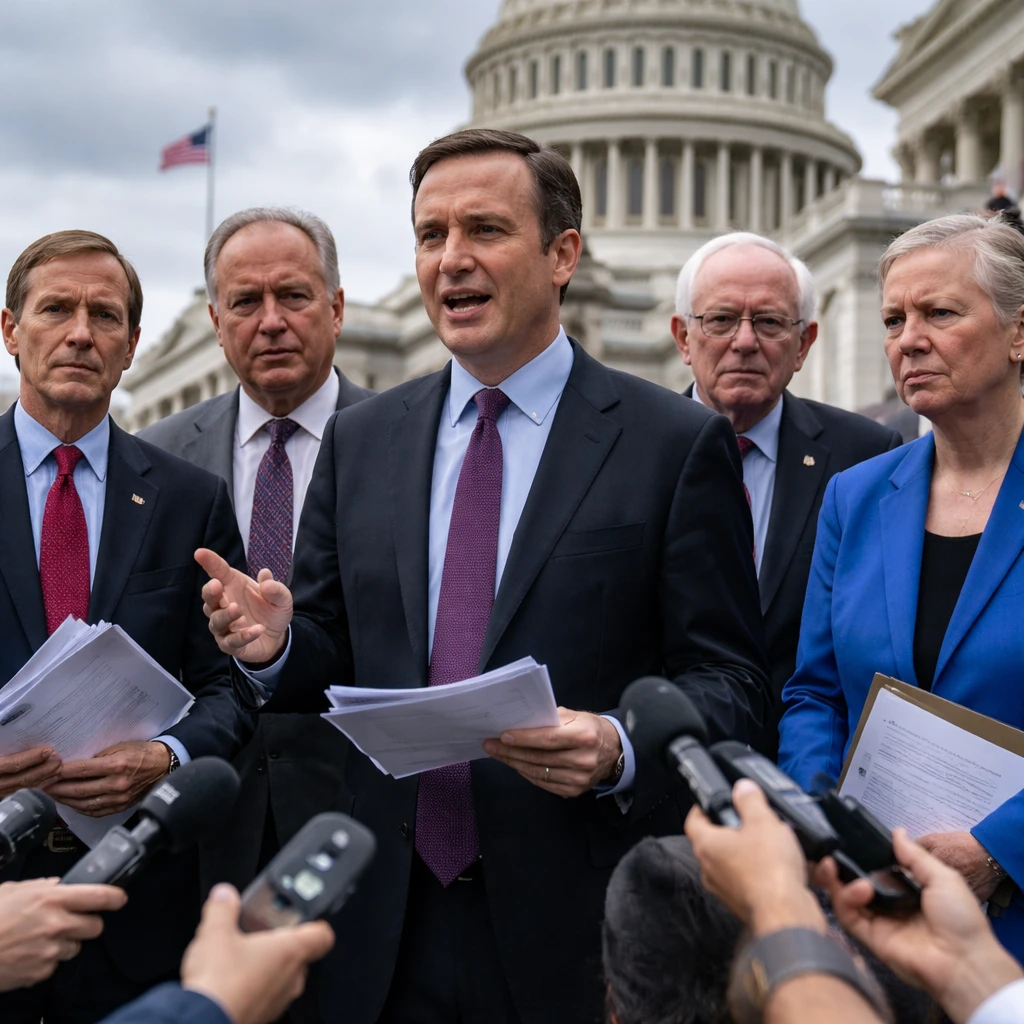
On March 9, a coalition of six Democratic senators announced an escalated campaign to secure public hearings with senior Trump administration officials about the Iran war, demanding that witnesses testify under oath and warning they will interrupt routine Senate proceedings if Republicans resist.
Senator Cory Booker of New Jersey told reporters that senior Democrats on the Senate Foreign Relations and Armed Services committees have formally asked Republican chairmen James Risch and Roger Wicker to schedule the hearings. Booker said the group's objective is to bring a swift end to the Iran war and to protect American service members, who "already have suffered some casualties."
Aides to the committees did not immediately offer comment on the requests. Senator Chris Murphy of Connecticut said the Democrats want hearings to begin next week and named two administration figures they seek to compel to testify: Defense Secretary Pete Hegseth, and Secretary of State and Acting National Security Adviser Marco Rubio.
The administration has been briefing members of Congress behind closed doors in classified sessions. Democrats argue that public testimony is essential so the American people can hear directly from top officials about how long the military engagement might last, what President Trump’s specific objectives are, and other related issues.
Republicans currently control a narrow 53-47 majority in the Senate, which allows them to determine what legislation reaches the floor for debate. Booker acknowledged those structural advantages but emphasized the authority of individual senators to complicate normal Senate operations, saying senators possess "a tremendous amount of power to disrupt the normal functioning of the Senate, as well as certain privileges that we can exercise." He declined to describe the specific tactics the group might use.
Describing the conflict as "the biggest military engagement since the war in Afghanistan," Booker said the Senate cannot simply continue "as business as usual."
So far, both chambers of Congress - each controlled by Republicans - have rejected Democratic calls for debate and votes on invoking the War Powers Act to authorize or constrain U.S. military action related to Iran. The administration has provided multiple rationales, which Democrats characterize as changing, for undertaking the military action without explicit congressional authorization.
Public sentiment appears to lean toward concern. A Reuters/Ipsos poll released on Monday found that 60% of Americans expect the U.S. military engagement to continue "for an extended period of time," with many anticipating upward pressure on gasoline prices. The same poll reported that only 29% of adults approve of the attacks.
While Republicans have largely acquiesced as President Trump has taken steps that bypass congressional authorities on matters such as appropriations and tariffs, Democrats have recorded occasional wins in pushing the Senate to assert itself against the administration in those policy areas.
Joining Booker and Murphy in the current push are Senators Tammy Duckworth of Illinois, an Iraq war veteran; Adam Schiff of California; Tammy Baldwin of Wisconsin; and Tim Kaine of Virginia. The group says its focus remains ending the conflict quickly and safeguarding U.S. forces.
Context for markets and policy observers
The senators’ pursuit of immediate public hearings intersects with broader concerns about political oversight, military engagement and economic consequences. Lawmakers and markets alike are watching whether the Senate will press for transparency in the administration’s war rationale and timeline, and whether such pressure will alter legislative or operational choices going forward.
The request for sworn, public testimony aims to move key national security discussions from closed briefings into the public domain so that voters, analysts and investors can better assess potential duration and costs of the engagement.