
Senate Republicans are returning from recess with a fraught choice: support a controversial $1.8 billion fund championed by President Donald Trump or resist a proposal that has stirred intense criticism within the party and triggered legal challenges.
The proposed "anti-weaponization" fund, designed to compensate alleged victims of political "weaponization," was disclosed as part of a legal settlement between the Justice Department and the Internal Revenue Service tied to a lawsuit in which the president had sought $10 billion over his claims about mishandled tax records. Its announcement set off bipartisan controversy and prompted a temporary federal court block on the administration’s effort to implement the program.
Republican leaders had intended to fold the fund into a $72 billion partisan spending bill to finance U.S. Immigration and Customs Enforcement and Border Patrol through the remainder of the presidency. Instead, those plans were suspended after a tense, two-hour closed-door meeting last week with Acting Attorney General Todd Blanche revealed significant unease among senators, and nearly half of the GOP’s 53-member Senate majority expressed reservations during deliberations just before a week-long Memorial Day recess.
At the center of senators’ demands are legally enforceable restrictions and clear eligibility rules. According to people in the room at Blanche’s briefing, he told lawmakers the fund would not distribute payments to members of the Trump family or to anyone convicted of a violent crime, but that assurance has not been formalized in writing. Lawmakers say they want those protections explicit, along with congressional input into how fund commissioners are selected and some form of judicial oversight.
"I would hope that Senate leadership is working with the administration and the Department of Justice to design something that’s going to work," said Senator Ron Johnson of Wisconsin, who voiced strong backing for the fund while urging an "overriding amendment that will render all their amendments moot."
Party leadership is now pressing the Justice Department to agree to guardrails that could blunt Democratic tactics to force repeated amendment votes intended to derail the funding and to put the president in an embarrassing position on the Senate floor. "What will dictate the next step is whether or not there are 51 Republican senators who believe that it is a satisfactory outcome," said a senior Republican aide. "I don’t think every member necessarily is going to find equal satisfaction."
Senate Majority Leader John Thune has asked the Justice Department and the White House to provide particulars about acceptable guardrails, but aides say no concrete response has been forthcoming.
A White House official described the administration as appreciative of last week’s conversations and feedback and said additional discussions were anticipated. The Justice Department did not provide comment to reporters seeking further detail.
Even if the administration agrees to written constraints, Republican strategists warn that the fund could become politically toxic ahead of the November midterm elections. Party officials are already contending with headwinds they identified as soaring consumer prices, an unpopular war with Iran, and declining approval ratings for President Trump, even within some parts of the party. "No one thinks this is a winning issue, even those in safe Republican House and Senate seats that don’t usually have to worry about an election. Even those folks want no part of this," said a Republican strategist involved in competitive congressional races who spoke on the condition of anonymity.
Some senators and House Republicans have signaled they will not move forward without clear congressional oversight. Senate Judiciary Committee Chairman Chuck Grassley publicly said Congress needs a role in monitoring the fund before he could support it. Representative Mike Flood, speaking at a town hall in Norfolk, Nebraska, echoed that posture: "Congress needs to have an oversight role in this before I can sign off or support this."
Other lawmakers are pushing for more granular answers. Representative Mariannette Miller-Meeks, who is viewed as politically vulnerable, told the Des Moines Register she has lingering questions about who determines eligibility, where the money would go, and how oversight would function. "Right now, I have more questions than I have answers," she said.
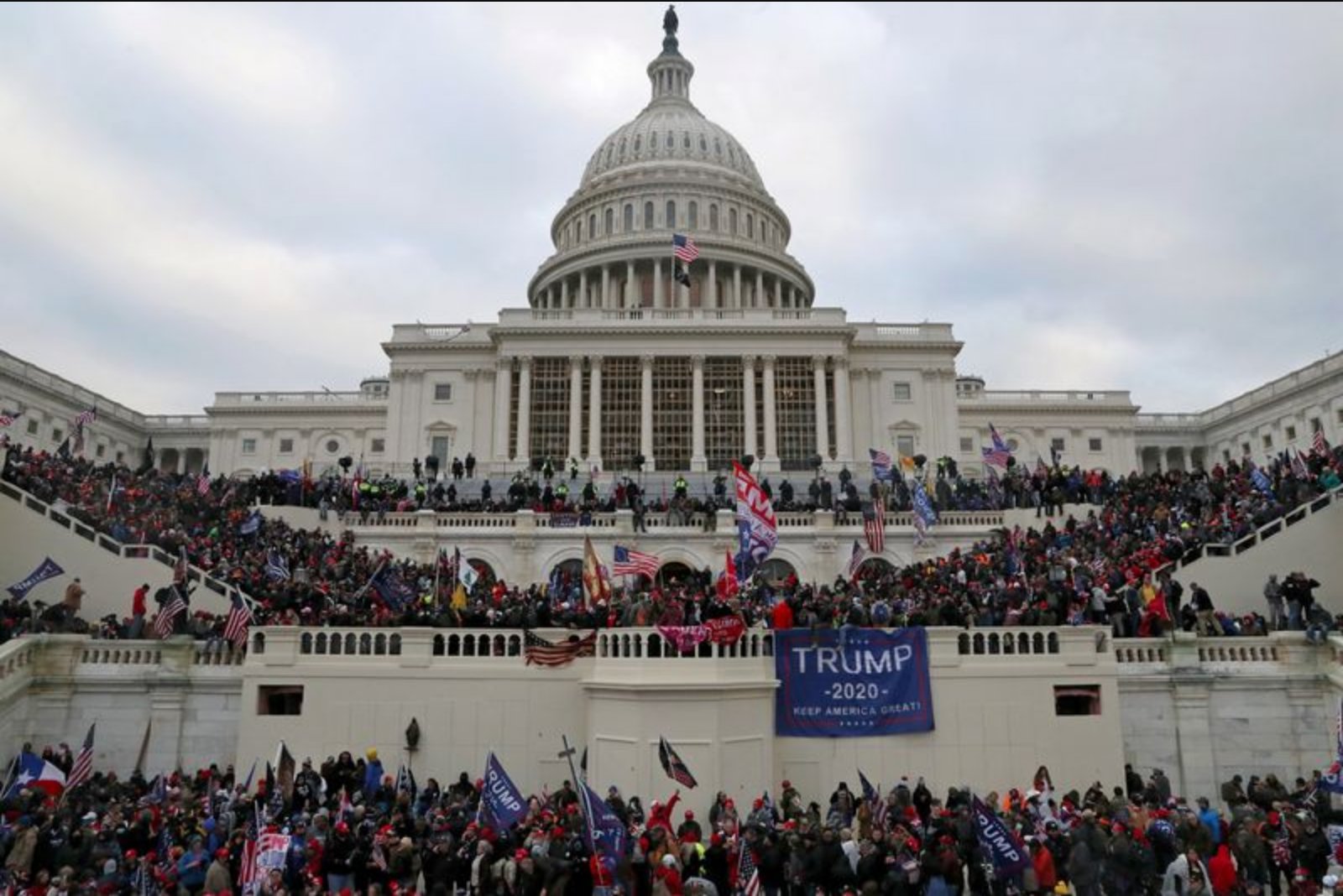
The controversy has also revived grievances related to the 2020 presidential election. James Troupis, a former Trump campaign attorney who is facing felony charges over his alleged involvement in a false elector scheme in Wisconsin, applied for $3.2 million in compensation this week, saying he has lost reputation and incurred roughly $1.7 million in costs after representing the president. Vice President JD Vance suggested a convicted elections clerk, Tina Peters of Colorado, could be a potential recipient of payments under the fund.
Senator Ron Johnson criticized the timing and handling of the public announcement of the fund, arguing the Justice Department mishandled the rollout as the Senate prepared to consider the immigration funding package. "To me, this whole thing was completely blown by announcing it. These things are better just done using the authority that Congress has given," he said. "The timing was atrocious."
Party leaders must weigh whether to proceed with the ICE and Border Patrol funding bill and risk extended floor fights and public scrutiny or to delay action until the administration provides written limits that placate a sufficient number of senators. With a federal judge temporarily blocking implementation of the fund, skeptics point to an uncertain legal pathway as well as political vulnerability.
As the GOP caucus debates next steps, lawmakers press for clearer terms, documented exclusions, and mechanisms for congressional oversight and judicial review. The question facing leadership is whether those concessions will be sufficient to secure the votes needed to pass the broader immigration funding measure and to avoid sustained intra-party conflict in the run-up to this year’s elections.
Key takeaways
- Senate Republicans are divided over a $1.8 billion fund tied to a Justice Department-IRS settlement; internal opposition stalled plans to attach the fund to a $72 billion immigration enforcement funding bill.
- Lawmakers seek written assurances on eligibility, explicit exclusions for the president’s family and convicted violent offenders, increased congressional input on fund commissioners, and judicial oversight.
- Political and legal headwinds could make the fund a liability for Republicans ahead of November, with potential implications for homeland security agencies, federal contractors, and consumer-sensitive markets facing election-related risks.
Risks and uncertainties
- Legal uncertainty: A federal judge has temporarily blocked the administration from implementing the fund, creating an unclear legal path forward.
- Political backlash: Internal GOP resistance and concerns about self-dealing and potential payouts to controversial figures could harm Republican standing in competitive races and affect sectors sensitive to election outcomes.
- Legislative impasse: Without written guardrails acceptable to a majority of Republican senators, leadership risks prolonged floor fights and the possibility that Democrats force repeated amendment votes to undermine the fund.