
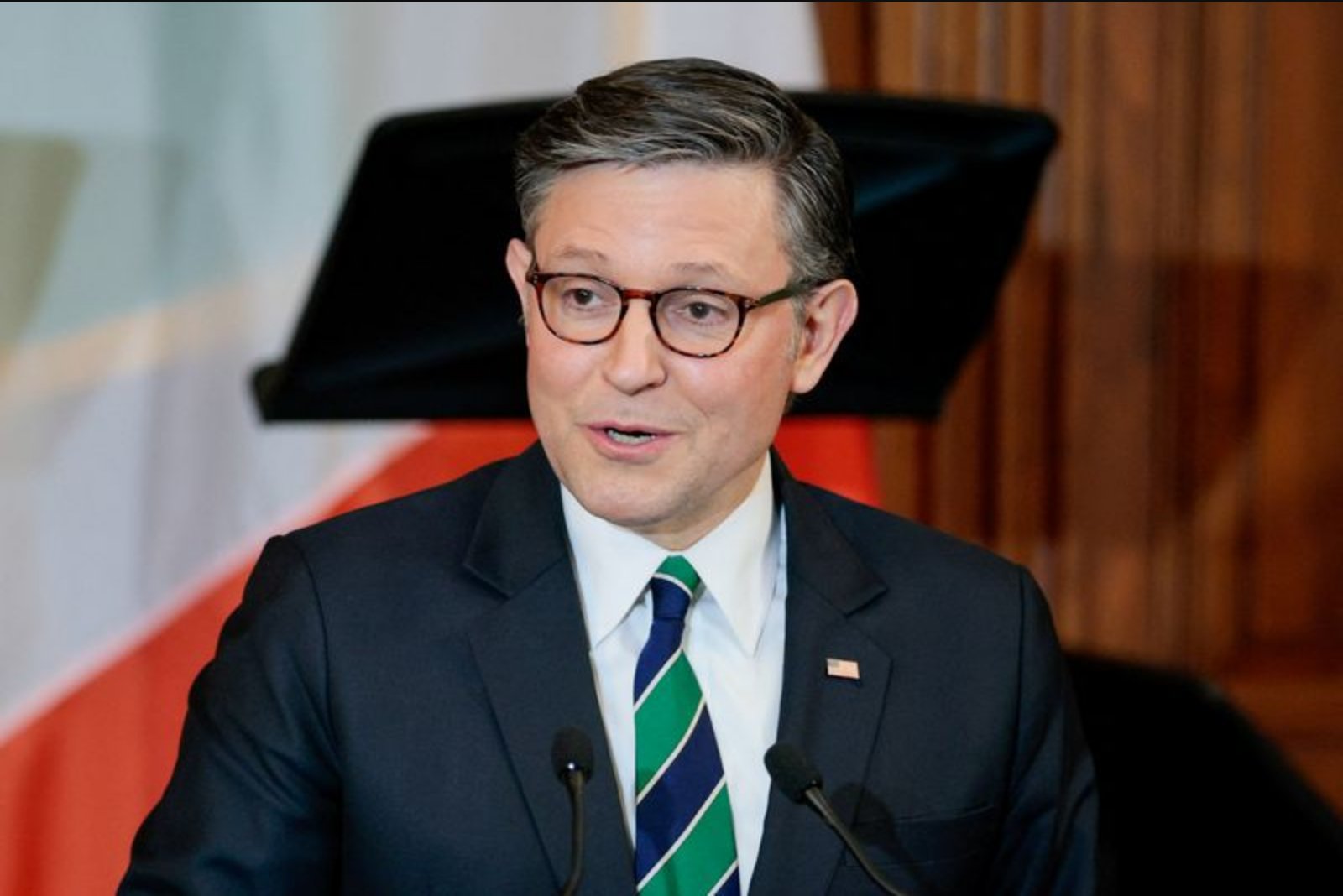
WASHINGTON, March 18 - U.S. House Republican leader Mike Johnson and top intelligence officials from the Trump administration are pushing for what they describe as a quick, clean reauthorization of Section 702 of the Foreign Intelligence Surveillance Act.
Johnson told reporters on Tuesday that the reforms enacted last year to Section 702 were "working just as we planned," and he argued that a straightforward extension of the surveillance authority is appropriate. He framed the move as an administrative renewal rather than an opportunity for substantive changes.
Closed-door briefings
To reinforce that position, a delegation of intelligence leaders met with congressional lawmakers behind closed doors on Wednesday. The officials who participated included CIA Director John Ratcliffe, FBI Director Kash Patel, and Lt. Gen. William Hartman, who was serving as the acting director of the National Security Agency at the time of the briefing. The content of their closed briefing has not been made public.
The FBI declined to comment on the meeting. Requests for comment to the CIA, the NSA and the Justice Department were not returned.
What Section 702 does
Section 702 permits the National Security Agency to collect intelligence on foreign targets by drawing on data that traverses U.S. digital infrastructure. The provision has long been contentious because, while it is aimed at foreigners abroad, it can yield information about Americans that can then be accessed by domestic law enforcement agencies without a judicial warrant.
That warrantless access has repeatedly made Section 702 a focal point of debate from both sides of the political aisle. Supporters have warned that intelligence capabilities could be significantly impaired without renewal, while opponents have warned of an incremental erosion of privacy protections and a slide toward expansive domestic surveillance.
Recent history and political shifts
Attempts to renew Section 702 in the past have at times produced intense political showdowns. The 2024 renewal ultimately passed only after multiple attempts - succeeding on its fourth try - and a proposal to require judicial approval before U.S. law enforcement could search intercepted communications failed in the House of Representatives by a single vote.
Some lawmakers who previously criticized the statute have since shifted position. The White House, led by the president who once criticized the program when out of power, is now advocating for its renewal. Likewise, Representative Jim Jordan, a prominent ally of the president who had earlier pledged to block Section 702 absent a warrant requirement, is now among those supporting reauthorization without introducing mandatory judicial sign-offs.
Lingering obstacles
Despite high-level support, obstacles remain in the House. Florida Representative Paulina Luna has said she will back renewal only if it is tied to the SAVE America Act - a Republican-sponsored voting bill that would require proof of citizenship for voter registration. Representatives for Luna did not respond to requests for comment.
A spokesperson for Jim Jordan referred to an interview in which he stated that reforms adopted in 2024 made "a short term, temporary extension is fine."
Critics' concerns
Opponents of Section 702 contend that the changes made in 2024 largely enacted existing practices into law without remedying the central issue of warrantless searches of communications gathered under the authority. They say the stakes are higher now given the political climate and the perceived weakening of institutional checks that might otherwise curb potential abuses.
"All of the institutional oversight mechanisms have been taken apart," said Jake Laperruque, deputy director of the Center for Democracy and Technology's Security and Surveillance Project. He argued that the dismantling of oversight bodies has removed monitoring functions that once served as early warnings of misuse.
Path ahead
How quickly and cleanly Section 702 will be renewed remains uncertain. Backers are pushing for a simple extension and say recent reforms address key concerns, while critics maintain those reforms are insufficient and point to both procedural and political hurdles that could delay or complicate reauthorization.
As the debate continues, agencies that collect, process and analyze large data flows - including intelligence organizations and their domestic law enforcement partners - will be watching how Congress resolves the competing priorities of national security, civil liberties, and legislative politics.