
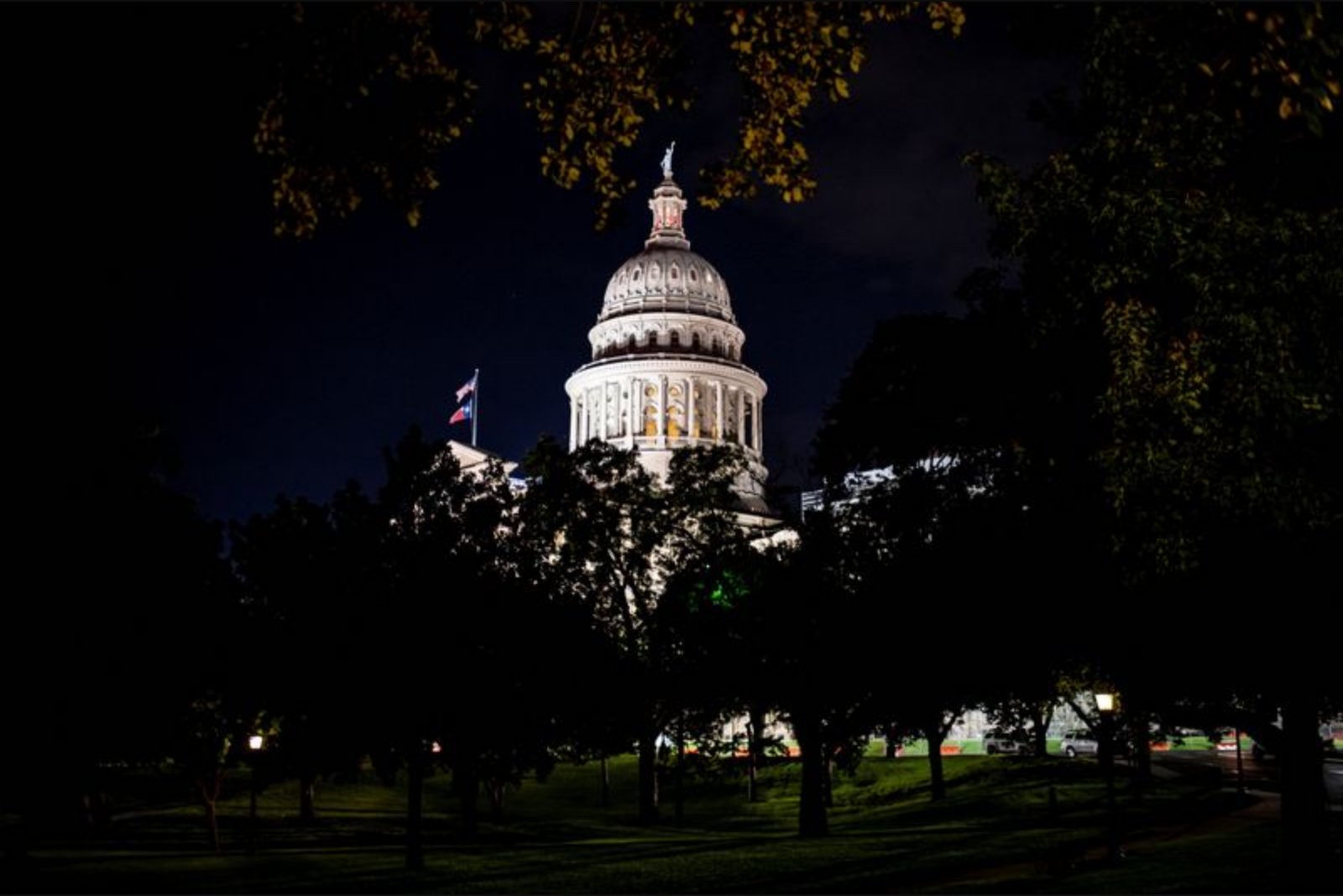
What began as an aggressive mid-decade effort to redraw congressional maps has produced massive churn across state capitols yet, by many measures, left the national partisan playing field close to even. Last summer, then-President Donald Trump persuaded Texas Republicans to adopt a new congressional map in a bid to fortify the party's fragile margin in the U.S. House. Other Republican-controlled legislatures looked prepared to follow Texas' lead, and at the time Republicans were viewed as potentially positioned to win as many as a dozen additional House seats in the November midterm elections.
That early prospect has diminished. Over the months that followed, several Republican states saw their redistricting pushes stall. At the same time, Democrats moved aggressively in some states, and courts issued rulings that reshaped maps in ways favorable to Democratic prospects. Taken together, those shifts have largely cancelled one another out, producing what analysts describe as a near-draw between the two parties as November approaches.
"I do think that it is a wash right now," said Erin Covey, a House analyst with the nonpartisan Cook Political Report. "It’s a huge amount of turnover and disruption all basically for nothing, if you’re looking solely at partisan seat gain."
That equilibrium is not guaranteed to hold. Several of the revised maps remain subject to legal challenges. Florida's Republican governor Ron DeSantis has signaled an intention to pursue redistricting in April. And the U.S. Supreme Court is weighing a case that could alter enforcement of the Voting Rights Act, a decision that could allow Republican-led Southern states to erase multiple Democratic districts if the Court weakens the statute.
The first electoral test
The Texas map that helped trigger the broader redistricting scramble is slated for an early electoral test when the state’s voters select party nominees for all 38 U.S. House seats, along with contests for U.S. Senate and governor. The changes to several districts produced uncommon primary matchups, including one in the Houston area where two incumbent Democrats, Christian Menefee and Al Green, were drawn into the same district and are running against each other.
Primary elections in Texas, North Carolina and Arkansas mark the official beginning of the midterm campaign season. For Democrats, the arithmetic in the House is straightforward: flipping three Republican-held seats in November would hand them control of the 435-member chamber. Winning the Senate majority, by contrast, remains a steeper challenge for Democrats.
A Democratic-controlled House could blunt a Republican president's legislative ambitions while leveraging subpoena power to conduct investigations - outcomes that underscore why both parties have invested heavily in reshaping district boundaries. Historically, the president’s party tends to lose congressional seats in the midterms, a pattern that underpinned the urgency behind Trump's mid-decade redistricting push.
Why mid-decade redistricting mattered
Redistricting typically occurs at the start of each decade to reflect population shifts captured in the U.S. Census. Both parties have long used that once-a-decade process to pursue partisan advantage through gerrymandering, the manipulation of district borders to increase a party's electoral prospects.
What made the recent episode unusual was the timing. For more than a century, mid-decade gerrymandering - taking up redistricting between censuses - had been largely exceptional. That changed when Texas Republicans, at Trump's urging, adopted a new map mid-cycle targeting five Democratic incumbents. Republican legislatures in Missouri and North Carolina moved quickly to approve their own maps that aimed at Democratic-held seats as well.
Trump’s intervention prompted a sharp response from Democrats. Figures such as former President Barack Obama and U.S. Senator Bernie Sanders, both identified in public debate as long-standing opponents of gerrymandering, urged Democratic-led states to redraw maps in return. Party leaders urged a more combative stance. "I’m sick and tired of this Democratic Party bringing a pencil to a knife fight," Democratic National Committee Chair Ken Martin told a party gathering, adding, "Let’s grow a damn spine and get in this fight."
In Texas, Democrats in the state's congressional delegation met with House Democratic leadership to coordinate a response, according to U.S. Representative Julie Johnson. Lawmakers and strategists centered around a plan promoted by California Governor Gavin Newsom to amend that state’s constitution through a voter referendum and install a map crafted to flip five Republican-held seats. The proposal moved rapidly through the state legislature and was approved overwhelmingly by voters in November.
Follow-on moves and legal outcomes
Virginia Democrats pursued a more intricate constitutional change to alter that state's maps, a maneuver that could produce a four-seat net gain for Democrats if it survives a Republican legal challenge expected this spring. In other states, favorable court rulings also reshaped the map landscape. Judges in Utah and New York ordered new maps that appear likely to flip a Republican seat in each of those states.
Not every redistricting gambit favored Democrats. In Maryland, an effort to redraw lines in a way that would eliminate the state's lone Republican seat encountered resistance from the Democratic leader of the state Senate and has stalled. Meanwhile, some Republican legislatures resisted pressure to adopt Trump-aligned plans. Indiana stands out as a state where a majority of state Senate Republicans rejected a redistricting proposal backed by Trump, despite the former president's threats of political retribution.
What comes next
Even if the maps now in place survive litigation and the electoral tests ahead, the broader contest over redistricting is unlikely to fade after November. Some Democratic-leaning states with anti-gerrymandering rules, including Colorado and New York, have proposed changing their own processes to permit new maps to be used as early as the 2028 cycle. That possibility leaves open the prospect of continued legal and political skirmishing over lines for years to come.
As Erin Covey observed, the volume of disruption across states could repeat itself: "We could have just as many states redraw their lines in 2028 as they did in 2026," she said. For now, the outcome of the map wars remains uncertain. Pending court decisions, state-level maneuvers and the primary contests that have begun in several states will determine whether the current near-equilibrium tilts for one party or the other in the lead-up to November.
Reporting on this story reflects court rulings, state legislative actions, party statements and primary schedules that have been made public as these events unfolded.