
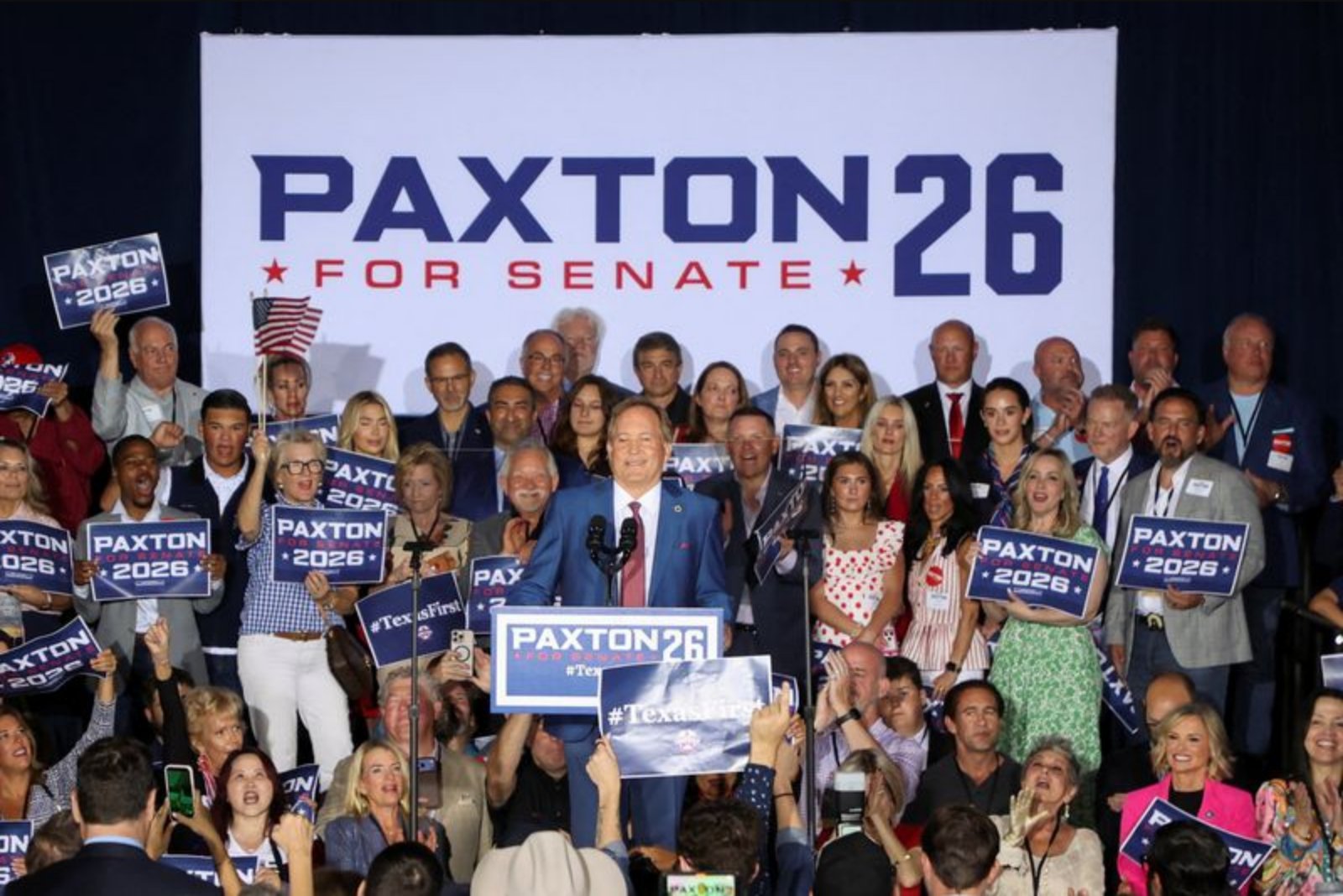
Texas Attorney General Ken Paxton defeated Senator John Cornyn in Tuesday’s Republican runoff for the U.S. Senate, a result that delivered a high-profile endorsement win for President Donald Trump but introduced several complications for Republican strategists aiming to preserve their slim Senate edge.
Cornyn’s new role as an unpredictable vote
Because Cornyn is no longer running for reelection, his remaining months in the Senate could see him act independently of party leadership. The endorsement of Paxton by Trump created tension with Senate Republican Leader John Thune and with Senator Tim Scott, who leads the Senate Republicans’ campaign arm. The article compares Cornyn’s potential trajectory to other departing or unbound senators who have taken unexpected positions in their final months, such as a senator who blocked a White House nomination and another who sided with Democrats on foreign policy procedural votes. Cornyn now joins the group of senators who may vote free of the usual leadership constraints, though the piece notes that it is unclear whether a former member of Republican leadership would oppose Trump after aligning his campaign closely with the president.
Paxton’s financial shortfall
Fundraising figures included in recent filings show Paxton with $2.3 million in the bank in early May, compared with $9.9 million on hand for Democratic nominee James Talarico in early April. In his victory speech, Paxton urged supporters to give on his campaign website and warned that Talarico will "raise more money than any Democrat in America." Internal messaging from the Senate Republicans’ campaign arm had warned that a Paxton nomination could "cause Republicans to divert hundreds of millions that would otherwise be spent winning key battlegrounds." With Paxton now the nominee, the article states that it is not clear where any additional funds to shore up the Texas race will originate. The Senate Leadership Fund and Trump-affiliated MAGA Inc did not provide comment when asked.
Ratings agencies see Texas as less secure
Political ratings services shifted their assessments of the Texas Senate contest from "likely Republican" to "lean Republican," reflecting a consensus that Paxton is a weaker general-election nominee than Cornyn. Even though Trump carried Texas by nearly 14 points in 2024, the piece notes that Republicans will now need to pour millions into what is expected to be a bruising campaign to try to hold a seat that was once treated as safe.
Democratic messaging seeks to underscore vulnerabilities in Paxton’s candidacy. A Talarico campaign memo released after the runoff described him as "the best positioned candidate in a generation to win Texas" and labeled Paxton "the most corrupt and damaged nominee in the modern Texas GOP," citing the attorney general’s felony indictment, an impeachment in the Texas House, allegations of corruption and reports of extramarital affairs. Paxton and his allies have signaled they will counter by attacking Talarico on cultural issues, including his positions and past comments related to transgender children, statements about the nature of God, a prior campaign that purchased only vegan products and remarks suggesting there are more than two biological sexes. An advertisement circulated on Wednesday highlighted Talarico’s description of the border as a "front porch" with "a giant welcome mat."
Implications for the Senate map and resource allocation
Republicans currently hold a 53-47 edge in the Senate, meaning Democrats need a net gain of four seats to take control. Democrats are defending two seats in states that President Trump won in 2024 and are targeting Republican-held contests in states such as North Carolina, Maine, Ohio and Alaska. A Democratic Senate PAC spokesperson said Republicans will likely face difficult decisions about which battlegrounds might have to forgo funding if resources are redirected to Texas. The article cites questions about whether funding will be reduced in North Carolina, where the Republican candidate is reportedly trailing, or in Ohio, where an "astronomical" amount of money has already been spent to shore up a particular incumbent.
Turnout dynamics that favored Paxton may not hold in November
Paxton’s win came in a low-turnout Republican runoff, with the attorney general receiving fewer than 900,000 votes. That level of participation was substantially below turnout in March’s Republican and Democratic primaries, when more than 2 million Democrats voted and more than a million voted for Talarico. The piece warns that the general election electorate will be different from the narrow base that decided the runoff. Without Trump on the ballot, some voters may opt to stay home in the fall or leave the top of the ticket blank as Talarico targets independents and moderate Republicans.
What this means for campaign finance and political operations
The article highlights the practical consequences for fundraising, ad buying and allocation of national party resources. It notes that a weaker nominee in a large state could force national Republican groups to redirect funds that had been earmarked for other contested states, potentially affecting campaign advertising buys and get-out-the-vote operations in several battlegrounds.
Overall, while Paxton’s primary victory is a win for President Trump’s influence in Texas, it introduces a set of strategic and financial challenges that could complicate the Republican path to maintaining a Senate majority.