
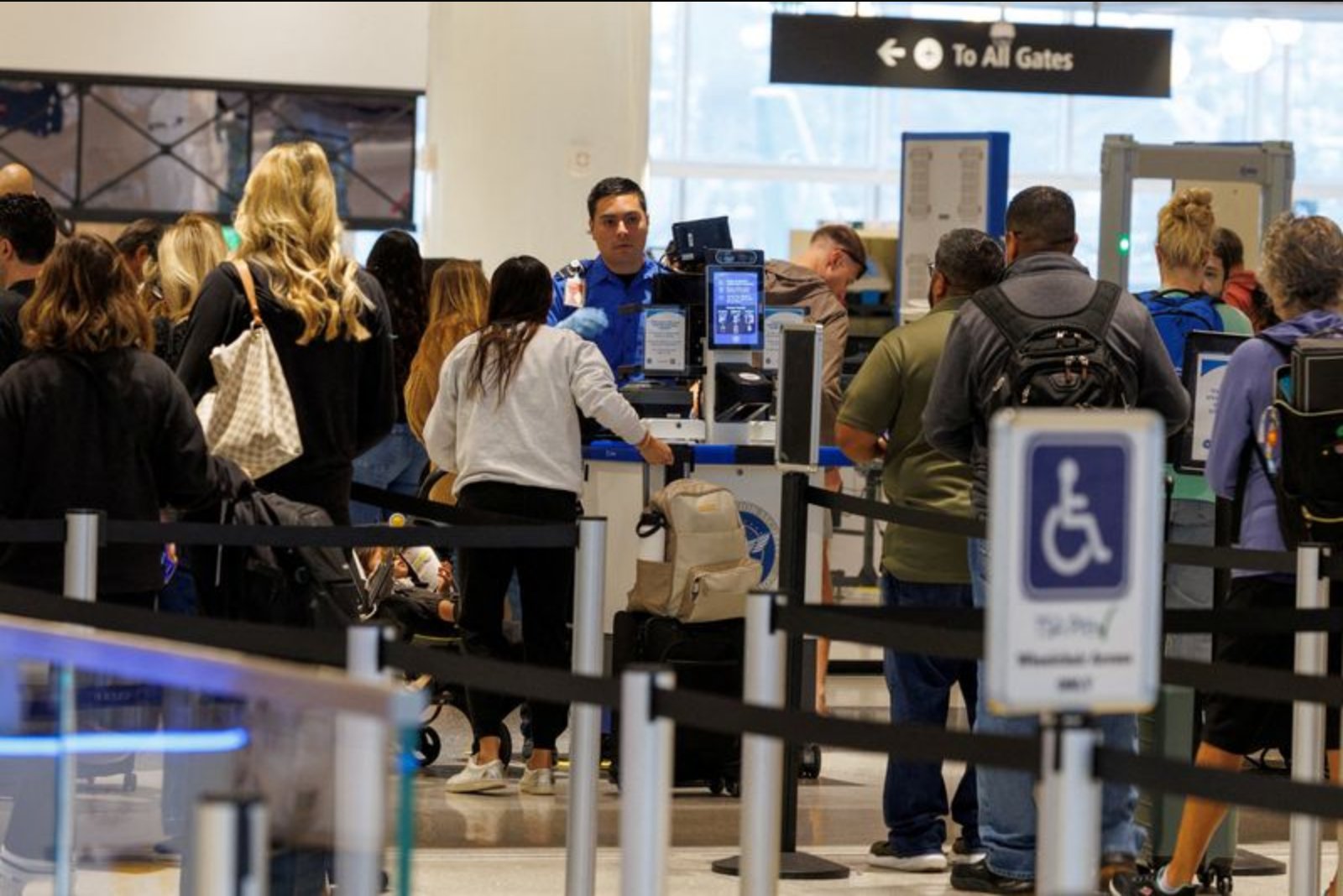
Airport security screeners nationwide were paid a fraction of their usual wages on Friday as a partial government shutdown persisted, heightening concerns that more Transportation Security Administration employees will call in sick to take second jobs or leave the agency entirely.
Funding for the U.S. Department of Homeland Security lapsed on February 13 after Congress failed to finalize a deal on immigration enforcement reforms sought by Democrats. The lapse interrupted funding for multiple federal operations, including the TSA.
Officials described the current lapse as narrower in scope than the record 43-day shutdown in October-November, which closed numerous departments. Still, the immediate effects are already being felt at airports: with paychecks reduced and the possibility of further lost earnings if the shutdown endures, union leaders and TSA managers say familiar consequences could reappear - absences, staff departures, and bottlenecked security lines.
Philip Glover, national vice president of District 3 of the American Federation of Government Employees, which represents TSA staff at 19 airports in Delaware and Pennsylvania, warned of rapid morale decline. "People are going to get discouraged a lot quicker this time," he said.
Local AFGE officials said they expect an uptick in resignations, and noted that some workers are still repaying debts incurred during the last shutdown. Ha Nguyen McNeill, the top official at the TSA, told Congress this month that about 1,110 transportation security officers left the agency in October and November 2025 - a more than 25% increase compared with the same period in 2024.
Describing the effects of the prior shutdown, McNeill told lawmakers, "We heard reports of officers sleeping in their cars at airports to save money on gas, selling their blood and plasma and taking on second jobs to make ends meet," and said the TSA is planning to surge staffing in March, April, and May to prepare for spring break, summer travel, and World Cup travel.
A TSA officer at Harry Reid International Airport in Las Vegas, speaking on condition of anonymity, said the back-to-back funding interruptions are prompting a reassessment of a nine-year career at the agency. The 34-year-old officer said, "I want to keep this job at least for the medical benefits, but sometimes I think I would be better off to abandon ship to reinvest myself elsewhere."
Union representatives said many workers face the need to make ends meet without pay for a second time in four months. They also said agency management has increased scrutiny of absences as some employees call in sick to take odd jobs to pay bills and fill gas tanks.
Darrell English, president of AFGE Local 777, which represents TSA employees in Illinois and Wisconsin, said officers are exploring other options to regain stability. "Officers are looking at other alternatives just to maintain some kind of stability," he said, adding, "That’s the backlash that’s coming down the line from these continuous shutdowns."
In Minnesota, Neal Gosman, treasurer of AFGE Local 899, said several long-tenured colleagues opted to retire shortly after the current shutdown began. "Maybe it’s just coincidence and these are older people who’ve been there a while, but somehow they decided to pull the trigger this week," he said.
Agency managers have signaled efforts to bolster staffing during key travel periods, but union leaders and front-line employees say the immediate financial strain and the memory of last year’s spikes in departures could undermine staffing stability if the funding lapse continues.
Context and implications
The reduced paychecks and heightened scrutiny of absences come at a time when the TSA and airlines typically prepare for increased passenger traffic. Union leaders point to the risk that sustained pay interruptions will accelerate workforce churn and create operational strain at checkpoints, with potential consequences for traveler wait times and airport throughput.