
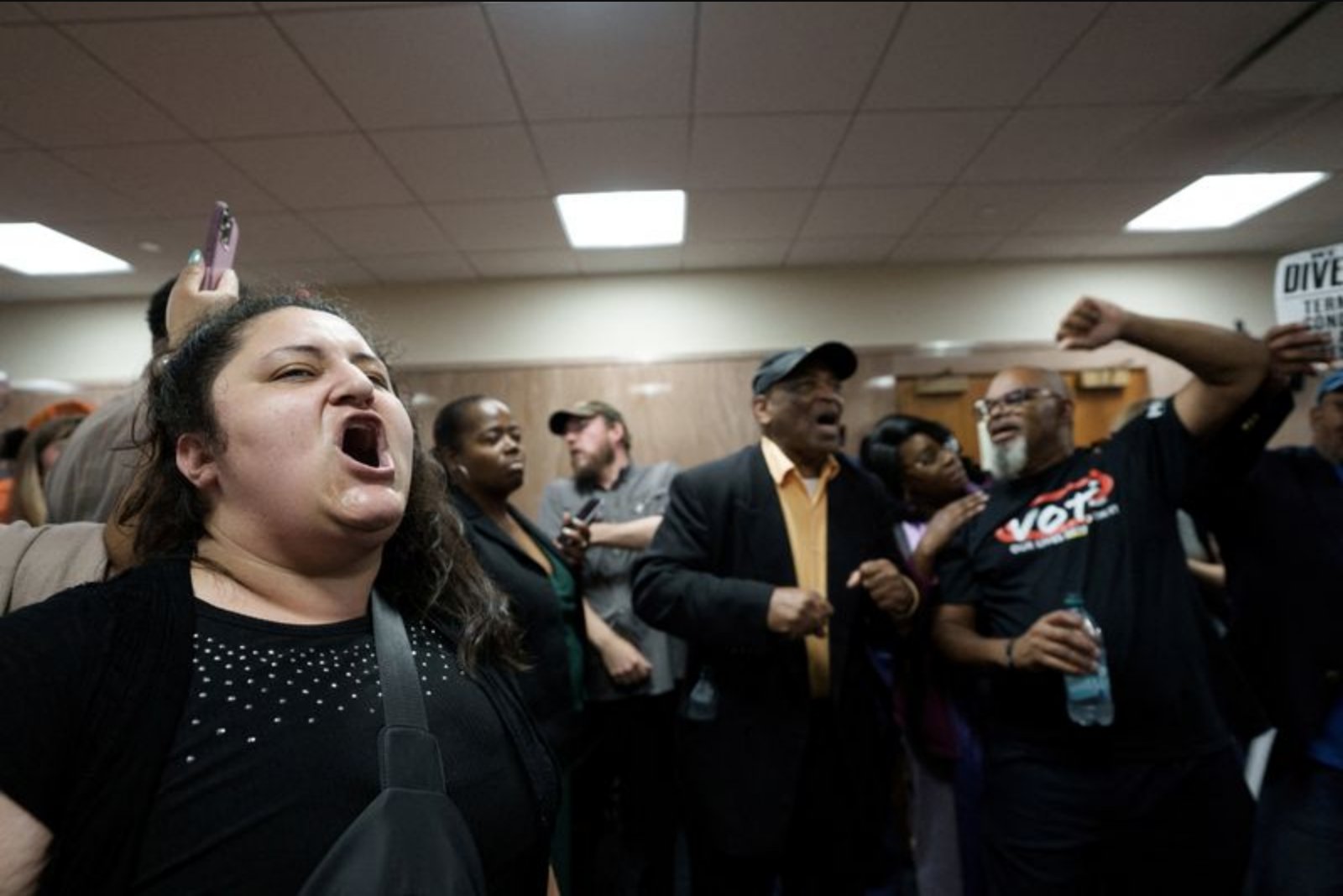
Louisiana Republicans on Friday approved a new congressional map that eliminates a Democratic-held, majority-Black seat, a change party officials say increases their chances of holding U.S. House seats in the November midterm elections.
The proposal, which cleared the state House of Representatives on Thursday, won Senate approval on a 28-10 vote on Friday, with senators divided along party lines. The legislation now moves to Republican Governor Jeff Landry, who is expected to sign the plan into law.
Under the map adopted in 2024 to comply with a court order enforcing the federal Voting Rights Act, Louisiana had been required to create a second district with a Black majority or near-majority. That map produced two districts represented by Black Democrats and left Republicans holding four of the state’s six congressional seats.
But a subsequent U.S. Supreme Court ruling invalidated the 2024 map as an illegal racial gerrymander. That decision removed a legal safeguard that had protected some majority-minority districts and opened the door for Louisiana and other Republican-led Southern states to redraw boundaries that previously concentrated large Black populations into single districts.
Governor Landry delayed the May 16 U.S. House primary elections to give lawmakers time to craft the new map. At the time of the governor’s order, thousands of mail ballots had already been returned, prompting concerns from voting rights advocates who warned the postponement could create confusion and disrupt the voting process.
The newly approved plan fragments the Baton Rouge-centered district held by U.S. Representative Cleo Fields. Democratic lawmakers condemned the redrawing as an attempt to disenfranchise Black voters, while Republican supporters defended the map as a partisan effort to reflect political realities rather than race.
The move in Louisiana is part of a broader wave of redistricting activity across the South. The trend accelerated after the Supreme Court’s April ruling that reduced protections for majority-minority districts. Several Republican-led states in the region have moved quickly to alter maps that previously consolidated heavily Black populations into Democratic-leaning districts.
Nationally, Republicans have been portrayed as gaining an upper hand in redistricting efforts, with media accounts saying they could secure an advantage in up to 10 House seats pending legal challenges. At the same time, some analysts cited in public commentary suggest Democrats could still be well positioned to win a House majority in November, citing political dynamics such as President Donald Trump’s sagging approval ratings and voter discontent over rising costs.
Because the issue remains the subject of legal scrutiny and political dispute, further court challenges and legislative adjustments are possible. For now, Louisiana’s Republican leadership has finalized a map that removes a previously protected majority-Black Democratic district, setting the stage for a changed congressional landscape in the state ahead of the midterm elections.