
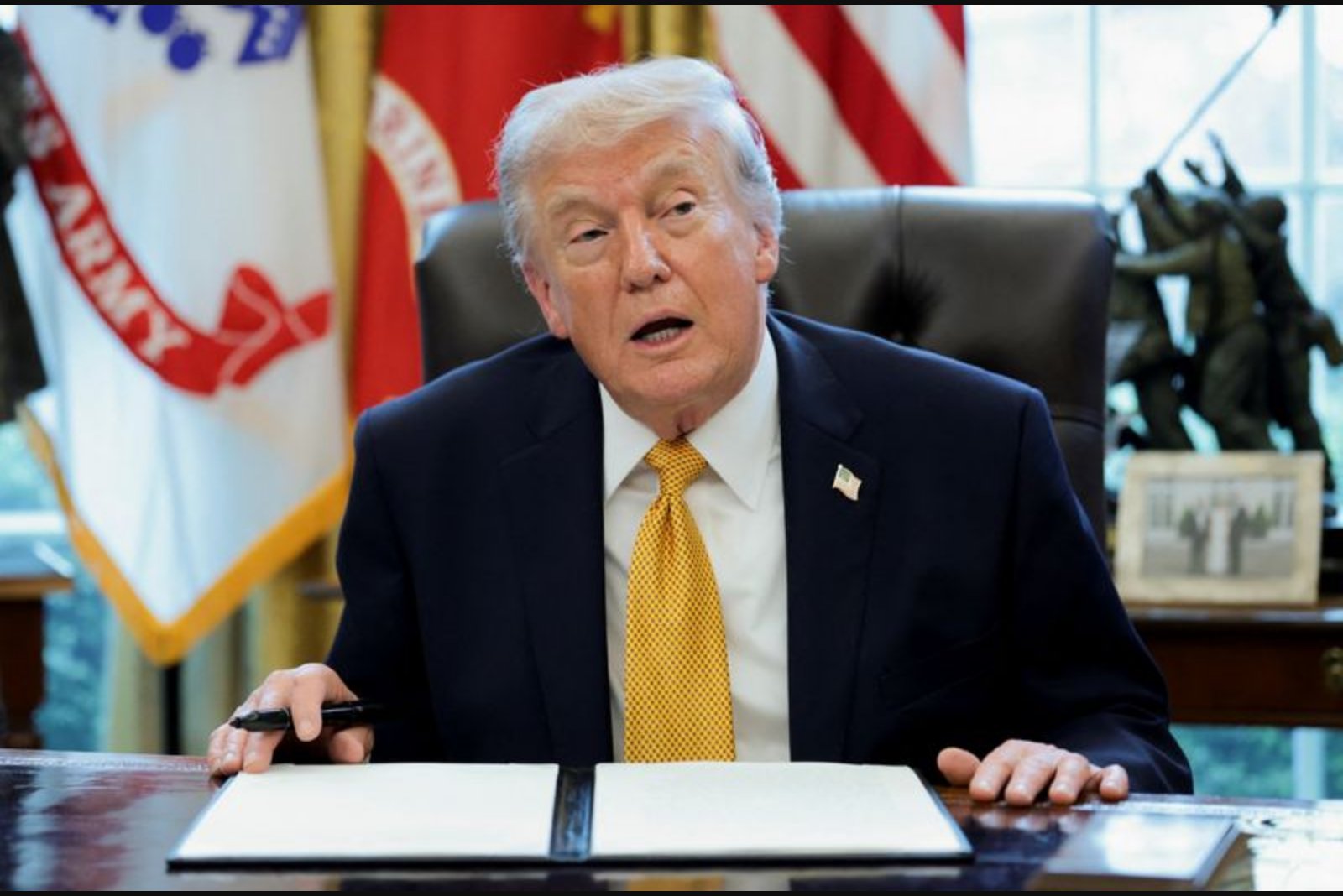
President Donald Trump has made passage of a comprehensive election-security bill a principal legislative priority, urging Congress to approve the SAVE America Act before the November elections. The proposal contains a series of substantial changes to how Americans register and cast ballots in federal elections, but it faces a skeptical Senate outlook and sharp criticism from Democrats and outside analysts who contend it could exclude legitimate voters who lack immediate access to certain documents.
Proof of U.S. citizenship
Under the bill, anyone registering to vote in a federal election would need to present documentary evidence that they are a U.S. citizen. Acceptable documents would include items such as a U.S. passport or a birth certificate. The requirement stipulates that these documents must be shown in person at the time of registration.
The White House has argued that preventing non-citizen voting is necessary to protect Republican prospects in the November midterm contests, when control of both the House of Representatives and the Senate is at stake. Independent investigations and multiple state-level audits cited in public debate, however, have repeatedly found that instances of non-citizen voting in U.S. elections are extremely rare. Some analysts who have examined the bill's mechanics say the citizenship-document requirement could fall hardest on groups less likely to have ready access to passports or birth certificates, including some married women and residents of rural communities.
Photo identification for in-person and mail ballots
The legislation would also require voters to present a valid physical photo ID at polling places. Acceptable forms would include a state driver's license, among other government-issued photo identifications. For those voting by mail, the bill would require either an included copy of a qualifying photo ID with the ballot or the submission of the ID copy plus the last three digits of the voter's Social Security number.
Currently, 36 states have statutes that either require or request voters to show some form of identification at the polls. Several of those states accept items such as student identification cards, hunting or fishing licenses, and other types of cards that the SAVE America Act would not allow. Lawmakers have also warned that some tribal identification cards could trigger additional documentary burdens under the bill, for example requiring a birth certificate or a hospital birth record in order to be accepted.
Democrats have argued that stricter photo ID rules could disenfranchise eligible voters who do not possess the required documentation. Proponents point out that certain states that have tightened voting requirements in past election cycles, such as Georgia, nevertheless reported high turnout figures, an outcome cited by supporters to argue that stricter rules do not necessarily suppress participation.
DHS access to state voter registration lists
A separate provision in the measure would oblige states to provide complete official voter registration lists to the Department of Homeland Security. The intention is to permit federal officials to verify the immigration status of people already registered to vote; when non-citizens are identified on a state's rolls, the bill would require their removal.
Advocates for voting rights and election integrity have warned that using federal checks in this way could lead to eligible citizens being misidentified as non-citizens, which in turn could cause wrongful removal from voter lists and expose individuals to potential prosecution. Historically, states have resisted comprehensive requests for voter data from federal authorities, and questions remain about the balance between federal involvement and the authority state legislatures hold over election administration under the U.S. Constitution.
Trump amendments on transgender issues and mail-in voting
The president is seeking additional provisions to be attached to the bill that would ban transgender women from participating in women's sports and would criminalize what the proposal calls "transgender mutilation of our children." He also wants to constrain mail-in voting so that absentee ballots would be permitted only for narrow categories: illness, disability, military service or travel.
Mail-in balloting has been widely used in recent national elections. About 30% of people who voted in the 2024 election, or some 48 million voters, used mail-in ballots. The president asserts that broader mail-in voting advantages Democrats and facilitates fraud, while longstanding Republican advocacy for mail-in voting for their own constituencies complicates simple partisan characterizations of the method.
Criminal penalties and private enforcement
The bill would create criminal liability for election officials who register individuals without documentary proof of U.S. citizenship. It also would expand private legal standing, allowing individuals to bring lawsuits if they believe the new restrictions are not being applied or enforced as written.
The SAVE America Act assembles a package of heightened identification and verification measures that its backers say will shore up election security. Its detractors contend the same rules risk excluding legitimate voters and could produce administrative errors with significant consequences for individuals and for state-run electoral processes.