
The Illinois Democratic primary on Tuesday is shaping up as an ideological barometer for the party in a state where Democrats hold substantial electoral advantages. With U.S. Senator Dick Durbin stepping down at age 81 and two other veteran members of the state's congressional delegation retiring, a crowded field of Democrats is vying to fill the vacuum and to test the political clout of progressives within the party.
Eleven Democrats are competing to succeed Durbin, and the wave of retirements has produced a series of contested House primaries across Illinois. Observers note that the state’s strong Democratic lean means few if any of these seats are expected to flip parties in November’s midterm elections. Still, the primary results will reveal how much influence more left-leaning voters carry in shaping the party’s next cohort of lawmakers.
Recent electoral returns provide context for the Democratic position going into the spring contests. With the incumbent Republican president’s approval rating recorded at 39% by the most recent Reuters/Ipsos poll, Democrats have posted strong showings in recent races, including a gubernatorial victory in Virginia, a maintained presence into a runoff in a heavily Trump-leaning Georgia district, and the selection of a more moderate U.S. Senate nominee in Texas.
Progressives and moderates on the ballot
The primary features notable Democratic members of Congress as well as a state executive official. Among the most prominent contenders are Representatives Raja Krishnamoorthi, 52, and Robin Kelly, 69, alongside Illinois Lieutenant Governor Juliana Stratton, 60. Each has staked out policy positions that voters will weigh on Tuesday.
Immigration policy and enforcement have been a prominent theme in the campaign, driven in part by large-scale arrests under the federal deportation program and the protests those actions sparked in Chicago. Stratton has taken the clearest progressive stance among the leading candidates on immigration, calling for abolishing U.S. Immigration and Customs Enforcement and declaring that, in her view, "ICE cannot be reformed."
Kelly introduced an impeachment resolution in January against former Homeland Security Secretary Kristi Noem, whom the campaign record links to oversight of ICE until she was fired on March 5. Krishnamoorthi has framed his position as seeking to remove what he calls "Trump’s ICE," rather than permanently closing the agency.
On the Republican side of the Senate primary, former Illinois Republican Party chairman Don Tracy is viewed as a leading contender among several candidates seeking the GOP nomination.
How the Democratic primary could unfold
Political scientists say the Democratic contest could be competitive. Laurel Harbridge-Yong, a Northwestern University political science professor, observed that the three leading candidates all bring electoral experience, strong credentials on various metrics and a range of endorsements, suggesting a close race.
Nationally, Republicans hold a 53-47 majority in the Senate and a 218-214 majority in the House with three vacancies. Historical patterns often see the incumbent president’s party lose seats in midterm elections; current election analysis referenced by the campaign discourse suggests Democrats have a plausible path to retake the House but face a steeper challenge in the Senate.
Down-ballot contests and open House seats
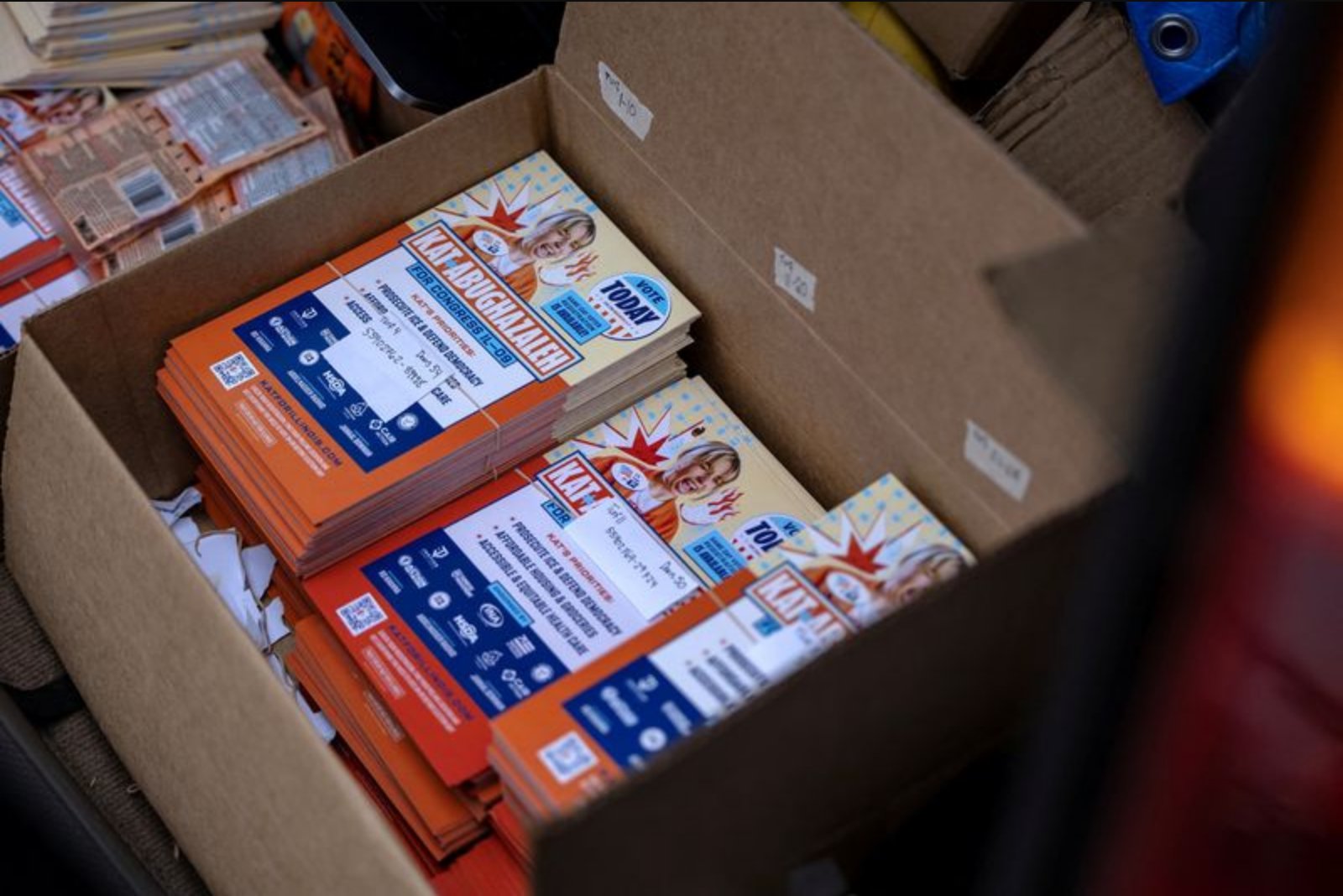
Alongside the Senate fight, a number of House seats are up for grabs following retirements by long-tenured members. Representatives Danny Davis, 84, and Jan Schakowsky, 81, both Democrats, are leaving their reliably left-leaning Chicago-area districts, prompting competitive Democratic primaries to succeed them. Additional open seats include those vacated by Krishnamoorthi and Kelly as they pursue the Senate seat.
Krishnamoorthi, who emigrated from India as a child, has nearly a decade of House service and leads the field in campaign fundraising. He reported $6.6 million in cash on hand after raising in excess of $30 million. A member of the House’s New Democrat Coalition, a group characterized by its moderation, he endorses raising the federal minimum wage to $17 per hour phased in over five years and supports expanding Medicare by allowing individuals as young as 50 to buy into the program.
Stratton and Kelly are positioning themselves to attract progressive voters with endorsements of a single-payer, "Medicare for all" federal health insurance system. Stratton carries the endorsement of Democratic Governor J.B. Pritzker, a central element of her advertising, and she has set a higher minimum wage target than her opponents, advocating a $25 federal minimum wage compared with her opponents’ $17 proposals. Stratton’s campaign financials show $4 million raised to date and $1.3 million cash on hand.
Kelly, in the House since 2013, highlights district experience that spans urban, suburban and rural constituencies. Her campaign has raised $3.3 million and holds nearly $721,000 in cash according to Federal Election Commission filings.
What voters will decide
Tuesday’s primaries will indicate whether progressive energy within the Illinois Democratic electorate can displace or substantially reshape candidates with more moderate platforms, especially on immigration enforcement, health care structure, and wage policy. The outcomes will determine who represents a heavily Democratic state in contests where the general election is not expected to be competitive between parties but where intraparty ideological balance could shift the delegation’s policy priorities.
As Illinois voters cast ballots, campaign fundraising, endorsements and policy contrasts will guide the selection of nominees who may help set the tone for Democratic priorities in Congress.