
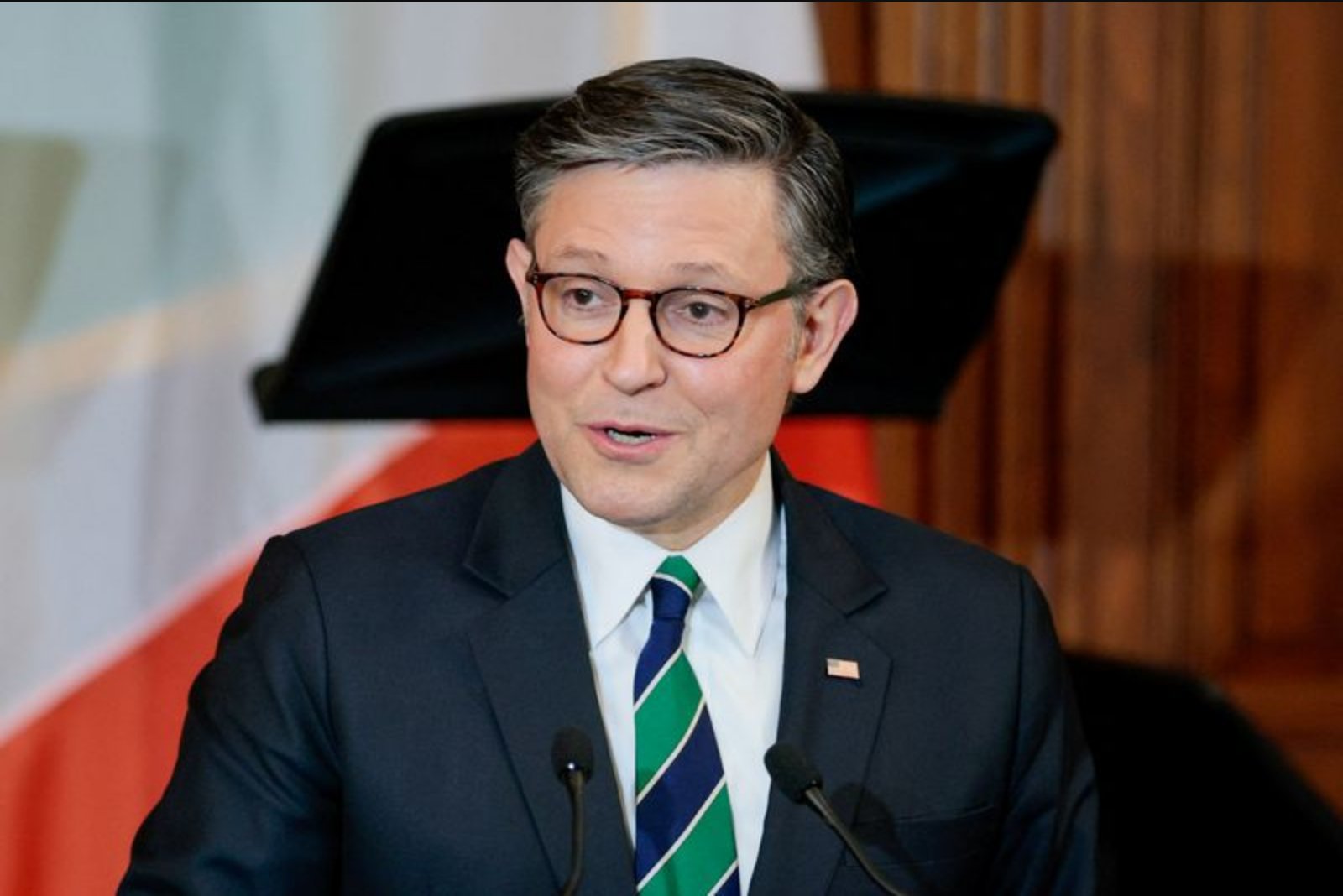
WASHINGTON, March 18 - House Republican leader Mike Johnson is urging a straightforward reauthorization of Section 702 of the Foreign Intelligence Surveillance Act, saying recent reforms are "working just as we planned." Johnson is pressing for a quick extension of the authority that permits U.S. intelligence agencies to gather foreign intelligence from data routed through American communications systems.
To reinforce that message, a group of senior U.S. intelligence officials met behind closed doors with congressional leaders on Wednesday. Participants included CIA Director John Ratcliffe, FBI Director Kash Patel, and Lt. Gen. William Hartman, who is serving as acting director of the National Security Agency. Details of the classified briefing were not disclosed publicly.
The FBI declined to comment on the meetings. The CIA, the NSA, and the Department of Justice did not return messages seeking comment.
Section 702 authorizes the NSA to target foreigners located outside the United States, drawing on information carried on U.S. digital infrastructure. The provision has long provoked concern from both political parties because it enables U.S. law enforcement to search the resulting intelligence without first obtaining a judicial warrant, a practice critics say raises substantial domestic privacy issues.
Efforts to renew Section 702 have historically generated contentious debate. Supporters often warn that intelligence capabilities could be severely diminished without renewal, while opponents argue that the practice moves the country closer to intrusive domestic surveillance. The most recent reauthorization bid in 2024 finally passed on its fourth attempt. A separate proposal to require judicial approval before U.S. law enforcement could query the collected data was narrowly defeated in the House of Representatives by a single vote.
Some lawmakers who previously opposed Section 702 have shifted their positions. Former critics, including supporters of the current administration, have signaled support for reauthorization. The White House is now advocating for renewal. Representative Jim Jordan, once a proponent of conditioning renewal on a warrant requirement, is among those now backing reauthorization without that judicial requirement.
Opposition and procedural hurdles remain in place. Representative Maria Elvira Salazar - identified in reporting as Paulina Luna in prior coverage - has said she would support renewal only if it is tied to the SAVE America Act, Republican legislation that would require proof of citizenship when registering to vote. Jordan’s spokesperson pointed to an interview in which Jordan said that reforms made in 2024 mean that "a short term, temporary extension is fine." A representative for Salazar did not return a message.
Civil liberties advocates argue that the 2024 changes largely formalized existing agency practices without resolving the central problem of warrantless searches. They warn that meaningful reform remains necessary in a political climate where critics contend executive branch checks have been weakened. Jake Laperruque, deputy director of the Center for Democracy and Technology’s Security and Surveillance Project, summarized those concerns, saying, "All of the institutional oversight mechanisms have been taken apart" and adding, "We've killed all the canaries in the coal mine."
The contested renewal, administration lobbying, converted skeptics, and unresolved demands for additional safeguards illustrate the narrow path ahead. Proponents are seeking a clean, rapid extension while some members of Congress and civil liberties organizations continue to press for judicial safeguards or legislative riders that would alter the conditions of renewal. With details of recent briefings kept secret and principal agencies declining comment, the timetable and substance of any forthcoming legislation remain uncertain.
Contextual note - The debate centers on the balance between foreign intelligence collection that relies on U.S. infrastructure and protections against domestic warrantless searches. The legislative and political dynamics described here reflect positions and developments specific to the present renewal effort.