
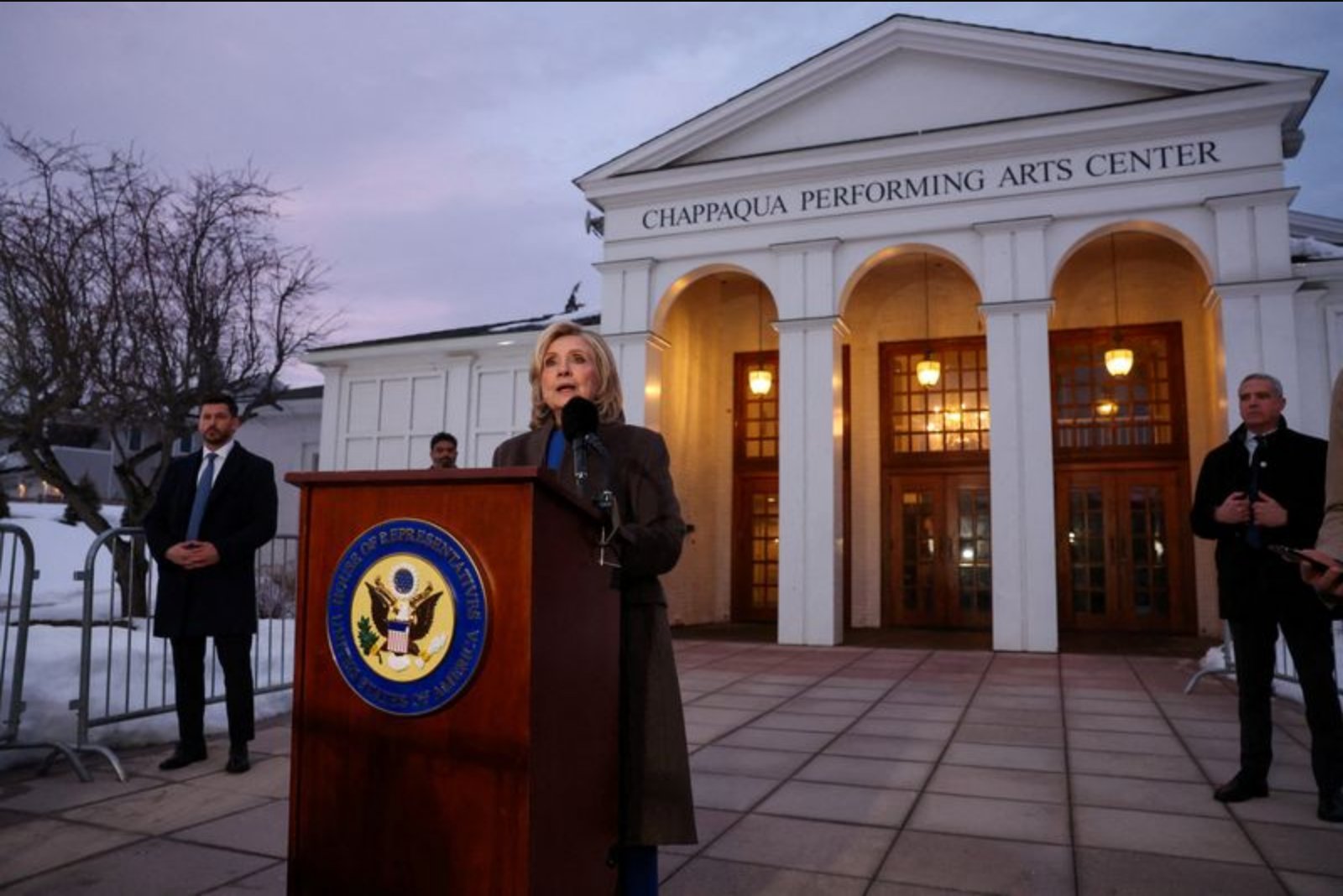
Hillary Clinton told a congressional oversight panel that she has no recollection of ever meeting Jeffrey Epstein and offered no information about his criminal actions, according to a statement she read while delivering a closed-door deposition. The former secretary of state said she "does not recall ever encountering Mr. Epstein" and that she "never flew on his plane or visited his island, homes or offices."
The statement accompanied a lengthy appearance before the House Oversight Committee in Chappaqua, New York. Lawmakers questioned Clinton for around seven hours, after which she spoke to reporters and characterized large portions of the session as repetitive. She said she had been asked the same questions multiple times throughout the day, and that she provided suggestions to the committee on how to conduct aspects of the investigation, though she declined to detail those proposals.
Clinton also described an unusual turn late in the proceedings, saying the questioning shifted to topics she considered irrelevant. She said the session "got quite unusual because I started being asked about UFOs and a series of questions about Pizzagate, one of the most vile bogus conspiracy theories." The Pizzagate reference alludes to false claims circulated in 2016 alleging a Washington, D.C. pizzeria was a front for a child sex trafficking ring involving her, claims she said were baseless.
In prepared remarks delivered during the deposition, Clinton accused the Republican-led committee of attempting to divert attention away from former President Donald Trump's own connections to Epstein. She further criticized the Trump administration for having "gutted" a State Department office that focused on international sex trafficking, saying that action was relevant to the broader investigation.
After Clinton completed her testimony, House Oversight Committee Chairman James Comer dismissed the idea of calling President Trump to appear before the panel. Comer said Trump had "answered hundreds if not thousands of questions" about Epstein and that the former president had been transparent in releasing documents related to the matter, according to Comer’s comments after the hearing.
Both Clinton and her husband, former President Bill Clinton, initially declined committee requests to testify but agreed to appear after the panel moved to hold them in contempt of Congress. Bill Clinton is scheduled to testify before the committee the following day. Hillary Clinton told reporters that her husband will state that the "vast majority" of people who had contact with Epstein prior to his criminal pleas in 2008 "did not know" about sex trafficking; she said that is what he would testify to.
Prior to the hearing, Comer sought to counter assertions that the inquiry was purely partisan, noting that several Democrats had supported calls for the Clintons to appear. Comer outlined the committee's lines of inquiry: any interactions Clinton may have had with Epstein, Epstein's role in the Clintons' charitable endeavors, and whether she had any relationship with Ghislaine Maxwell, the jailed associate of Epstein. He said the committee planned to make transcripts and video of the interviews publicly available.
Representative Robert Garcia, the committee’s top Democrat, said reporters should also expect calls for testimony from others, including President Trump and Commerce Secretary Howard Lutnick. Garcia argued that those individuals should answer questions about their connections. Comer acknowledged it was "possible" the committee might subpoena Lutnick. Lutnick has acknowledged visiting Epstein's private island years after he says he severed ties with Epstein.
Democrats on the panel, including Garcia, have charged that the Justice Department selectively withheld material from a set of roughly 3 million Epstein-related documents it released, alleging the omission was intended to shield President Trump from scrutiny. Garcia said the omitted material included records concerning a woman who accused Trump of sexually abusing her when she was a minor. The Justice Department said it is reviewing whether any documents were improperly withheld and stated it would publish them if appropriate. The department has also cautioned that some material previously released contained unfounded accusations and sensational claims about Trump.
Law enforcement officials have not charged Trump with criminal wrongdoing in connection with Epstein. The record shows Trump socialized extensively with Epstein in the 1990s and 2000s, prior to Epstein’s 2008 conviction for soliciting prostitution from a minor. Comer said evidence gathered by the committee so far does not implicate Trump.
Bill Clinton flew on Epstein’s plane several times in the early 2000s after leaving the presidency. He has denied any wrongdoing and has expressed regret for his association with Epstein. Comer said Epstein visited the White House 17 times while Bill Clinton was in office.
In a release of documents, the Justice Department highlighted photographs of Bill Clinton, but the broader document set also revealed Epstein’s ties to a lengthy roster of business and political figures. The released material included names such as Howard Lutnick and Tesla CEO Elon Musk. Abroad, the documents have prompted criminal probes of other prominent individuals, including Britain's Andrew Mountbatten-Windsor, the former Duke of York.
Context and next steps
Clinton’s testimony completes the first of two scheduled depositions by the former presidential couple before the committee. Lawmakers have said they will continue to pursue records and interviews that could further illuminate Epstein’s network and contacts. The committee has indicated a willingness to make public both transcripts and video of the sessions, and it may seek additional testimony from other figures whose names have surfaced in the document releases.
The Justice Department has said it is reviewing potential withholding of documents and will act as appropriate. The committee continues to weigh subpoenas and potential witnesses, with Comer signaling potential further action depending on what the committee determines it still needs to investigate.
Reporting note
The deposition in Chappaqua produced extensive questioning and yielded no admission by Hillary Clinton of contact with Epstein or knowledge of his criminal conduct. The committee’s inquiries and the broader document releases have kept scrutiny on a wide set of public figures and institutions, even as partisan divisions over the probe’s intent remain a point of contention.