
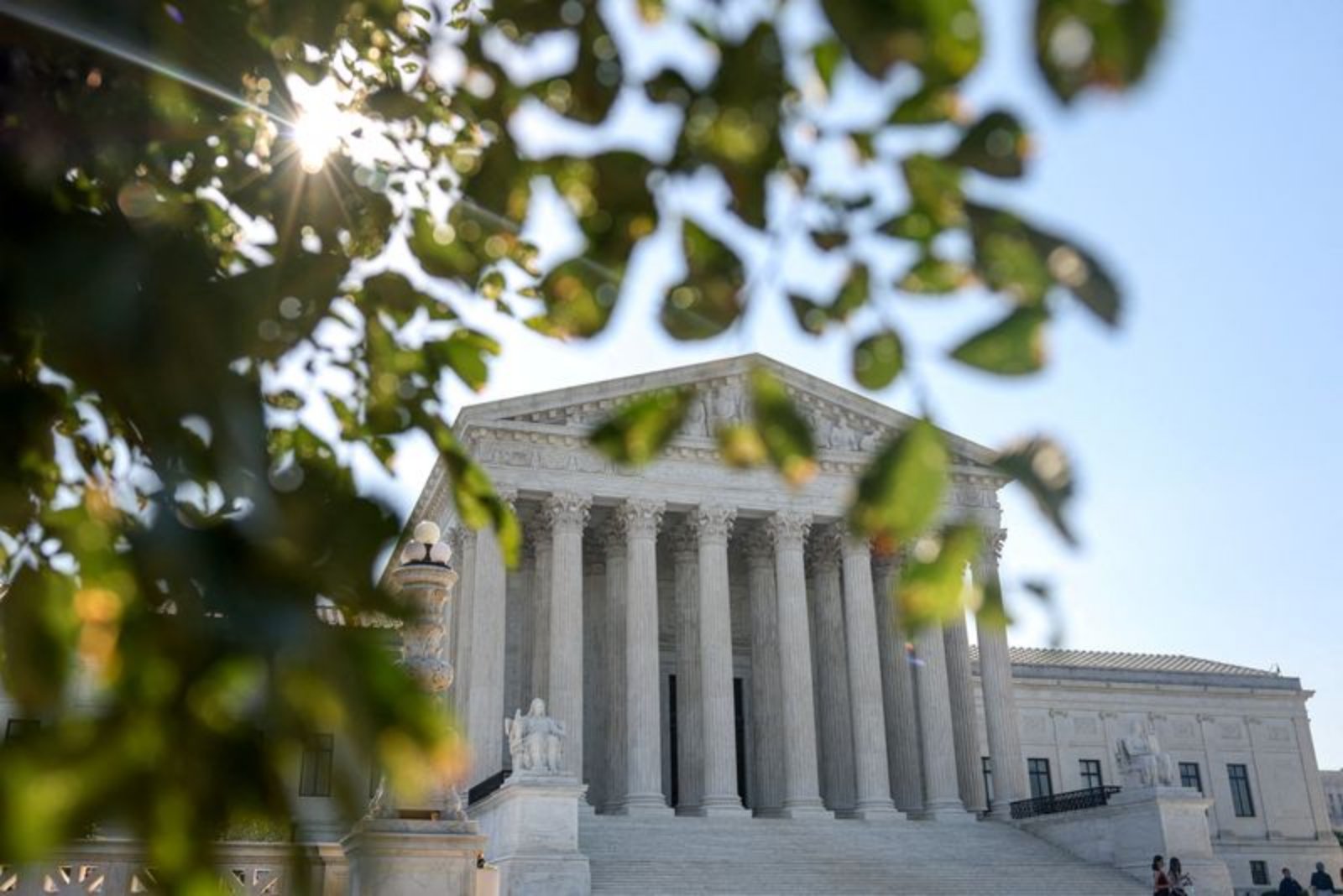
President Donald Trump reacted angrily on February 20 after the U.S. Supreme Court struck down his sweeping global tariffs, a signature component of his economic and foreign policy. That decision may not be the only setback for the president this term. The high court is set to rule on four additional major matters connected to Trump by roughly the end of next month, covering birthright citizenship, the attempted removal of a Federal Reserve governor, the ouster of a Federal Trade Commission member and the rescission of Temporary Protected Status for migrants from Haiti and Syria.
The Supreme Court currently sits with a 6-3 conservative majority that includes three justices appointed by Trump during his first presidential term. Since the president returned to office last year, the court has issued a series of emergency rulings that have often been favorable to his administration. Still, the tenor of the justices’ questions during oral arguments suggests the court could rule against the administration in at least two of the disputes - the challenge to the birthright citizenship directive and the attempted removal of the Federal Reserve governor. The court is scheduled to issue rulings on Thursday.
An executive order on birthright citizenship
On the first day of his second term, President Trump signed an executive order directing federal agencies not to recognize U.S. citizenship for children born on American soil if neither parent is a U.S. citizen or a lawful permanent resident, commonly known as a green card holder. The order is a central plank of the president’s stringent immigration approach.
During oral argument on April 1, most justices expressed skepticism about the administration’s legal theory. The key question is whether the order runs afoul of the citizenship clause of the 14th Amendment as well as a federal statute that codifies birthright citizenship rights. Observers noted that none of the three Trump appointees - Brett Kavanaugh, Neil Gorsuch and Amy Coney Barrett - appeared receptive to the administration’s position during argument.
"The Trump administration is probably looking at a 7-2 loss," said Georgia State University law professor Anthony Michael Kreis.
University of Pennsylvania political science professor Rogers Smith observed that broad public support for current birthright citizenship practices has made legislative change difficult in the past. "There is a reason that repeated Republican efforts since the 1990s to change birthright citizenship rules have never made it out of committee in Congress, even when Republicans controlled both legislative chambers," Smith said. "Most members of Congress know that most of their constituents do not favor changing current policies."
The Lisa Cook removal dispute
Since the Federal Reserve was established in 1913, no president had tried to remove a sitting central bank official until President Trump moved last year to remove Federal Reserve Governor Lisa Cook. The administration pointed to allegations, made by one of the president’s appointees, that Cook engaged in mortgage fraud. Those claims remain unproven, and Cook has contended they were a pretext to remove her over disagreements on monetary policy.
At oral argument on January 21, many justices voiced concern about the consequences for Federal Reserve independence if they accepted the administration’s claim that the president acted within his removal authority. When the court agreed last October to hear the Cook case, it allowed her to remain in office while the dispute proceeds. That contrasts with the court’s decision not to preserve the position of Federal Trade Commission member Rebecca Slaughter, whom the administration removed while she pursues a legal challenge.
Rebecca Slaughter and the FTC tenure question
The Supreme Court addressed the Slaughter matter at oral argument on December 8. Conservative justices at that hearing gave indications they were inclined to uphold the president’s removal of the FTC commissioner. The Department of Justice has urged the court to use Slaughter’s case to overturn a 1935 precedent that has narrowed presidential authority by protecting the leaders of independent agencies from at-will removal.
A 1914 statute allows the president to remove Federal Trade Commission commissioners only for cause - identified in the law as inefficiency, neglect of duty or malfeasance in office - but bars removal for policy disagreements to shield agencies from political interference. Comparable tenure protections exist for officials at more than two dozen other independent agencies.
During argument, the conservative justices appeared receptive to the administration’s contention that statutory tenure protections infringe on presidential power under the Constitution. "A decision in favor of Trump in the Slaughter case will strip power away from Congress and give much more to the president," said University of Minnesota political science professor Timothy Johnson.
Bradley University political science professor Taraleigh Davis said the arguments in the Cook case suggested the justices were inclined to guard the Fed’s independence, but she underscored an unresolved legal issue. "But I didn’t hear an answer to what legal principle actually distinguishes the Fed from the FTC," Davis said.
Temporary Protected Status for Haiti and Syria
On April 29 the court heard argument over the administration’s move to terminate temporary humanitarian protections for roughly 350,000 migrants from Haiti and about 6,100 from Syria. The program at issue is Temporary Protected Status, which allows nationals of designated countries affected by war, environmental disaster or other extraordinary conditions to live and work in the United States while it remains unsafe for them to return home.
The Supreme Court has historically been deferential to presidential judgments in areas involving immigration, national security and foreign policy. The administration has argued that its decision to rescind certain TPS designations falls within that traditional sphere of deference.
What to watch
- How the court reconciles statutory protections for independent agencies with constitutional separation of powers concerns, particularly in the Slaughter and Cook matters.
- Whether the justices find that the 14th Amendment and existing federal statute continue to guarantee birthright citizenship as currently applied.
- How precedents on judicial deference in immigration and foreign policy contexts affect the outcome of the Temporary Protected Status challenge.
With rulings expected imminently, the high court’s decisions in these cases will clarify the contours of presidential authority, the tenure protections for officials at regulatory and independent agencies, and the legal safeguards for certain immigrant populations. The arguments to date signal a split across the docket, with potential wins and losses for the administration that together will shape executive power debates going forward.