
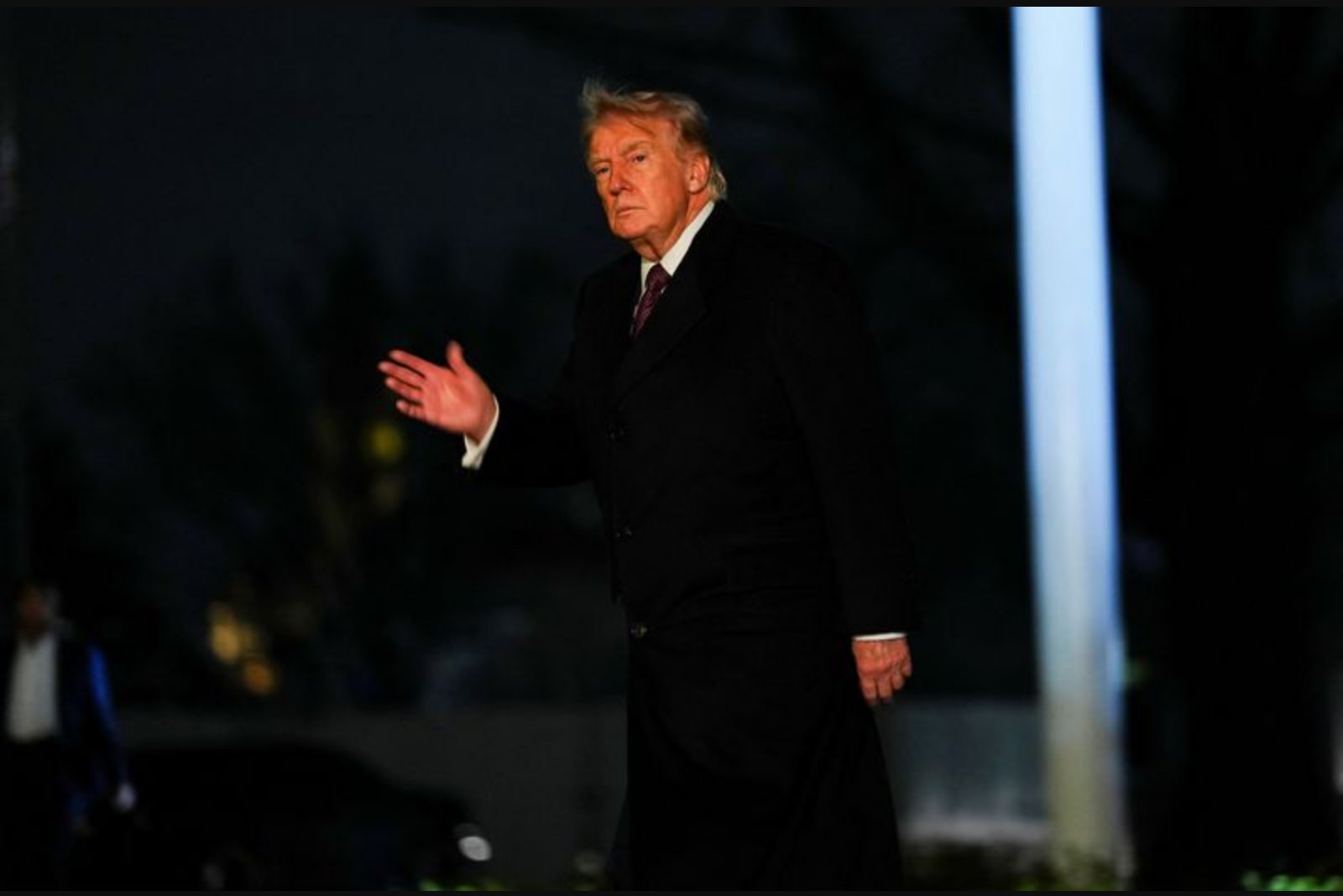
Republican leaders are moving a high-profile voting bill toward the Senate this week amid pressure from former President Donald Trump, who has insisted passage would "guarantee" a favorable outcome for his party in the midterm elections. The legislation, known as the SAVE America Act, faces steep opposition from Democrats and skepticism within the Republican conference, yet if enacted it would change registration rules in ways that election administrators and voting-rights advocates warn could disenfranchise significant numbers of Americans.
Under the proposed law, most people registering to vote would be required to show citizenship documentation such as a current U.S. passport or an original birth certificate. Common forms of identification that do not typically confirm citizenship - including state driver’s licenses and REAL IDs - would not generally suffice. The bill would also mandate in-person registration for many voters.
That combination of stricter documentary requirements and in-person registration raises immediate practical concerns. The University of Maryland’s Center for Democracy and Civic Engagement estimates that about 21 million eligible voters do not have easy access to documents proving their citizenship. Those constraints can manifest as logistical burdens for people who lack passports, who have changed names after marriage, or who live substantial distances from election offices.
Although proponents argue the SAVE America Act would prevent non-citizens from voting, federal law already prohibits non-citizen voting. Democrats and voting rights advocates have denounced the bill as a form of voter suppression. Trump has pressed Republican House members to back the measure and has urged Senate Republican leaders to alter the Senate’s filibuster rules so the legislation could pass by simple majority; he has pledged not to sign other legislation until that procedural change occurs. Republican Senate Majority Leader John Thune has put the bill on the Senate floor this week, but there is not yet enough support within the Republican caucus to change filibuster rules.
Data suggest a paradoxical political risk for the bill’s backers. Passport ownership tracks with several demographic patterns that favored Democrats in the 2024 presidential election: higher passport ownership is correlated with higher educational attainment and with support for the Democratic ticket in many states. An analysis cited by critics finds that 14 of the 17 states with the highest passport ownership supported the Democratic nominee, while the 12 states with the lowest passport ownership supported Trump in 2024.
Those patterns matter because Republican voters, on average, are less likely to own passports than the overall population. They are also more likely to live in rural areas, where distance to election offices could make in-person registration more difficult. Nicole Hansen, a lawyer with the nonpartisan Campaign Legal Center, noted that many of the states with the lowest passport ownership are rural and that voters there could face added obstacles registering in person.
Senator Lisa Murkowski of Alaska, a Republican who opposes the bill, pointed to the special circumstances in her state: about one-fifth of Alaskans do not live on the road system and might need to fly to an election office to register. "The bill as written would disenfranchise many Alaskans," she wrote in a recent op-ed. In contrast, Senator Roger Marshall of Kansas dismissed the notion that rural residents would be disproportionately burdened, saying many rural residents already travel periodically to county seats for essentials and would be able to register then.
Another potential snag relates to name changes. Critics say the bill could disproportionately affect married women whose legal names on birth certificates do not align with current surnames. A 2023 Pew Research Center study cited by critics found that Democratic women were twice as likely as Republican women to keep their last name after marriage, which could reduce the chance of a mismatch for Democratic women and increase the likelihood of mismatches for Republican women. CNN exit polls from the 2024 presidential election indicated that married women favored Trump over the Democratic nominee by a 52% to 47% margin, while single women favored the Democratic nominee by 61% to 38%.
White House press secretary Karoline Leavitt rejected the claim that the bill would disproportionately harm married women, calling it a "huge myth" and saying that only a fraction of women would need to update their documentation. Still, the broader administrative implications are large: federal data show more than 100 million Americans either submitted new voter registrations or updated existing registrations between 2022 and 2024, a volume that highlights the scale of any change to registration mechanics.
Not every analyst sees a clear partisan split in documentary access. Wren Orey, director of the elections project at the Bipartisan Policy Center, said survey data suggest roughly 12% of Americans do not have easy access to either a passport or a birth certificate. Orey’s review found no strong partisan gap: Republicans were more likely to report having a birth certificate, while Democrats more often reported having passports. He said the bill "would impact a large portion of Americans across all demographic groups."
As the Senate considers the SAVE America Act, the political calculus for Republicans is uncertain. Supporters say the bill advances election integrity by tightening eligibility checks. Opponents say it risks disenfranchising millions of eligible voters and could unintentionally reduce turnout among constituencies that delivered Republican victories. With filibuster reform unresolved and mixed evidence about partisan distribution of document access, the bill’s path and its potential effects remain unsettled.
Note: This article presents the provisions of the SAVE America Act and the debates surrounding its potential impacts as reported by analyses and public statements, including estimates from the University of Maryland’s Center for Democracy and Civic Engagement, comments by elected officials, and findings cited from Pew Research Center and CNN exit polls.