
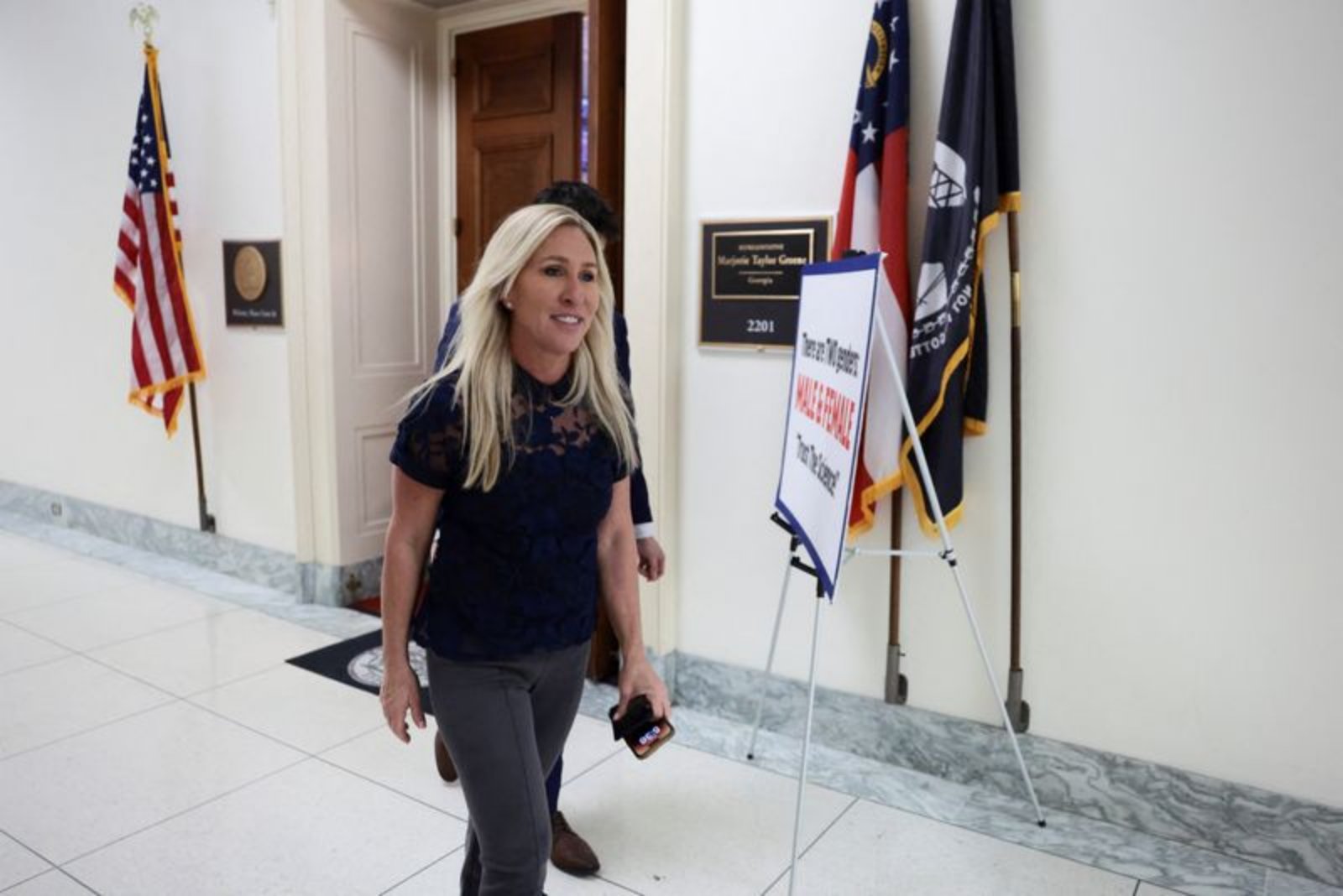
Georgia voters are heading to the polls in a special election to pick who will replace Republican firebrand Marjorie Taylor Greene in the U.S. House. The contest has drawn national attention because it is being watched as an early indicator of former President Donald Trump’s influence inside one of his staunchest strongholds.
Trump has publicly endorsed Clay Fuller, a former district attorney who served four northwest Georgia counties. Fuller’s backers have boosted his profile, including high-profile appearances on the campaign trail. Yet he faces a serious challenge from Colton Moore, a former state senator who has cultivated a hard-right following and describes himself as "Trump’s #1 Defender." The contest also includes Democrat Shawn Harris, who has attempted to attract disgruntled Trump voters.
With 17 candidates in the race, election analysts and local observers expect no one to reach a majority in what is likely to be a low-turnout election. That outcome would push the contest into a runoff on April 7 between the two finishers with the highest vote totals - a scenario that could feature a Democrat in the top two if Republican support is fractured.
Why the race matters
The seat up for grabs represents Georgia’s 14th Congressional District, a mostly blue-collar corridor stretching from Atlanta’s exurbs up to the Tennessee border. The district became a focal point of national politics after Greene captured the seat in 2020 and quickly emerged as one of the most visible figures in the MAGA movement. Greene stepped aside in January following an acrimonious split with the president, leaving a vacancy that has thrust the district back into the spotlight and forced voters to weigh how much authority Trump should have in determining her successor.
Kerwin Swint, a political science professor at Kennesaw State University who lives in the district, described the vote as a useful barometer for Trump’s hold over local Republican voters. "This is an interesting case to see how powerful Trump’s hold over the party is in that particular district," Swint said. He predicted that Harris could finish first without a majority, with the large field of Republican contenders dividing conservative votes and likely sending either Fuller or Moore into the runoff alongside the Democrat. Swint added that, despite that possibility, Harris would probably lose in a runoff given the district’s conservative tilt.
Campaign dynamics and messaging
Fuller has the benefit of the former president’s endorsement and the visibility that endorsement brings. Trump visited Rome, a central city in the district, last month and presented Fuller on stage in a show of support. That appearance was intended as a clear signal to local voters that Fuller is the candidate favored by Trump’s national organization.
But the race remains unsettled as some supporters say they prefer to make their decision independently of endorsements. Moore said he is confident of his ability to win without the president’s backing, pointing to his long record of promoting Trump’s claims about the 2020 election and his record of confronting perceived political adversaries. Moore argued that substantial outside funding - which he described as "DC swamp money" - has been deployed to support Fuller through television advertising and other means. He contended that some "low-information voters" might back Fuller simply because of Trump’s endorsement, but he emphasized the enthusiasm of grassroots activists. "But the activists, the people who are most likely to get out and vote, they know we were Trump’s number one defender in Georgia," Moore said.
What the winner faces
The victor of the special election will serve in the House through the end of 2026, but will immediately be thrown into a campaign for the full two-year term that begins in January 2027. The path to that full term starts almost immediately: a May primary could assemble many of the same contenders, setting the stage for a potentially crowded intraparty contest that will culminate in the general election in November, when all 435 House seats and one-third of Senate seats are on the ballot.
Tuesday’s contest also comes in a charged international context. It follows closely on the heels of U.S. and Israeli attacks on Iran - developments that some White House aides privately worry could create political risks for Republicans, including Trump, at a time when voters are signaling they are more focused on domestic concerns. Polling and voter conversations cited in the campaign have emphasized issues such as affordability and healthcare as priorities for many constituents.
Outlook
Given the crowded field, a divided Republican vote and the district’s conservative baseline, the most plausible immediate outcome is a runoff on April 7. That runoff will provide a clearer signal about whether Trump’s endorsement can marshal enough support to carry Fuller to victory over an energized MAGA-aligned challenger, or whether activist energy behind a candidate like Moore can override the weight of a presidential nod.
The race will be watched closely by political strategists and investors who monitor how shifts in party dynamics and geopolitical events interact with voter priorities - particularly in sectors sensitive to defense spending and healthcare policy.