
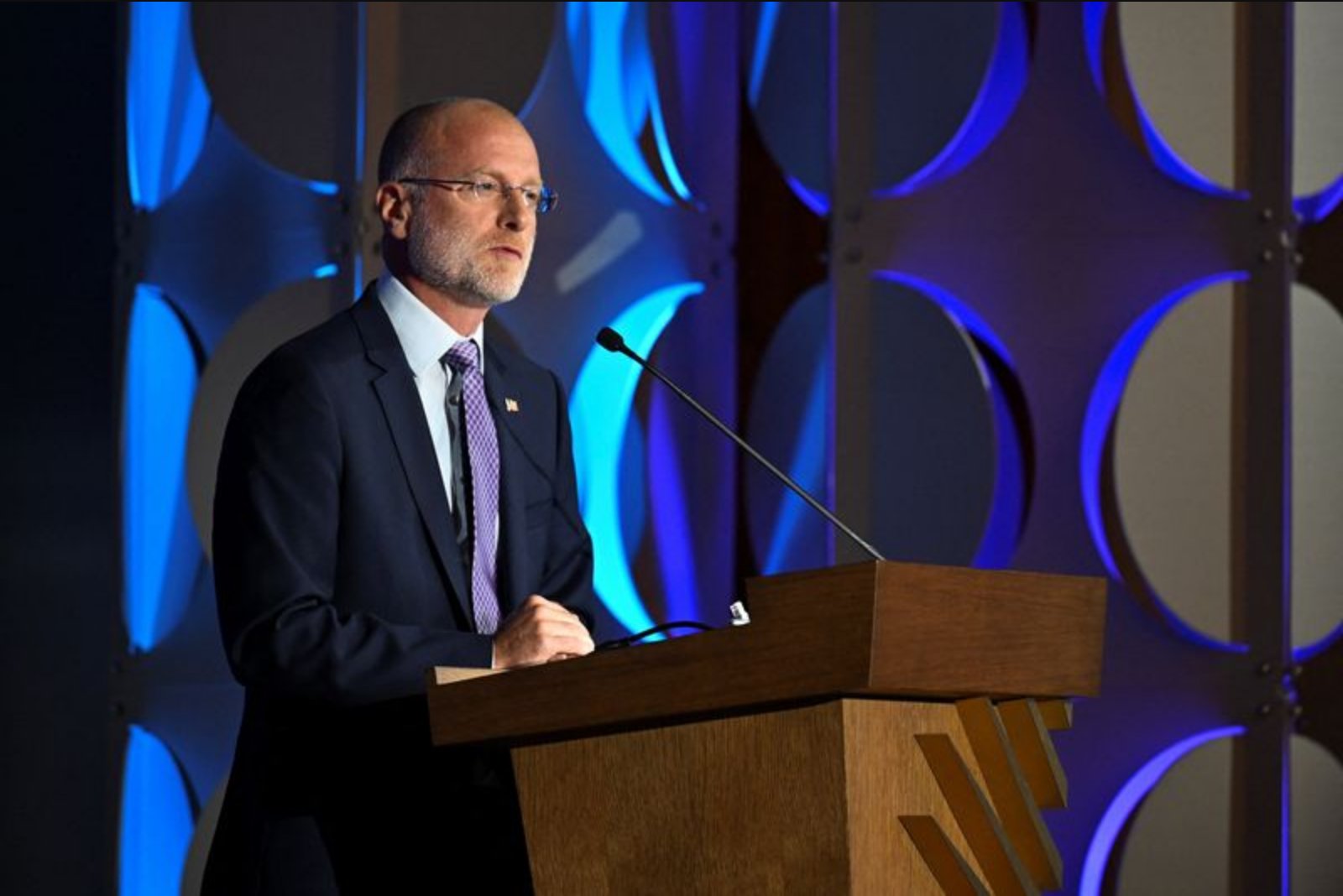
FCC Chairman Brendan Carr used social media on Saturday to renew his critique of broadcast news organizations and to underline the threat of regulatory consequences for stations he says disseminate misinformation.
In a post on X, Carr said broadcasters that air "fake news" must "correct course before their license renewals come up," sharing a screenshot of a Truth Social message from President Donald Trump earlier that day. The screenshot showed Trump accusing the New York Times, the Wall Street Journal and "other lowlife 'papers' and media" of "terrible reporting" about the U.S. and Israel’s war with Iran.
Trump's post described certain outlets as committing "terrible reporting" on the conflict between the United States, Israel and Iran, and singled out specific newspapers alongside broader media criticism.
Carr framed his post around the FCC's licensing authority, emphasizing that "Broadcasters must operate in the public interest, and they will lose their licenses if they do not." The commission issues licenses for television and radio broadcasters that operate on the public airwaves; it does not regulate news organizations that distribute news only online or in print, such as the New York Times and the Wall Street Journal.
This instance marked the first time Carr has explicitly tied his long-standing concerns about broadcaster content to wartime reporting by reposting a presidential critique aimed at stories on the U.S. and Israel’s conflict with Iran. In his post, he also referenced "hoaxes and distortions" during the 2024 presidential campaign and said "the public has lost faith and confidence in the media."
Carr has repeatedly called for stricter enforcement of the FCC's public interest obligations for license holders, saying the commission has failed to deploy that authority properly for decades. By amplifying the president's accusations, Carr extended the scope of his criticism to include coverage of a current armed conflict.
The president has long accused media outlets of lying when coverage is critical of him and has previously urged that licenses be revoked for broadcast outlets he deems unfair. That pressure campaign has drawn criticism from Democratic lawmakers and a number of prominent Republicans, according to public commentary referenced in Carr's post and related discourse.
Carr has pointed to polls that indicate broad public distrust of the media as supporting his enforcement stance. The exact enforcement actions Carr envisions, and how the FCC would apply public interest obligations in practice, were not detailed in his Saturday post.
Key takeaways
- FCC Chair Brendan Carr reposted President Trump's criticism of media coverage on Iran and warned broadcasters that airing "fake news" could jeopardize license renewals.
- The FCC issues licenses for television and radio broadcasters but does not regulate outlets that operate solely online or in print.
- Carr reiterated his long-term push to enforce broadcasters' public interest obligations, citing "hoaxes and distortions" during the 2024 presidential campaign and public distrust in the media.
Sectors potentially affected: Broadcasting, media, and regulatory compliance functions of television and radio companies.
Risks and uncertainties
- Regulatory uncertainty for broadcast companies over how the FCC may interpret and enforce "public interest" requirements - impacting broadcasters' compliance and legal planning.
- Heightened political pressure on broadcast outlets could influence editorial decisions or lead to disputes over license renewals - affecting newsrooms and corporate governance in broadcast firms.
- Public distrust in media cited by regulators may complicate market perceptions of news brands and their advertising and audience metrics.