
WASHINGTON, March 3 - The 2026 midterm congressional season began on Tuesday with primary elections in Texas, North Carolina and Arkansas that have already produced political flashpoints likely to be referenced throughout the cycle. Voters faced a slate of high-profile contests that provide an initial measure of how both major parties are positioning themselves during President Donald Trump’s second term and as they prepare for a general election that will determine control of the U.S. House and Senate.
Republicans enter the year holding narrow majorities in both chambers, making every primary result potentially significant to the balance of power in Washington. The first day of voting brought clear contrasts in style and strategy across multiple races, and also showed how a sudden foreign policy crisis has the capacity to shape domestic political calculations almost immediately.
Democratic dilemma - confrontation or conciliation?
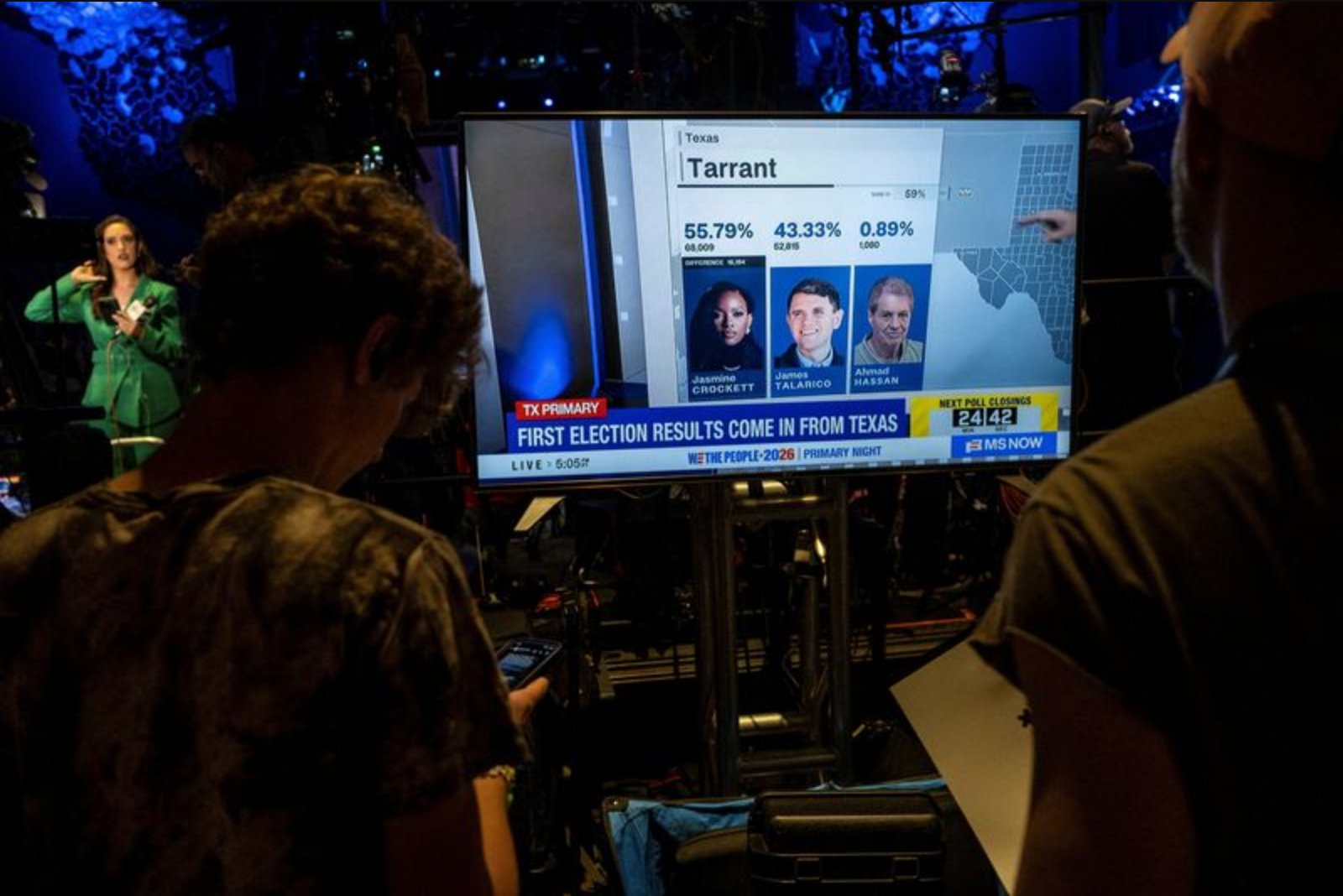
In Texas, the Democratic contest for the U.S. Senate became a study in competing approaches to opposing President Trump. Representative Jasmine Crockett, 44, built her profile as a vocal critic of the president and Republicans more broadly, deploying confrontational rhetoric that has raised her national visibility within Democratic circles. Her primary opponent, State Representative James Talarico, 36, emphasized a different posture - one rooted in appeals to faith and cross-partisan outreach. Talarico, a Presbyterian seminarian and former middle-school teacher, ran on a message of bridging divides and broadening the party’s reach.
That juxtaposition offered Democratic voters an early choice about whether to prioritize candidates who punch back forcefully against Trump, or those who might court moderates and independents in hopes of improving Democratic prospects in states where the party has struggled in statewide contests. Late on Tuesday, returns indicated Talarico was heading toward victory, a result his campaign attributed to building a wide coalition of voters rather than exclusively energizing the party’s base.
Party strategists and observers framed the race as part of an internal debate over direction: should Democrats double down on mobilizing core supporters, or pivot toward a more moderate message aimed at reclaiming working-class and minority voters who shifted toward Republicans in recent cycles? Talarico, while casting himself as a bridge-builder, did not shy from firm policy positions; he pushed for reform of the federal immigration agency and called for the impeachment of Department of Homeland Security Secretary Kristi Noem, signaling a willingness to adopt sharp policy critiques alongside a conciliatory tone.
Texas remains a steep electoral landscape for Democrats at the statewide level: the party has not won statewide since 1994. Still, discord within the Texas Republican field - most notably a bruising primary between four-term incumbent John Cornyn and Texas Attorney General Ken Paxton - has fed Democratic hopes of exploiting Republican weakness if their sectional battles produce a nominee perceived as vulnerable.
Democrats calculate that an eventual nominee viewed as scandal-plagued could be easier to defeat in November, and gaining four Senate seats remains the arithmetic the party needs to reclaim control of that chamber.
The Trump test within Republican primaries
On the Republican side in Texas, the U.S. Senate primary largely became a contest over which candidate could credibly claim the strongest alignment with President Trump rather than a debate about policy specifics. The dynamic was evident as the field of contenders emphasized loyalty to the president, leaving policy discussions comparatively muted.
Senator John Cornyn, 74, represents the Republican establishment and has at times clashed with Trump, including over the events surrounding the 2020 election. Attorney General Ken Paxton, 63, ran as a staunch MAGA ally and litigant who filed legal challenges related to the 2020 results. A third prominent candidate, U.S. Representative Wesley Hunt, also sought to foreground his pro-Trump credentials.
Because no contender cleared the 50% threshold needed for an outright nomination, Cornyn and Paxton were set to face a runoff. President Trump publicly said he liked the candidates but withheld a formal endorsement in Texas, an indication that the president may be reserving judgment until the runoff match-up in May. By contrast, Trump did endorse in North Carolina, backing Michael Whatley, who went on to win that state’s Republican Senate primary.
Even where Trump did endorse, his wider base showed fissures. In North Carolina, two rivals who campaigned to Whatley’s right - asserting more pronounced MAGA credentials - together accounted for roughly 20% of the vote, a sign that a segment of the Republican electorate continues to jockey for influence even after the president’s public backing.
Iran strikes quickly reshape campaign narratives
A new U.S. military engagement with Iran, only days old at the time of the primaries, already permeated campaign rhetoric and voter messaging. Republican candidates on the ballot largely defended President Trump’s strikes, while Democrats voiced opposition, framing the attacks as ill-conceived and lacking clear political objectives.
How the Iran strikes will play out politically is unclear, and the immediate effect on vote tallies was not yet evident. However, the conflict raised several issues that candidates quickly addressed: the safety of military personnel, the potential for increased oil and gas prices, and the broader question of whether the administration remains faithful to campaign promises made in 2024 to focus on domestic economic concerns rather than foreign military interventions.
A Reuters/Ipsos poll conducted over the weekend before the primaries found that only one in four Americans supported the strikes, underscoring the tenuous public backing for the action. Campaign voices within the MAGA movement also began expressing unease with the administration’s closeness to Israel, signaling fissures in the conservative coalition.
On the campaign trail in Texas, Jasmine Crockett highlighted the personal toll of the conflict, saying that military families were frightened for their loved ones. James Talarico balanced his comments by mourning both the deaths of U.S. troops and the reported deaths of dozens of girls at a school on the first day of the U.S.-Israeli air strikes, demonstrating how candidates attempted to address humanitarian as well as security concerns.
Redistricting and unexpected intra-party matchups in Texas
At President Trump’s urging, Texas Republicans redrew congressional maps last year outside the typical post-census process, creating new district lines that affected the primary landscape. The revised maps produced some surprising pairings, putting prominent Democrats against one another in fierce contests.
Representative Al Green faced Democratic Representative Christian Menefee after being placed in the same district, while Representative Julie Johnson was challenged by former Representative Colin Allred. In southern Texas, district lines were reconfigured in an attempt to improve Republican chances in predominantly Hispanic areas, with the goal of flipping two Democratic seats.
Those changes did not guarantee success for Republicans. Polling suggested that the party could struggle to hold recent gains among Hispanic voters, and Democrats targeted several contests with candidates who have cross-cultural recognition; for example, Latin Grammy winner Bobby Pulido mounted a challenge to Republican Representative Monica De La Cruz in a race Democrats viewed as competitive.
There was also an implicit recognition that state-level efforts to redraw maps could prompt reciprocal actions by Democratic-led states, potentially neutralizing some of the partisan advantages Texas Republicans sought.
What comes next
The initial primaries delivered a mix of predictable and unsettled outcomes: intra-party debates among Democrats over strategy, a Republican field still shaped by loyalty tests to President Trump, an immediate foreign policy shock that candidates were scrambling to address, and redistricting that reshaped certain matchups. With narrow majorities in Congress hanging in the balance, each of these threads will likely reverberate through the remaining primary calendar and into the November general election.
For voters and market watchers alike, the early contests provide an initial signal about how parties plan to allocate resources and craft messages in what promises to be a pivotal midterm season. The races underscore how quickly an international event can alter political calculations and how state-level mapmaking continues to influence national contests.