
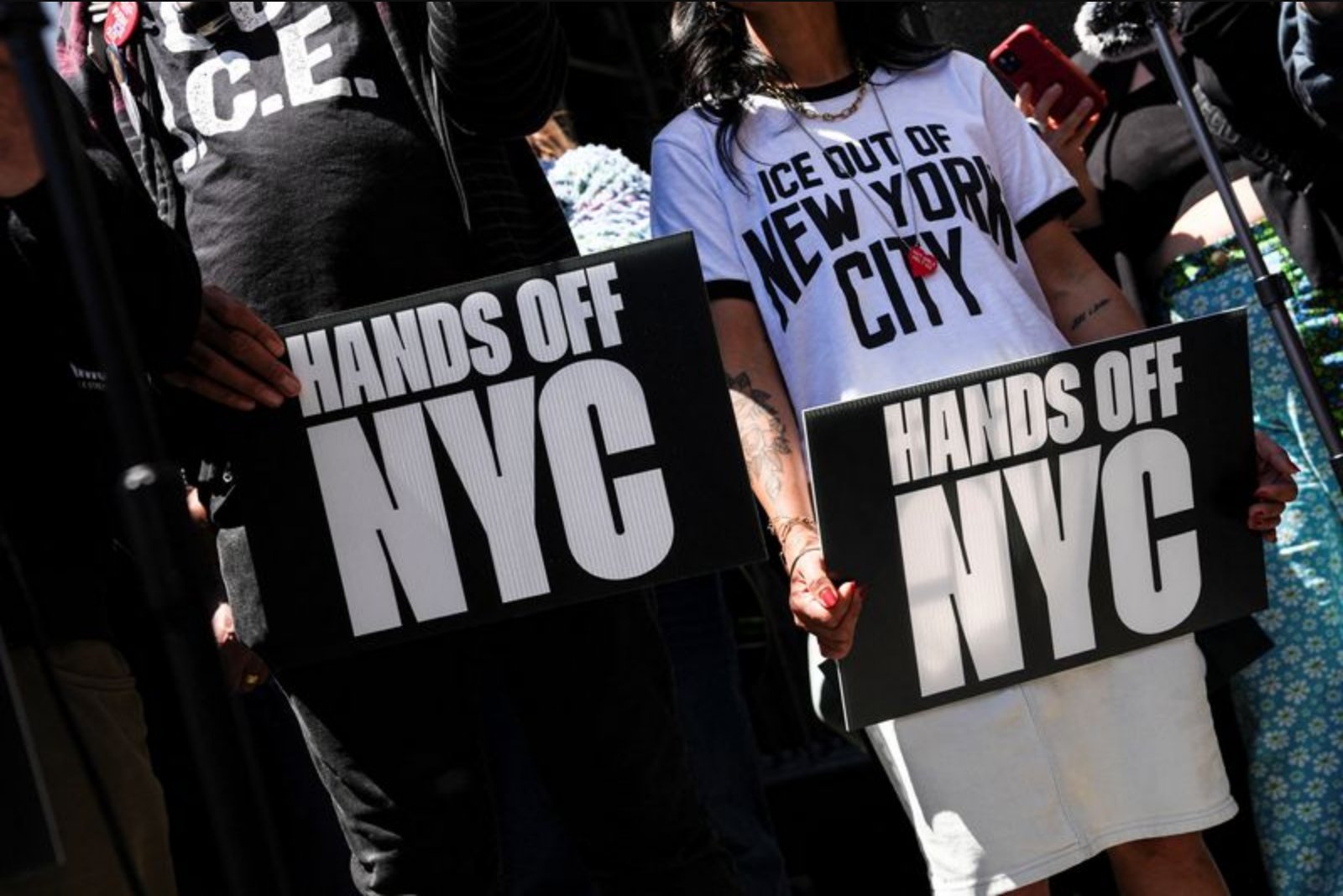
New York City recorded a notable rise in federal immigration enforcement activity after U.S. President Donald Trump returned to the White House, according to an audit released on Friday. The review, initiated by Mayor Zohran Mamdani shortly after he assumed office this year, found that U.S. Immigration and Customs Enforcement arrested 5,567 people in the New York City area between Jan. 20, 2025 and March 10, 2026.
The audit states that more than half of those arrests occurred at the immigration court located at 26 Federal Plaza. The total, the report says, represents a 71% increase compared with the same span of days at the end of President Joe Biden's administration.
The U.S. Department of Homeland Security, which has federal oversight of immigration enforcement and has carried out Trump’s aggressive immigration campaign, did not immediately respond to a request for comment.
Why the city audited ICE activity
Mamdani, a Democrat, commissioned the audit as part of efforts to protect immigrant communities. In a statement published on Friday, he said: "New York City is home to immigrants from every corner of the world, and no one should live in fear because of their status."
The audit delivers over two dozen recommendations aimed at tightening oversight of how city systems interact with federal immigration authorities. Among the proposals is a recommendation to audit emails exchanged between officials in the city’s Department of Corrections and ICE to determine whether any communications were improper.
Another recommendation calls for the city to stop sending daily reports to ICE that detail the national origin of non-citizens admitted into custody who have qualifying "violent and serious convictions." The report notes that sharing such nationality information is not required by federal, state or local law.
Legal and policy context highlighted in the report
The audit also reiterates the tension between federal immigration enforcement and local policy in cities like New York. It notes that New York and other Democratic strongholds have laws that limit cooperation with federal immigration authorities. Supporters of such limitations argue that local resources should not be diverted to what is primarily a federal responsibility. They further contend that, from a broader public safety perspective, encouraging immigrants to report crimes without fear of deportation improves community cooperation with law enforcement.
The audit does not offer new legal determinations, but it does recommend administrative steps the city could take to review past communications and alter reporting practices to ICE where the audit found such reporting is not legally required.
The document and its recommendations are presented as tools for municipal leaders to consider as they balance public safety, legal compliance and the relationship between immigrant communities and law enforcement.