
Politics February 2, 2026

Chicago Mayor Orders City Police to Investigate Alleged Illegal Conduct by Federal Immigration Agents

Executive order directs preservation of body-camera footage and reporting on potential state or local law violations amid legal pushback to federal immigration operations

By Hana Yamamoto
Chicago Mayor Orders City Police to Investigate Alleged Illegal Conduct by Federal Immigration Agents

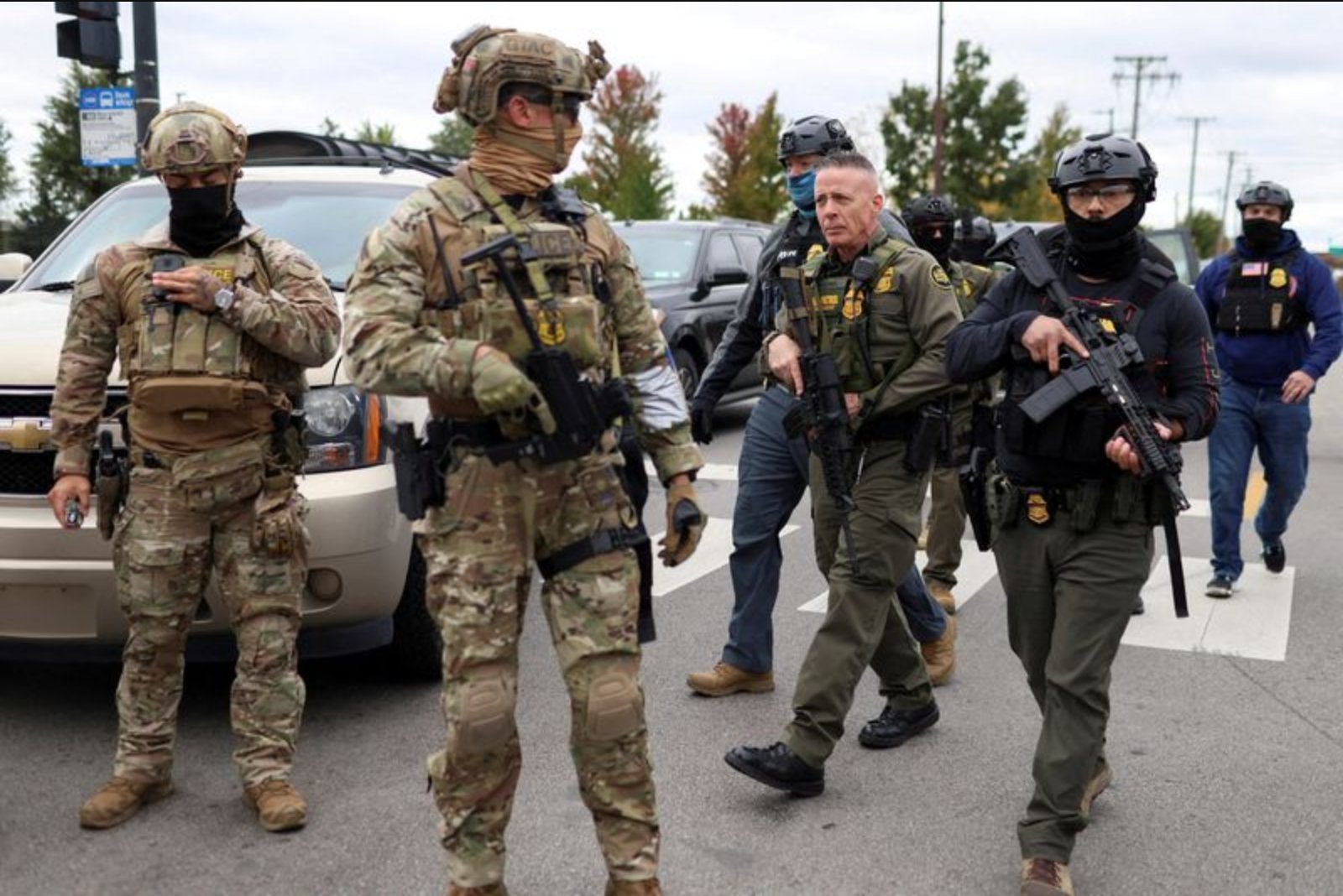
Chicago Mayor Brandon Johnson has issued an executive order instructing the Chicago Police Department to investigate allegations of illegal activity by federal immigration agents and to refer cases for prosecution when warranted. The order requires preservation of body-camera footage, identification of federal supervisory officers at scenes, and completion of reports describing any state or local laws allegedly violated. The Department of Homeland Security rejected the allegations, and legal and political challenges over expanded federal immigration enforcement continue in several states.

Key Points

  • Mayor’s executive order directs Chicago police to preserve body-camera footage, identify federal supervisory officers at scenes, and file reports on any alleged violations of state or local law - sectors impacted include municipal government and law enforcement oversight.
  • The Department of Homeland Security disputed claims of criminal misconduct by ICE, stating ICE personnel adhere to high professional standards - this highlights tensions between federal and local authorities that affect public-sector legal and compliance services.
  • States and localities are pursuing legal and legislative measures in response to increased federal immigration enforcement, as seen in Minnesota's lawsuit and New York’s proposed bill - these actions engage the legal sector and state government policy-making processes.

Chicago's mayor has signed an executive directive ordering the city's police department to probe allegations that federal immigration agents have engaged in unlawful conduct and to pursue prosecution referrals where appropriate, his office said.

The order instructs Chicago police officers to preserve body-camera footage from incidents involving federal immigration personnel, to identify the federal supervisory officer present at the scene, and to complete reports outlining any state or local laws that the federal agents are alleged to have broken.

In a statement accompanying the order, the mayor said, "With today’s order, we are putting ICE on notice in our city. Chicago will not sit idly by while (President Donald) Trump floods federal agents into our communities and terrorizes our residents."

The Department of Homeland Security, which oversees U.S. Immigration and Customs Enforcement and the Border Patrol, rejected the allegations. "These claims of criminal misconduct by ICE law enforcement are FALSE," DHS spokesperson Tricia McLaughlin said in a statement, asserting that ICE personnel adhere to "the highest professional standard" in their work.

Legal protections for federal officers complicate the city-level response. Federal agents are generally immune from state prosecution for actions taken as part of their official duties. That immunity applies only when an officer's actions were authorized under federal law and were necessary and proper, a limitation the order and subsequent actions will likely need to navigate.

The mayor's directive arrives amid visible resistance from state and local Democratic officials to an expanded federal immigration enforcement presence. Officials in Minnesota filed a lawsuit against the federal government over the influx of immigration officers, though a federal judge declined on Saturday to issue a preliminary injunction that would have halted the operation.

In New York, Governor Kathy Hochul introduced legislation intended to bar local law enforcement from being deputized by ICE to participate in immigration enforcement operations, reflecting similar state-level efforts to restrict cooperation with federal agents.

Chicago's order requires municipal officers to document incidents involving federal immigration personnel thoroughly, centering body-worn camera preservation and supervisory identification as immediate steps for any encounter that raises questions of legality under state or local statutes. The mayor's office framed the directive as a formal mechanism to ensure accountability and to provide a basis for referrals for prosecution if investigations find unlawful conduct.


Context in recent days shows a patchwork of legal and political responses to federal immigration enforcement activity - from lawsuits seeking to curb operations to proposed state laws aimed at limiting local participation - while federal officials continue to defend their conduct as meeting professional standards.

Risks

  • Legal uncertainty over the extent of state authority to investigate or prosecute federal agents, given federal immunity that applies when actions are authorized under federal law and deemed necessary and proper - this creates uncertainty for municipal legal departments and law enforcement.
  • Ongoing litigation and judicial decisions could leave operations by federal immigration agents in flux, as illustrated by a federal judge declining to issue a preliminary injunction in Minnesota - this preserves operational uncertainty for agencies and jurisdictions involved.
  • Heightened political opposition and proposed state-level restrictions on cooperation with federal immigration enforcement, such as legislation to bar deputization, could produce regulatory and compliance risks for local governments and interagency partnerships.

More from Politics

U.S. proposal would suspend asylum work permits until processing times fall, DHS says Feb 20, 2026 Trump Banner Appears at Justice Department Headquarters, Part of Broader Push to Stamp Presidential Identity on Federal Buildings Feb 19, 2026 Florida Legislature Votes to Rename Palm Beach International Airport for President Trump Feb 19, 2026 U.S. Proposal Would Relax Nuclear Safeguards in Draft Saudi Pact, Document Shows Feb 19, 2026 Commission of Fine Arts Gives Unanimous Approval to $400 Million White House Ballroom Plan Feb 19, 2026