
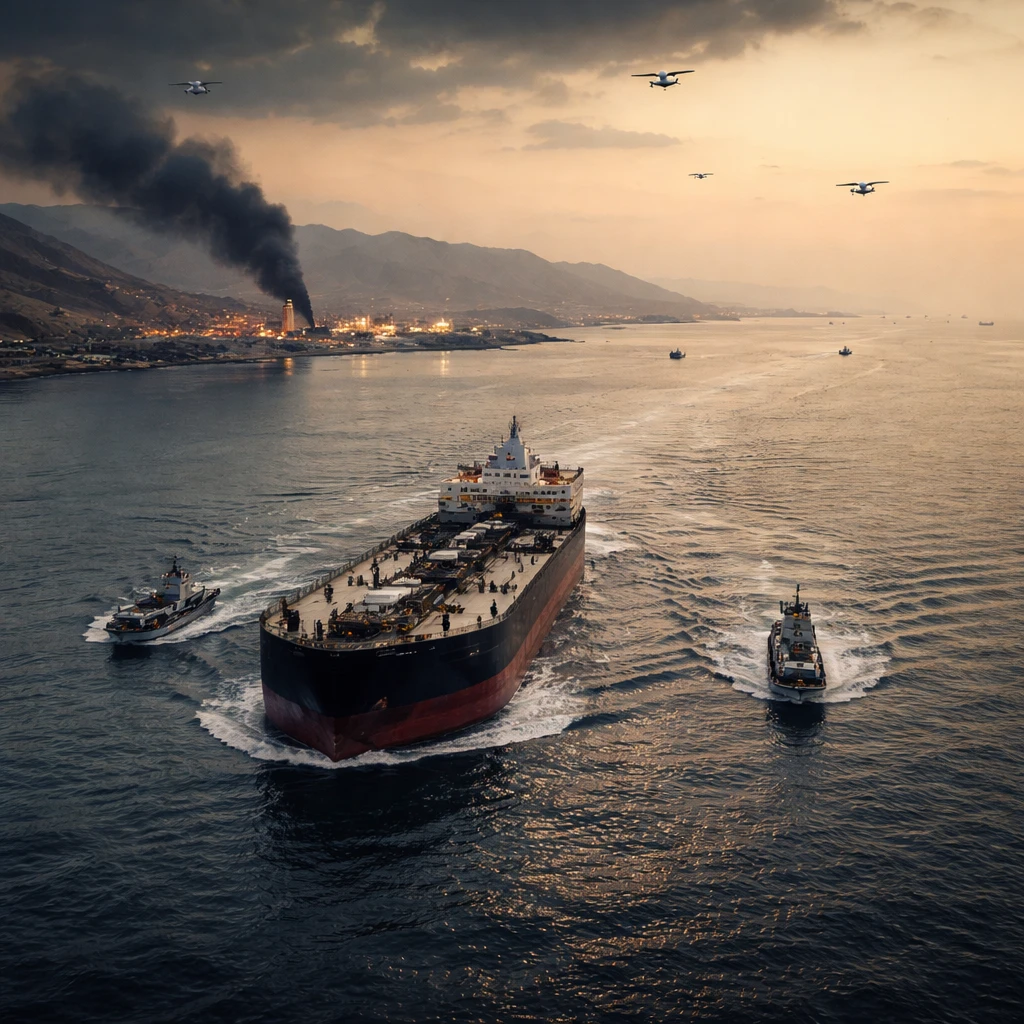
Summary: Iran's announcement that it has shut the Strait of Hormuz has heightened market and geopolitical attention. Analysts say the country's messaging has shifted from tentative to firm, but many observers doubt Iran's ability to physically maintain a blockade. Military depletion, naval losses, and signs of degraded communications are cited as constraints. Oil prices and exploration and production shares rose, while tanker traffic and regional energy infrastructure have been disrupted.
Shift in Tehran's Position
In a note Monday, Bank of America analyst Kalei Akamine said Iran's posture has hardened - moving from what was described earlier as "mixed" signals to a stance consistent with "firm closure" after previously signalling "no intention to close the strait." That shift has prompted closer scrutiny of Tehran's operational capability to enforce such a closure.
Operational Limits Cited by Analysts
Akamine highlighted several factors that analysts see as limiting Iran's ability to sustain a maritime blockade. Iran's missile stockpile is estimated at 2,000 to 3,000 missiles but is believed to have been heavily depleted. According to Akamine, U.S.-Israeli strikes may have destroyed about half of that arsenal, while Iranian forces have launched roughly 750 missiles.
The pattern of recent strikes - characterized by larger pauses between missile barrages and a rise in drone use - is interpreted by some experts as a tactical attempt to conserve munitions. Akamine also pointed to naval degradation, noting that nine Iranian naval vessels have been sunk, which weakens Iran's capacity to interdict shipping.
Reports that communications have been compromised are also being factored into assessments. Observers point to longer pauses between missile strikes and inconsistent explanations offered for attacks on Gulf countries as evidence that command-and-control links may be degraded.
Market Reaction and Short-Term Risk
Markets reacted quickly to the developments. Akamine noted crude oil rose 7 percent and exploration and production equities gained about 4 percent. He described the price action as "disciplined," suggesting markets are currently leaning toward the view that the conflict will be short-lived. However, Akamine warned that if tensions extend beyond this week, markets may begin "pricing oil, and equities, materially higher."
Morgan Stanley analyst Martijn Rats provided additional indicators of disruption: only two oil tankers transited the strait on Monday, compared with about 35 under normal conditions, while freight rates on key Middle East-China routes "nearly doubled."
Infrastructure Impacts
Infrastructure effects are already apparent. QatarEnergy halted LNG output after attacks on facilities, and Aramco implemented a partial shutdown at its Ras Tanura refinery. These developments underscore how operations in the region's energy sector are being affected even as analysts debate Iran's ability to sustain a formal maritime closure.
Conclusion
Analysts describe a disconnect between the firmness of Tehran's rhetoric and observable limits on its operational capacity. Market moves to date show significant short-term sensitivity, but also a degree of restraint, with the possibility that sustained tensions could push prices and equities materially higher.
Key points
- Iran’s language has moved from tentative to "firm closure," according to Bank of America.
- Analysts cite depleted missile inventories, the sinking of nine naval vessels, and possible communications degradation as constraints on Iran’s ability to enforce a blockade.
- Immediate market effects include a 7 percent rise in crude, about a 4 percent gain in exploration and production equities, and sharply reduced tanker transits with higher freight rates.
Risks and uncertainties
- If hostilities persist beyond the near term, markets may price oil and equities substantially higher.
- Regional energy infrastructure has already been hit, with LNG production halted at QatarEnergy facilities and a partial shutdown at Aramco’s Ras Tanura refinery - risks to energy supply remain.
- Reduced tanker transits and near-doubling of freight rates on key routes increase shipping and logistical risk for oil flows.