
Politics June 2, 2026 06:07 AM

Boston Court to Consider Challenge to Trump Executive Order on Mail-In Ballots

Democratic-led states and voting rights groups seek injunction as USPS moves to implement ballot-listing requirements

By Nina Shah

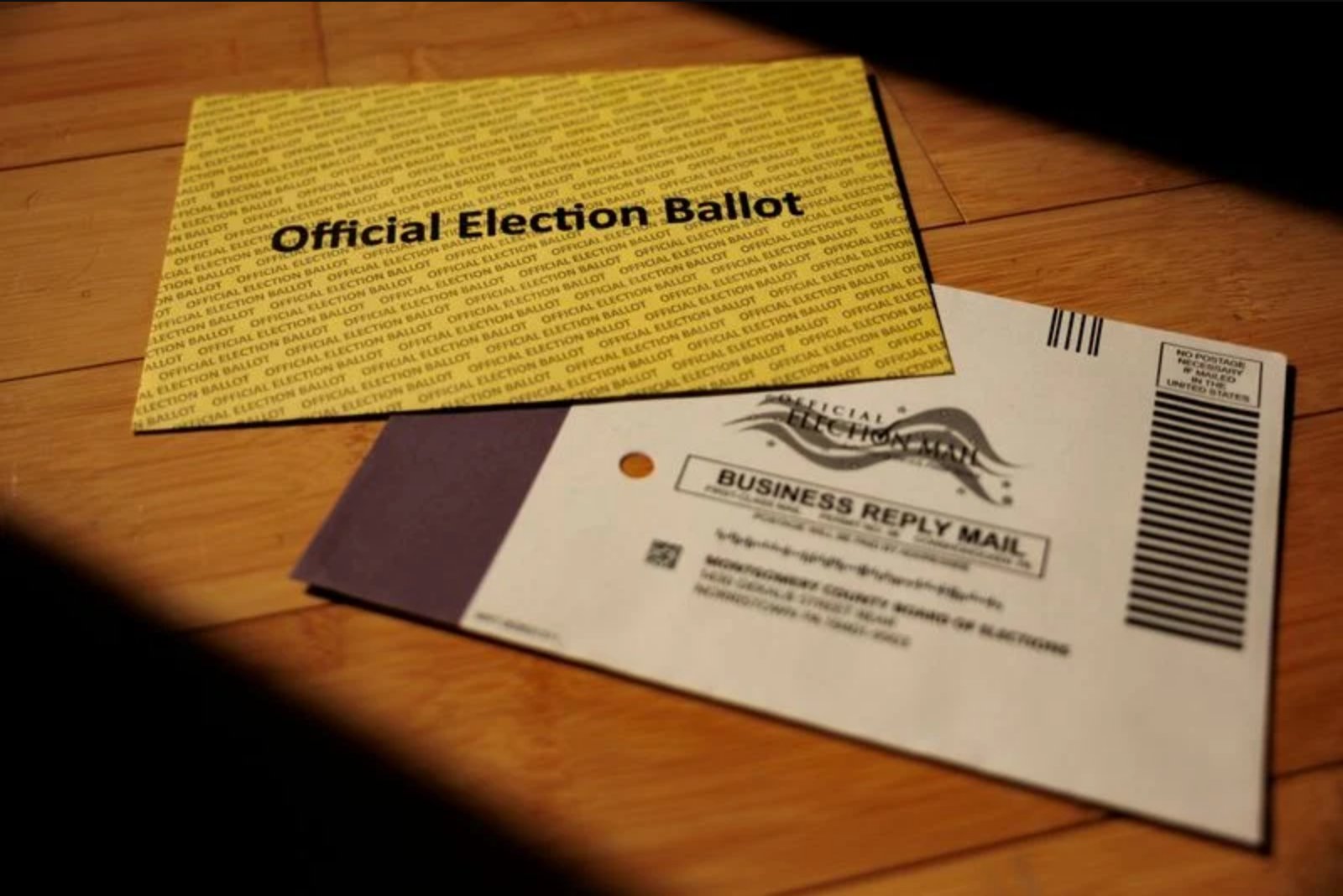
A federal judge in Boston will hear arguments from Democratic-led states and voting rights organizations seeking to block President Donald Trump's executive order that directs federal action to tighten rules around mail-in voting. The order, signed March 31, instructs federal agencies and the U.S. Postal Service to take steps including compiling state voter eligibility lists and restricting delivery of ballots to names on state-approved mail-in lists. Plaintiffs say the order unlawfully interferes with state-controlled election administration and would force disruptive last-minute changes ahead of the November midterms.

Boston Court to Consider Challenge to Trump Executive Order on Mail-In Ballots

Key Points

  • U.S. District Judge Indira Talawni in Boston will hear arguments on Tuesday from Democratic-led states and voting rights groups seeking to block President Trump's March 31 executive order targeting mail-in voting procedures.
  • The executive order directs the federal government to compile lists of confirmed citizens eligible to vote, use federal data to help states verify eligibility, require USPS to deliver ballots only to names on states' approved mail-in lists, and mandates five-year preservation of election-related records.
  • USPS has issued proposed rules to implement the directive, requiring states to provide names and barcodes linked to mail-in ballots for federal elections; a separate D.C. judge recently declined to impose a preliminary injunction, finding the challenge premature.

A federal courtroom in Boston is set to receive arguments on Tuesday from a coalition of Democratic-led state governments and voting rights groups seeking to keep in force a court order that would block President Donald Trump's executive action aimed at tightening mail-in voting procedures.

The litigation will be heard by U.S. District Judge Indira Talawni, who will consider two consolidated lawsuits challenging the March 31 executive order. The plaintiffs contend the order exceeds federal authority over elections and improperly directs federal agencies to intrude on processes that the Constitution assigns to the states.

The executive order instructs the administration to assemble a roster of confirmed U.S. citizens eligible to vote in each state and to employ federal data to assist state election officials in verifying voter eligibility. In addition, it directs the U.S. Postal Service to limit delivery of ballots to individuals whose names appear on each state's approved mail-in ballot list.

In response to the directive, the Postal Service on Friday proposed new rules designed to implement the order. The proposed rules would require states to provide the names and barcodes associated with their mail-in ballots for federal elections. The executive action would also obligate states to preserve election-related records for a period of five years.

State attorneys general and other plaintiffs argue in court filings that the order violates the U.S. Constitution and unlawfully interferes with mail-in voting by instructing USPS to block delivery of ballots based on criteria outside state control. Their complaint warns that allowing the order to remain effective would compel states to rapidly change election procedures before the November midterm elections, creating chaos and likely disenfranchising eligible voters.

Judge Talawni, who was appointed by President Barack Obama, has overseen several challenges to executive actions from the Trump administration and has frequently ruled in favor of plaintiffs contesting administration policies. She will take up the case after a related bid to enjoin the order in Washington, D.C., was rejected last week.

In that separate matter, U.S. District Judge Carl Nichols, a Trump appointee based in Washington, declined on Thursday to issue a preliminary injunction in a lawsuit brought by the Democratic Party. Judge Nichols concluded the request was premature because the executive order had not yet been implemented.

The Boston hearing will determine whether a court will halt implementation of the order while litigation proceeds, or allow the administration and USPS efforts to move forward as they begin to take effect.


Sectors affected: election administration, postal services, and state governments responsible for conducting federal elections.

Risks

  • Legal uncertainty about the executive order's implementation may prompt operational changes at USPS and state election offices, affecting the administration of federal elections - impacting postal services and state election departments.
  • If courts allow the order to take effect, plaintiffs warn states could be forced into last-minute overhauls of election systems ahead of November, creating the risk of administrative chaos and potential disenfranchisement - affecting voters and election infrastructure.
  • Divergent judicial outcomes in different jurisdictions create uncertainty over national uniformity in handling mail-in ballots, which may complicate planning for states, the Postal Service, and stakeholders monitoring election-related logistics.

More from Politics

U.S. Removes Endangered Status for Permian Basin Lizard, Resolving Texas AG Lawsuit Jun 4, 2026 Trump Jr. Champions Crypto and Predicts Tehran Deal at Zurich Forum Jun 4, 2026 Top White House Europe Official to Exit as NSC Sees Broad Reshuffle Jun 4, 2026 New York Democrats Advance Plan to Reclaim Redistricting Authority for 2028 Jun 4, 2026 Trump to Move to Nominate Todd Blanche as Permanent U.S. Attorney General Jun 4, 2026