
Former U.S. Treasury Secretary Janet Yellen said the escalation of conflict around Iran will act as a drag on American growth and push inflation higher, increasing the Federal Reserve's reluctance to reduce interest rates.
Speaking by video at a shipping industry conference in Long Beach, California, Yellen said the recent Iran situation makes the Fed "even more on hold, more reluctant to cut rates than they were before this happened." The remarks were delivered to S&P Global's TPM26 event.
Current inflation and the role of tariffs
Yellen emphasized that inflation is running roughly one percentage point above the Fed's 2% target. She attributed about half a percentage point of the current roughly 3% inflation pace to tariffs imposed under the Trump administration.
Before the shock from Iran, the central bank had been addressing signs of weakness in the labor market and waiting for inflation to decline. The Iran incident, she said, has pushed oil prices up significantly, a development that complicates the Fed's path toward its inflation goal.
Oil supply risks and the Strait of Hormuz
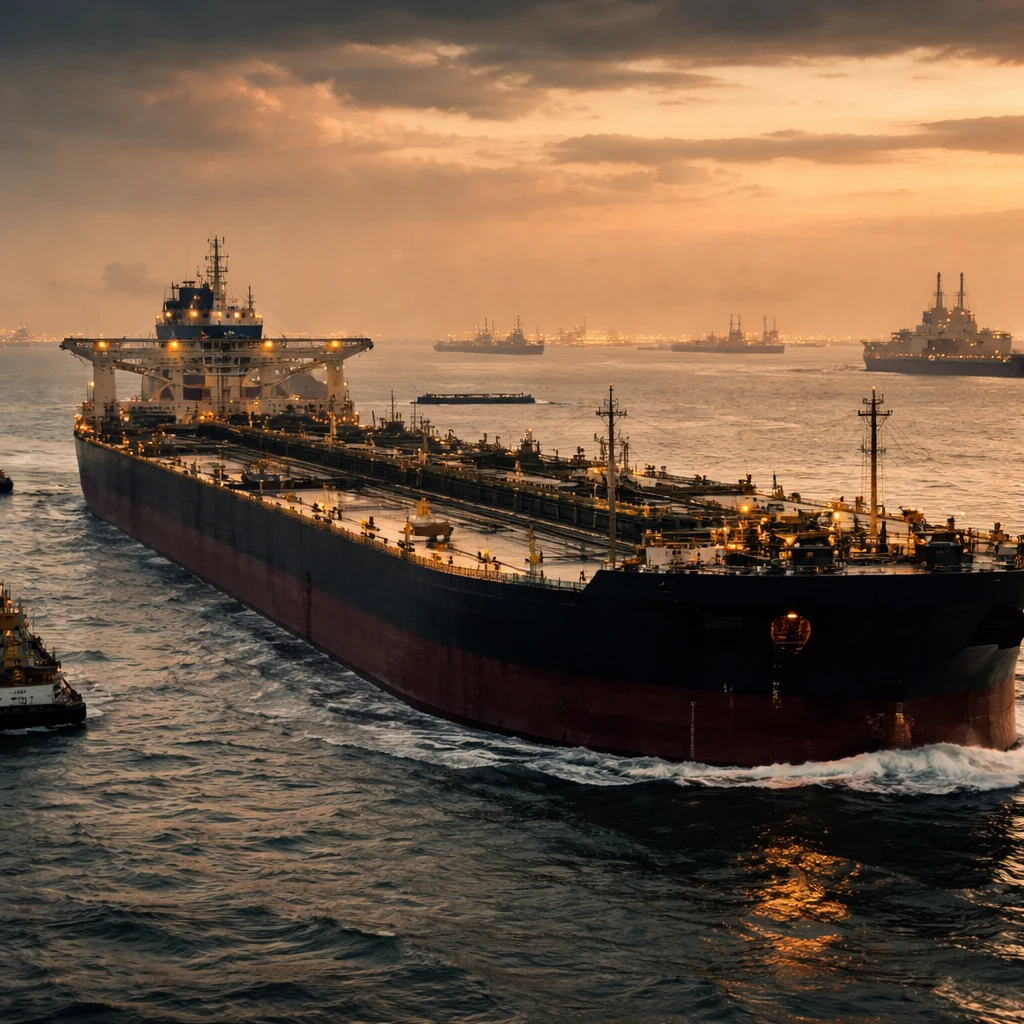
Yellen warned that if the closure of the Strait of Hormuz persists beyond a short period, oil prices may stay high or rise further. She noted that a substantial portion of the region's oil is transported through the strait, and that prolonged disruption would sustain upward pressure on energy costs.
The combination of higher oil prices and existing inflation above target creates a policy problem for the Fed. Yellen described a concern within the central bank that market participants might conclude the Fed is content with inflation at 3% but not committed to returning to 2%. If that perception takes hold, she said, the Fed worries about the possibility of permanently higher inflation and more difficult tradeoffs, which supports a more prolonged pause on rate cuts.
Growth outlook and institutional concerns
Despite highlighting the risks tied to the Iran conflict and energy markets, Yellen described the U.S. economy as "pretty healthy" at present and said she remains optimistic about the outlook.
She also criticized the Trump administration's effort to remove a Fed governor, calling the attempt "all but unthinkable." The Supreme Court has not yet issued a ruling on that matter, and Yellen said she expects the effort will likely fail.
Key takeaways
- The Iran conflict has increased inflationary pressures and could slow U.S. growth, reducing the chance of near-term Fed rate cuts.
- Inflation is about 1 percentage point above target, with tariffs contributing roughly 0.5 percentage point to the current 3% pace.
- Prolonged closure of the Strait of Hormuz would likely keep oil prices elevated, reinforcing the Fed's caution on easing policy.
Contextual risks highlighted
- Energy market disruption - sustained higher oil prices if the Strait of Hormuz remains closed, affecting energy and transportation sectors.
- Monetary policy risk - the Fed may delay rate cuts, impacting interest-sensitive sectors such as housing and consumer credit.
- Institutional uncertainty - political moves against Fed officials could unsettle perceptions of central bank independence, with potential market consequences.