
The conflict involving Iran has pushed oil and gas prices higher and prompted comparisons with the energy shock that accompanied Russia's 2022 invasion of Ukraine. While there are parallels, Neil Shearing, group chief economist at Capital Economics, says the episode today departs from that earlier shock in several important respects - factors that could shape how policymakers and markets respond.
How big could the supply shock be?
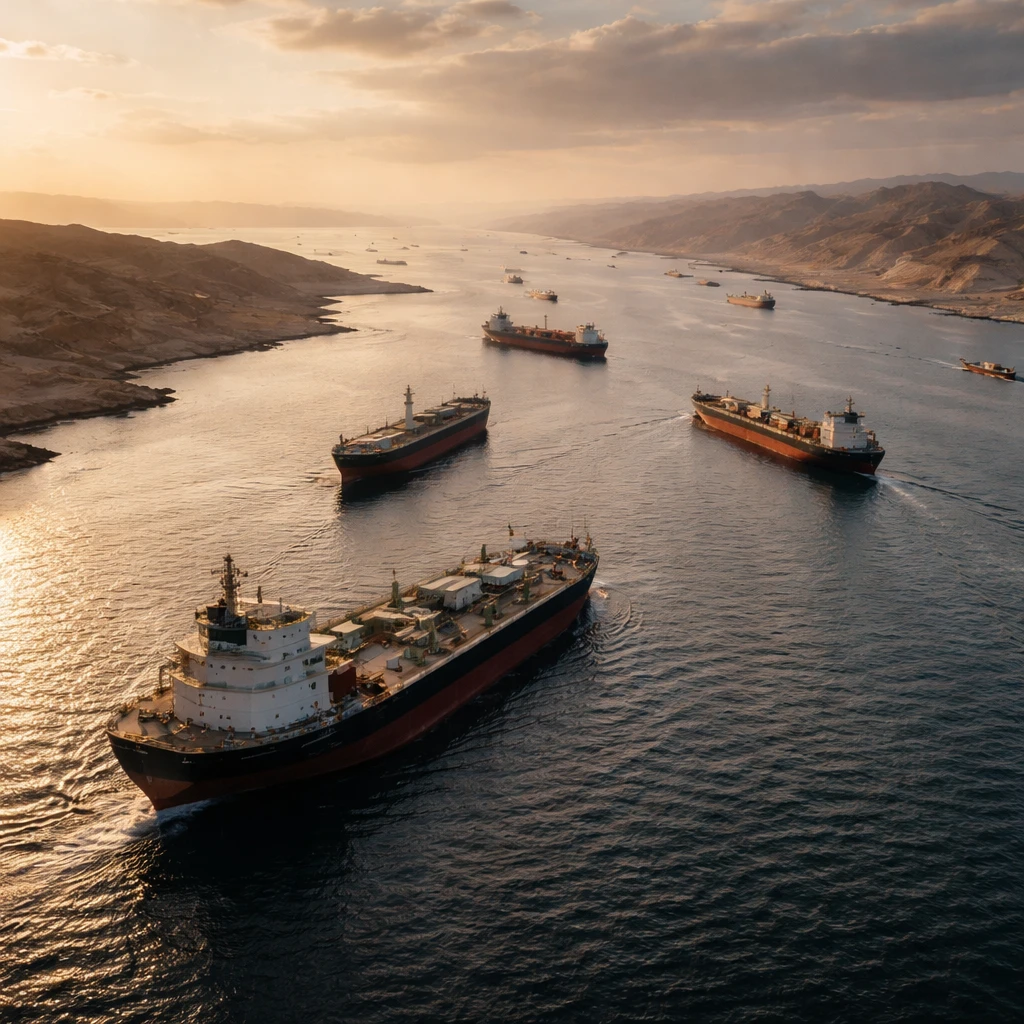
Shearing points to the strategic significance of the Strait of Hormuz as a key differentiator. Around a quarter of global seaborne oil trade and about a fifth of seaborne natural gas shipments transits that narrow waterway. In theory, a sustained closure of the strait could produce a disruption that exceeds even the loss of Russian energy supplies in 2022. That potential scale is therefore a central consideration in evaluating the macroeconomic stakes.
That said, the immediate market reaction has been relatively contained. Oil briefly spiked toward $120 per barrel but subsequently traded in a range between the mid-$80s and high-$90s. Natural gas prices have registered smaller increases than they did during the 2022 crisis.
Shearing notes that market participants appear to be assigning a higher probability to a severe but short-lived campaign against Iran, a dynamic he describes as broadly consistent with a more benign macro scenario.
Economic backdrop differs from 2022
Another meaningful distinction is the state of the economy. In 2022, labour markets were exceptionally tight and inflation expectations were already elevated when energy prices surged - a combination that made it easier for firms to pass higher input costs through to consumers. Today, Shearing says labour market conditions are looser across major economies and inflation expectations have drifted lower. As a result, the pass-through of higher energy costs into consumer prices is likely to be more constrained now than it was four years ago.
Policy settings are not the same
Policy rates have also moved materially since 2022. At the time of the Ukraine shock, interest rates were close to zero across advanced economies and negative in the eurozone, leaving central banks behind the curve and forcing them into aggressive tightening once inflation picked up. Shearing contrasts that period with the current stance: policy rates are now nearer to neutral in the eurozone and are moderately restrictive in the U.S. and U.K.
That difference means central banks are not starting from an ultra-loose baseline. Shearing observes that in 2022 central banks "were caught on the back foot when the energy shock hit and had to tighten aggressively simply to return policy to something like a neutral setting. That is not the case today." With rates already around neutral and labour markets looser, Shearing argues it would take a much larger and more persistent shock - for example, a prolonged closure of the Strait of Hormuz - to compel another round of significant tightening.
Implications for policymakers and markets
One policy lesson Shearing draws from the previous crisis is that broad-based energy subsidies are costly and should be reserved for extreme circumstances. When support is needed, he says it is preferable to target help at the most vulnerable households rather than implement wide-ranging subsidies.
Markets have adjusted pricing expectations: they have already largely priced out the interest-rate cuts that had been anticipated in the coming months, a recalibration Shearing describes as broadly appropriate. However, he cautions that the threshold for a renewed tightening cycle remains high in the current configuration of rates and labour markets.
Conclusion
In sum, while the recent rise in energy prices shares some surface similarities with the 2022 shock, Capital Economics identifies three core differences - the potential scale of supply disruption centered on the Strait of Hormuz, a softer economic backdrop reducing cost pass-through, and materially different central bank starting points. Those distinctions inform why policymakers and markets may respond in a different manner this time, even as risks persist if the conflict broadens or supply channels are disrupted for a prolonged period.