
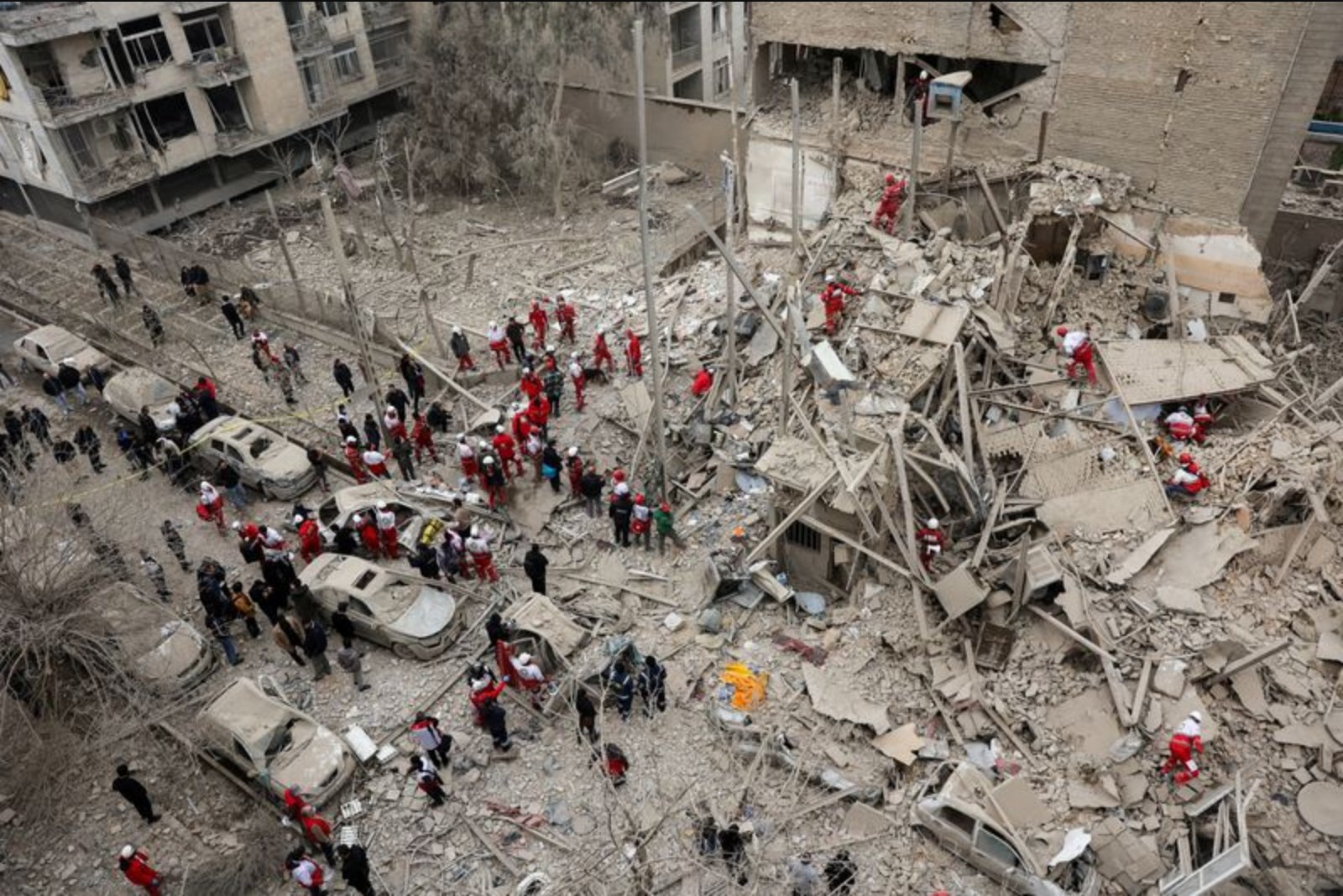
The widening conflict involving Iran raises the prospect of a severe energy shock that could ultimately touch nearly every national economy. While the full extent depends on how long fighting continues and how it affects shipping and supplies, the pattern of vulnerability is already discernible: some nations have both larger direct exposures to Middle East energy flows and fewer policy options to absorb an abrupt rise in fuel and gas prices.
Major advanced economies at risk
European countries are among those most immediately sensitive to a renewed jump in energy costs. The region still bears fresh memories of supply disruption after Russia's invasion of Ukraine, which exposed import dependencies and pushed inflation into double digits - a reminder of how quickly energy-driven price shocks can feed into broader economic stress.
Germany - With an economy weighted toward industry, Germany has more to lose from higher energy costs. Its manufacturing sector had only recently stopped contracting for the first time since 2022. As a major exporter, Germany is also vulnerable to any global slowdown. The large stimulus package the government announced last year will help blunt some of the blow, but room to add further support is constrained by expected budget shortfalls in coming years.
Italy - Italy's sizeable manufacturing base increases its exposure to rising industrial energy prices. The country also relies heavily on oil and gas within its primary energy mix, one of the largest shares in Europe, which would amplify the domestic impact of any international supply shock.
Britain - The British electricity system relies more on gas-fired generation than other major European peers, which means rising gas prices tend to translate quickly into higher electricity costs. Since the war began, gas prices have climbed faster than oil, lifting the immediate inflationary impulse. An energy price cap will mute the initial surge in consumer prices, but the policy carries the risk of prompting further interest rate increases. That scenario could leave Britain with the highest borrowing costs in the G7 for longer, at a time when unemployment is rising. Budget constraints and pressure in bond markets also limit the government's capacity to provide additional relief to households and firms.
Japan - Japan is acutely exposed through its energy import profile, sourcing around 95% of its oil from the Middle East and with nearly 90% of those shipments transiting the Strait of Hormuz. That vulnerability compounds existing inflationary pressures stemming from a weak yen, which pass through into food and daily necessities because of Japan's heavy reliance on imported raw materials.
Emerging market heavyweights bearing direct and indirect shocks
Some of the region closest to the fighting - the Gulf states - faces direct economic harm. Analysts are already cutting growth expectations for parts of the region that had been expected to expand this year. The surge in oil and gas prices is of little consolation if an effective closure of the Strait of Hormuz prevents Kuwait, Qatar and Bahrain from delivering hydrocarbons to global markets. Disrupted exports would weigh directly on government revenues and activity.
The conflict could also reduce remittances, the regular flows that migrant workers send home and that amount to tens of billions of dollars annually across the region. Those transfers are an important source of household income and foreign-exchange inflows.
India - India imports about 90% of its crude oil and nearly half of its liquefied petroleum gas, and roughly half of that oil and an even larger share of LPG must pass through the Strait of Hormuz. Economists have already trimmed India's growth forecasts and the rupee has swooned to a record low. At the grassroots level, the surge in gas prices has prompted informal rationing in restaurants and kitchens across the country, with some vendors removing hot foods and drinks - including local staples such as samosas, dosa and chai tea - from menus.
Turkey - Bordering Iran, Turkey is preparing for potential refugee flows and heightened geopolitical uncertainty. The immediate macroeconomic consequence has centered on monetary policy: the central bank has halted an interest rate-cutting cycle for the second time within a year and has intervened in currency markets, selling as much as $23 billion of reserves to support the lira.
Countries already fragile face magnified pressures
A group of nations that have recently suffered full-blown crises or narrowly avoided them look especially vulnerable to even a modest additional shock.
Sri Lanka - Government measures to restrain energy spending have become pronounced. The state has made every Wednesday a public holiday for public-sector workers in an effort to cap energy use. Schools, universities and public institutions are being closed, non-essential public transport has been suspended and motorists must now register for a National Fuel Pass that restricts fuel purchases.
Pakistan - Having been on the brink of collapse two years ago, Pakistan has tightened fuel pricing and enacted temporary closures of schools for two weeks. Public departments have had their fuel allowances halved, are prohibited from purchasing new air conditioners and furniture, and have been ordered to withdraw a portion of their vehicle fleets from use.
Egypt - Beyond the immediate pain of higher fuel and staple food costs, Egypt faces the potential for a sharp drop in Suez Canal and tourism receipts, the latter of which generated almost $20 billion for the economy last year. The currency has also weakened markedly, falling nearly 9% since the war began, increasing the difficulty of servicing debt that is often denominated in U.S. dollars.
Implications for policy and markets
The pattern that emerges from these country profiles is straightforward: economies that import large shares of their energy, depend heavily on maritime chokepoints such as the Strait of Hormuz, or rely on tourism and remittances are the most exposed. At the same time, nations that have limited fiscal headroom or weakened monetary credibility will find it harder to counterbalance the shock without incurring additional financial strain.
Policy choices - from energy subsidies and price caps to interest rate adjustments and use of foreign-exchange reserves - will influence both the depth and duration of economic pain. But for many of the countries highlighted, the tools available are constrained by previous policy commitments, depleted war chests or bond market pressures.
As the situation develops, monitoring energy shipments, shipping lane disruptions and shifts in remittance patterns alongside currency moves and central bank actions will provide an early read on which economies are bearing the brunt of the shock.